


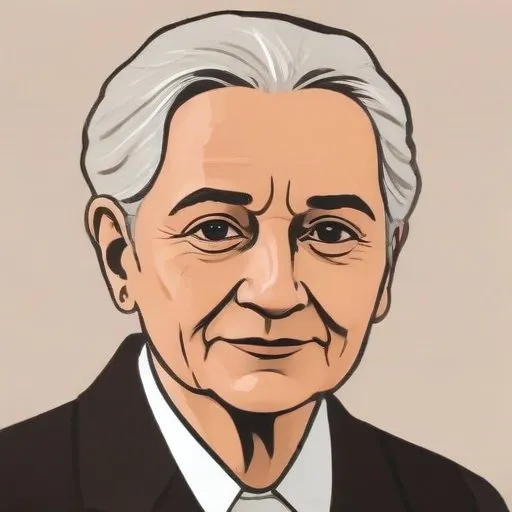
A Polish writer and intellectual who explored the human condition, morality, and politics through his novels, essays, and poetry, earning him the Nobel Prize in Literature.
Czesław Miłosz, the Polish-American poet, prose writer, translator, and diplomat, is renowned for his morally charged and intellectually stimulating works that tackled the complexities of human existence. He is best known for winning the 1980 Nobel Prize in Literature, solidifying his position as one of the greatest poets of the 20th century.
Miłosz was born on June 30, 1911, in the village of Szetejnie, Kovno Governorate, Russian Empire (now Kdainiai district, Kaunas County, Lithuania). His early life was marked by the turmoil of World War I and the subsequent Polish-Soviet War, which had a profound impact on his writing.
Miłosz survived the German occupation of Warsaw during World War II and became a cultural attaché for the Polish government during the post-war period. His experiences during this time deeply influenced his poetry and prose, as seen in works like The Captive Mind, which critiqued Stalinism and the dangers of totalitarianism.
When communist authorities threatened his safety, Miłosz defected to France in 1951 and eventually chose exile in the United States, where he became a professor at the University of California, Berkeley. This period of exile had a profound impact on his writing, as he grappled with the complexities of identity, morality, and faith.
Miłosz's poetry is characterized by its lyricism, depth, and moral clarity. His works often explored the human condition, delving into themes of love, death, history, and faith. Some of his most notable works include The Captive Mind, Native Realm, and The Issa Valley.
As a translator, Miłosz introduced Western works to a Polish audience, and as a scholar and editor, he championed a greater awareness of Slavic literature in the West. His efforts helped bridge the cultural divide between East and West, promoting cross-cultural understanding and exchange.
Miłosz's Catholic faith played a significant role in his work, as he explored the complexities of morality, politics, and history. His personal life was marked by a deep sense of introspection and self-awareness, which is reflected in his writing.
In addition to the Nobel Prize in Literature, Miłosz received numerous awards and honors for his contributions to literature and culture. He died on August 14, 2004, in Kraków, Poland, and is interred in Skaka, a church known for honoring distinguished Poles.
Miłosz's legacy extends far beyond his literary achievements. He is remembered as a symbol of moral courage, intellectual curiosity, and artistic innovation, inspiring generations of writers, scholars, and thinkers.
As Miłosz himself once said, "The writer's role is to speak the truth, as he sees it, and not to be a propagandist for any ideology or party." His life and work serve as a testament to the power of moral clarity, intellectual honesty, and artistic expression.
Born in 1923
A Polish poet and translator who captured the human experience through subtle, introspective verse, earning her the Nobel Prize in Literature. Her poetry explores the complexities of life, love, and mortality.
Born in 1921
A Polish poet and playwright who explored the human condition, morality, and the absurdity of life through his avant-garde works, often blending poetry and drama.
Born in 1894
A renowned Polish literary figure, celebrated for his innovative and humorous poetry, plays, and theatrical direction, which continue to inspire and entertain audiences.
Born in 1878
A Ukrainian-Polish poet and academic who made significant contributions to 20th-century Polish literature, exploring themes of existentialism and modernity. Their work is characterized by its lyricism and philosophical depth.
Born in 1869
A Polish Renaissance man who excelled in poetry, playwriting, and painting, creating iconic works that merged folk motifs with modernist styles. His innovative art and literature continue to inspire Polish culture.
Born in 1847
A pioneering journalist and author who explored social issues and championed realism in Polish literature, leaving a lasting impact on the country's literary scene.
Born in 1798
A national hero in Poland, celebrated for his romantic poetry and plays that ignited a sense of patriotism and freedom during a time of foreign rule. His works are still widely read and performed today.
