


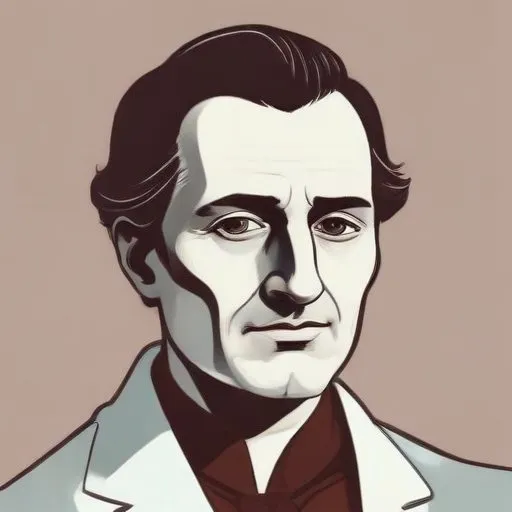
A Polish poet and playwright who explored the human condition, morality, and the absurdity of life through his avant-garde works, often blending poetry and drama.
Tadeusz Rewicz was a renowned Polish poet, playwright, and translator, celebrated for his immense contribution to the country's literary landscape. Born on October 9, 1921, in Radomsko, Poland, Rewicz's works spanned multiple genres, earning him a distinctive place in the hearts of readers and audiences alike.
Rewicz was the son of Wadyslaw and Stefania Rewicz (née Gelbard), a Jewish convert to Catholicism. After completing his high school education, he enrolled at Jagiellonian University in Krakow. However, his academic pursuits were interrupted by World War II, during which he served in the Polish underground Home Army.
Rewicz's literary journey began in 1938, when he first published his poetry. Over the years, he wrote and published 15 volumes of poetry between 1944 and 1960, cementing his reputation as a talented poet. His debut as a playwright came in 1960 with the play The Card Index (Kartoteka), which marked the beginning of a long and successful career in dramaturgy.
Some of Rewicz's most notable plays include The Interrupted Act (Akt przerywany) (1970), Birth Certificate (Świadectwo urodzenia) (1961), Left Home (Wyszed z domu) (1965), and The White Wedding (Biała maestwo) (1975). His works have been translated into almost all major languages, with two of his plays being produced at La MaMa Experimental Theatre Club in New York.
Rewicz's literary prowess was recognized and celebrated by his peers and critics alike. In 1948, Czesław Miłosz, a fellow poet and Nobel laureate, wrote a poem dedicated to Rewicz and his poetry. In 2008, his New Poems collection was nominated for the National Book Critics Circle Award.
Rewicz's immense contribution to Polish literature has left an indelible mark on the country's cultural landscape. His works continue to be widely read and performed, inspiring generations of writers, poets, and playwrights. Through his literary output, Rewicz has ensured that his voice will be heard and remembered for years to come.
Rewicz passed away on April 24, 2014, leaving behind a legacy that will continue to inspire and enrich the world of literature.
Rewicz's personal life was marked by tragedy, with his elder brother, Janusz, being executed by the Gestapo in 1944 for serving in the Polish resistance movement. His younger brother, Stanisław, went on to become a notable film director and screenwriter.
Throughout his life, Rewicz was deeply influenced by his experiences during World War II, which shaped his writing and worldview. Despite the challenges he faced, Rewicz remained committed to his craft, leaving behind a rich and diverse body of work that continues to captivate audiences today.
Born in 1809
A leading figure of the Polish Romantic movement, known for his poetic and theatrical works that explored themes of love, freedom, and national identity. His plays and poems are still widely performed and studied in Poland today.
Born in 1798
A national hero in Poland, celebrated for his romantic poetry and plays that ignited a sense of patriotism and freedom during a time of foreign rule. His works are still widely read and performed today.
Born in 1869
A Polish Renaissance man who excelled in poetry, playwriting, and painting, creating iconic works that merged folk motifs with modernist styles. His innovative art and literature continue to inspire Polish culture.
Born in 1878
A Ukrainian-Polish poet and academic who made significant contributions to 20th-century Polish literature, exploring themes of existentialism and modernity. Their work is characterized by its lyricism and philosophical depth.
Born in 1847
A pioneering journalist and author who explored social issues and championed realism in Polish literature, leaving a lasting impact on the country's literary scene.
Born in 1846
A Polish journalist and author who wrote epic historical novels, including "Quo Vadis", which won him the Nobel Prize in Literature in 1905. His works are known for their vivid storytelling and historical accuracy.
