


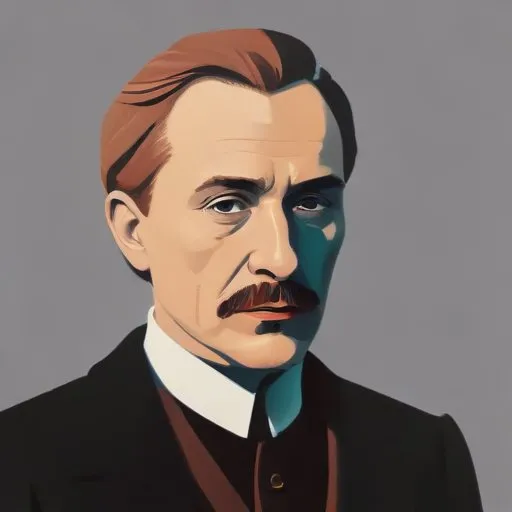
A renowned Polish literary figure, celebrated for his innovative and humorous poetry, plays, and theatrical direction, which continue to inspire and entertain audiences.
Julian Tuwim, known also under the pseudonym Oldlen, was a renowned Polish poet, lyricist, and children's literature author who left an indelible mark on Polish literature. He is celebrated for his contribution to children's literature and his role as a co-founder of the Skamander group of experimental poets.
Tuwim was born on September 13, 1894, in Łódź, then part of the Russian Partition, to a family of assimilated Jews. His parents, Izydor and Adela, provided him with a comfortable middle-class upbringing. He was educated in Łódź and later in Warsaw, where he studied law and philosophy at Warsaw University.
In 1918, Tuwim co-founded the Skamander group of experimental poets with Antoni Słonimski and Jarosław Iwaszkiewicz. This group of poets sought to break away from the traditional mannerism of the time and create a new, more expressive form of poetry. Tuwim's poetry, characterized by vitality, optimism, and a celebration of urban life, was a staple of the Skamander group's ideology.
Tuwim's poetry collections, such as Czyhanie na Boga (In Lurking for God, 1918), Sokrates taczcy (Dancing Socrates, 1920), and Sidma jesie (Seventh Autumn, 1922), showcased his unique style and perspective. His later collections, including Sowa we krwi (Words in the Blood, 1926), Rzecz Czarnoleska (The Czarnolas Matter, 1929), and Biblia cygaska (The Gypsy Bible, 1933), solidified his position as a leading figure in Polish literature.
In recognition of his contribution to literature, Tuwim was awarded the prestigious Golden Laurel of the Polish Academy of Literature in 1935.
Tuwim's poetry and literary contributions continue to inspire and influence generations of writers and poets. His work has been widely translated and recognized globally, cementing his legacy as a major figure in Polish literature.
Tuwim's poetry and literary work often expressed a sense of optimism, vitality, and a celebration of urban life. His use of vernacular language and slang in his poetry reflected his desire to connect with the everyday experience of the common person.
Tuwim's life and work serve as a testament to the power of creativity and innovation. His dedication to his craft and his willingness to break away from traditional forms of poetry have inspired generations of writers and continue to inspire today.
Julian Tuwim's legacy as a poet, lyricist, and children's literature author continues to be celebrated and recognized globally. His contributions to Polish literature have left an indelible mark, and his poetry continues to captivate readers with its unique blend of vitality, optimism, and urban sensibility.
Born in 1847
A pioneering journalist and author who explored social issues and championed realism in Polish literature, leaving a lasting impact on the country's literary scene.
Born in 1867
A Polish novelist who won the Nobel Prize in Literature in 1924 for his novel "Ch?opi" (The Peasants), a realistic depiction of rural life in Poland. He's known for his detailed and nuanced portrayals of Polish society and culture.
Born in 1846
A Polish journalist and author who wrote epic historical novels, including "Quo Vadis", which won him the Nobel Prize in Literature in 1905. His works are known for their vivid storytelling and historical accuracy.
Born in 1878
A Ukrainian-Polish poet and academic who made significant contributions to 20th-century Polish literature, exploring themes of existentialism and modernity. Their work is characterized by its lyricism and philosophical depth.
