


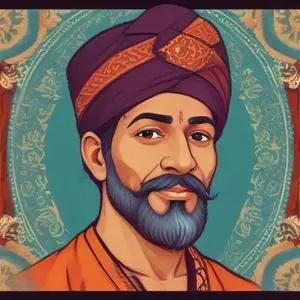
A pioneering Indian social reformer who fought against casteism, advocated for women's education, and challenged traditional Hindu norms, leaving a lasting impact on Indian society.
Phule was born on April 11, 1827, in Pune, India, to a family belonging to the Mali caste. His family, originally named Gorhe, had its roots in the village of Katgun, near Satara. Phule's great-grandfather, a low-ranking village official, moved to Khanwadi in Pune district, where his son, Shetiba, brought the family to the brink of poverty. The family of three sons then moved to Poona, seeking employment, and were taken under the wing of a florist who taught them the art of growing and arranging flowers.
Phule's early education was at a Scottish Mission's School in Pune, where he was exposed to Western ideas of equality and social justice. This exposure deeply influenced his worldview, and he began to question the discriminatory practices of the caste system. In 1848, Phule, along with his wife Savitribai, started the first school for girls in Bhidewada, Pune, marking the beginning of his crusade against patriarchy and caste oppression.
In 1873, Phule founded the Satyashodhak Samaj (Society of Truth Seekers), an organization dedicated to promoting social equality and challenging the caste system. The Samaj welcomed members from all religions and castes, providing a platform for the marginalized to unite and demand equal rights. This pathbreaking initiative earned Phule the honorific title 'Mahatma' (Great Soul) in 1888.
Phule's efforts in education and social reform went hand-in-hand. He established several schools for girls and members of the lower castes, providing access to education that was previously denied to them. His activism extended to the fight against child marriage, female infanticide, and the exploitation of the lower castes. Phule's writings, particularly his book 'Gulamgiri' (Slavery), exposed the ills of the caste system and advocated for a more just society.
Jyotirao Phule's pioneering work has had a profound impact on modern Indian society. He is revered as a champion of social justice, and his legacy continues to inspire generations of social reformers. Phule's fight against the caste system and patriarchy has paved the way for a more inclusive and equitable society, making him an iconic figure in Indian history.
"It is a blasphemy to say that the Vedas are the only source of knowledge. The Vedas are not the only repository of knowledge. There are other books which are also valuable sources of knowledge."
"The primary objective of education should be the upliftment of the lowest strata of society."
Phule's life is a testament to the power of courage and conviction. His unwavering commitment to social justice and education has inspired countless individuals to strive for a more equitable society. His legacy serves as a beacon of hope, motivating generations to continue the fight against discrimination and oppression.
Born in 1831
A pioneering Indian poet, educator, and activist who fought for women's rights, education, and social reform in 19th-century India, leaving a lasting legacy in the country's struggle for equality.
Born in 1869
Indian freedom fighter, activist, and philosopher who led India to independence from British rule through non-violent civil disobedience, inspiring civil rights movements worldwide.
Born in 1891
Indian Minister of Law and Justice who fought for the rights of the marginalized and drafted the Indian Constitution, playing a key role in shaping modern India's democracy.
