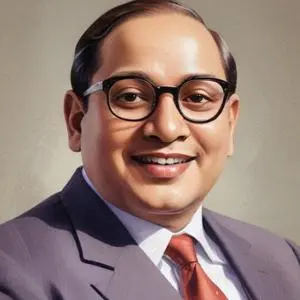
B. R. Ambedkar: The Architect of Modern India
A Champion of Social Justice and Equality
Bhimrao Ramji Ambedkar, popularly known as Babasaheb Ambedkar, is renowned for being the principal architect of the Constitution of India and a pioneering social reformer who dedicated his life to fighting against social discrimination and inequality. As the first Law and Justice Minister of India, he played a pivotal role in shaping the country's legal framework and advocating for the rights of marginalized communities.
Early Life and Education
Born on April 14, 1891, in Mhow, Madhya Pradesh, into a Mahar dalit caste, Ambedkar was the 14th and last child of Ramji Maloji Sakpal and Bhimabai Sakpal. Despite facing socio-economic discrimination, he pursued higher education, earning degrees in economics from Columbia University and the London School of Economics, and later trained in law at Grays Inn, London. His academic achievements were a testament to his determination and intellectual prowess.
Pioneering Work in Social Reform
Ambedkar's work in social reform was instrumental in bringing about significant changes in Indian society. He was a vocal advocate for the rights of dalits, women, and other marginalized communities, and his efforts led to numerous legislative reforms. Some of his notable contributions include:
- Founding the Bahishkrit Hitakarini Sabha, an organization dedicated to promoting education and socio-economic upliftment of dalits.
- .Publishing journals such as Mooknayak and Bahishkrit Bharat, which served as a platform for promoting social reform and critiquing caste-based discrimination.
-
Constitutional Legacy
As the Chairman of the Drafting Committee of the Constituent Assembly, Ambedkar played a crucial role in drafting the Constitution of India. His vision for a democratic and egalitarian society was reflected in the constitution, which enshrined fundamental rights and principles of social justice. Some of his key contributions to the constitution include:
- Enshrining the principles of equality, justice, and liberty in the preamble.
- Introducing provisions for affirmative action and reservations for marginalized communities.
- Establishing the concept of a secular and democratic republic.
Philosophical Contributions and Beliefs
Ambedkar's philosophical contributions were deeply rooted in his commitment to social justice and equality. He believed in the power of education and critical thinking in bringing about social change. Some of his notable philosophical contributions include:
- His critique of Hinduism and the caste system, which he argued was discriminatory and hierarchical.
- His advocacy for Buddhism as a more egalitarian and inclusive religious philosophy.
- His emphasis on the importance of critical thinking and rational inquiry in promoting social progress.
Influence on Modern Society
Ambedkar's legacy extends far beyond his lifetime. He continues to inspire generations of Indians and people around the world who are committed to promoting social justice and equality. His influence can be seen in various aspects of modern Indian society, including:
- The continued struggle for social justice and equality in India.
- The growth and development of the Dalit Buddhist movement.
- The increasing recognition of the importance of affirmative action and reservations in promoting social equality.
Awards and Honors
In recognition of his exemplary contributions, Ambedkar was posthumously awarded the Bharat Ratna, India's highest civilian award, in 1990. His birthday, April 14, is celebrated as Ambedkar Jayanti, a national holiday in India.
Legacy and Impact
B. R. Ambedkar's life and work serve as a powerful reminder of the importance of promoting social justice and equality. His commitment to education, critical thinking, and social reform continues to inspire people around the world. As a champion of social justice, Ambedkar's legacy will forever be etched in the annals of Indian history.
FAQ
What is B.R. Ambedkars role in Indian history?
B.R. Ambedkar was a leading figure in Indian history, serving as the Chairman of the Drafting Committee of the Indian Constitution and playing a key role in shaping the countrys social and political landscape.
How did B.R. Ambedkars advocacy benefit Indias Dalit community?
B.R. Ambedkars advocacy greatly benefited Indias Dalit community, as he fought tirelessly for their rights and dignity, leading to significant improvements in their social and economic status.
What is B.R. Ambedkars contribution to Indian economics?
B.R. Ambedkars contribution to Indian economics lies in his advocacy for state-led economic development and his role in shaping Indias economic policy, particularly in the areas of finance and commerce.
How did B.R. Ambedkars legal expertise shape Indias Constitution?
B.R. Ambedkars legal expertise was instrumental in shaping Indias Constitution, as he played a key role in drafting and refining the document, ensuring that it enshrined the principles of equality, justice, and liberty.
What is B.R. Ambedkars legacy in modern India?
B.R. Ambedkars legacy in modern India is that of a champion of social justice and equality, who continues to inspire generations of Indians to fight for their rights and dignity. His contributions to Indian history, economics, and law remain unparalleled.