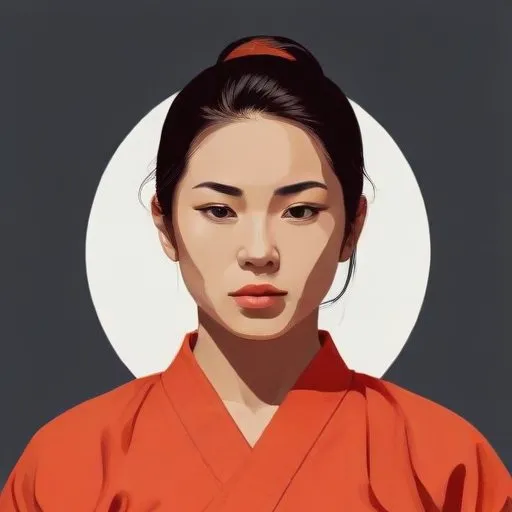
Kanō Jigorō

Kanō Jigorō

Kanō Jigorō was born on October 28th, 1860

Full Name: Kanō Jigorō
Place of Birth: Mikage, Japan
Occupation: Japanese Martial Artist
Date of Birth: 1860
Date of Death: 1938
Martial Art: Judo
Invention: Kodokan Judo
Olympic Sport: Judo introduction

Developer of Kodokan Judo, a martial art and Olympic sport that emphasizes grappling and throwing techniques, known for its emphasis on mutual welfare and benefit.

Written by: Lisa Chang Lisa Chang

Kan Jigor: The Visionary Behind Modern Judo and Education

Kan Jigor is renowned for founding judo, a Japanese martial art that has become an Olympic sport, and revolutionizing education through innovative pedagogical approaches. Born on December 10, 1860, in Mikage, Japan, Kan's legacy extends far beyond his martial art, as he played a pivotal role in shaping modern education and international sports.

Early Life and Career

Kan was born into a sake-brewing family and was an adopted son of Kan Jirsaku, a sake brewer. Despite this background, Kan's passion lay in education and martial arts. He studied at the Tokyo Imperial University, where he developed his interest in physical education and martial arts.

The Birth of Judo

In 1882, Kan founded the Kodokan Judo Institute, where he developed the principles of judo, a combination of jujutsu and other martial arts. His innovative approach focused on maximum efficiency with minimal effort (seiryoku zenyo) and mutual welfare and benefit (jita kyei). This philosophy not only transformed martial arts but also influenced education and sports globally.

Pedagogical Innovations

Education and Sports Leadership

Kan's impact on education was profound. He served as director of primary education for the Ministry of Education (1898-1901) and president of Tokyo Higher Normal School (1900-1920). He also founded Nada High School in Kobe, Japan, and played a key role in introducing judo and kendo into Japanese public school programs in the 1910s.

International Sports Pioneer

Kan was the first Asian member of the International Olympic Committee (IOC), serving from 1909 to 1938. He represented Japan at most Olympic Games between 1912 and 1936 and was a leading spokesman for Japan's bid for the 1940 Olympic Games.

Awards and Honors

Legacy

Kan Jigor's contributions to education, martial arts, and international sports have left an indelible mark on modern society. His commitment to innovation, mutual respect, and self-improvement continues to inspire generations of educators, athletes, and individuals worldwide.

Through his remarkable journey, Kan Jigor has shown that with vision, perseverance, and dedication, one can create a lasting impact on humanity.

Timeline
1860
Birth in Mikage, Japan
Kanō Jigorō was born on October 28, 1860, in Mikage, Japan. He would go on to become a renowned Japanese martial artist and founder of judo.
1882
Establishment of Kodokan Judo
Kanō founded the Kodokan Judo Institute in 1882, which became the premier institution for judo training.
1909
Introduction of Judo to the Olympics
Kanō played a key role in introducing judo to the Olympic Games in 1909, which helped popularize the sport worldwide.
1938
Death in Tokyo, Japan
Kanō Jigorō died on May 4, 1938, in Tokyo, Japan, at the age of 77. His legacy was marked by his contributions to the development of judo and its global popularity.
1920
Founding of the International Judo Federation
Kanō founded the International Judo Federation in 1920, which aimed to promote judo worldwide and establish standardized rules.
Kanō Jigorō

Kanō Jigorō Quiz

Kan? Jigor? is credited with developing which martial art and Olympic sport?

Score: 0/5
FAQ
What is the significance of Kanō Jigorō in the development of judo?
Kanō Jigorō was a Japanese martial artist and educator who founded the sport of judo in 1882. He is credited with creating a new, safer, and more efficient system of jujutsu that emphasized maximum efficiency with minimum effort.
What is the Maximum Efficiency with Minimum Effort principle in judo?
Kanō Jigorōs principle of Maximum Efficiency with Minimum Effort is a central concept in judo, which emphasizes using an opponents energy and momentum against them rather than relying on brute strength.
How did Kanō Jigorō popularize judo in Japan?
Kanō Jigorō introduced judo to the Tokyo Metropolitan Normal School in 1882, and it quickly spread to other schools and clubs. He also founded the Kodokan Judo Institute, which is still the headquarters of international judo.
What was Kanō Jigorōs role in the development of the Olympic Games?
Kanō Jigorō was a pioneer in introducing Asian sports to the Olympic Games. He successfully lobbied for the inclusion of judo in the 1964 Tokyo Olympics, and it has since become a core Olympic sport.
What is the Kodokan Judo Institute, and what is its significance?
The Kodokan Judo Institute is a renowned martial arts school founded by Kanō Jigorō in 1882. It is the central hub of judo training and education, and its instructors are considered among the best in the world.

Related People:

Gichin Funakoshi

Born in 1868

Founded the style of Shotokan karate, a highly influential and widely practiced form of martial arts, and is often referred to as the "Father of Modern Karate."

Gōgen Yamaguchi

Born in 1909

A pioneering karate master who developed the Kyokushin style, known for its full-contact sparring and intense physical conditioning.

Born in 1923

A legendary karate master who founded Kyokushin karate and was known for his intense full-contact sparring and rigorous training methods. He's also famous for his 100-man kumite, where he fought 100 opponents in a row.