


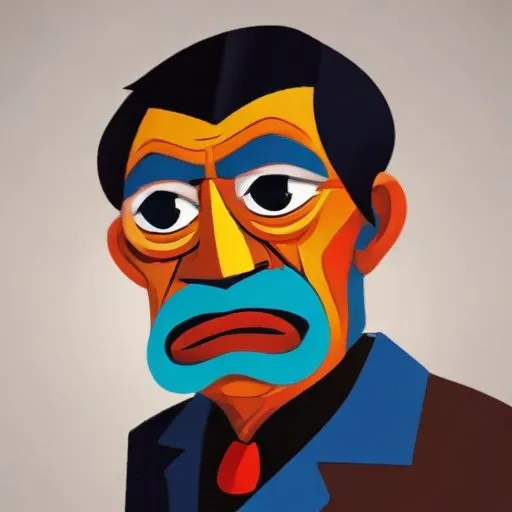
A pioneer of CoBrA, a European avant-garde movement, this artist's vibrant, expressive works blend abstract and figurative elements, often featuring bold colors and distorted forms.
Karel Appel, a Dutch painter, sculptor, and poet, is renowned for his vibrant and expressive works that challenged the status quo of modern art. As one of the founders of the avant-garde movement CoBrA, Appel's innovative style and techniques continue to inspire and influence artists to this day.
Born on April 25, 1921, in Amsterdam, the Netherlands, Christiaan Karel Appel was the son of a barber and a descendant of French Huguenots. As a child, he was affectionately called "Kik" and showed a keen interest in art, producing his first painting on canvas at the tender age of 14.
Appel's artistic journey began in earnest during the 1940s, when he studied at the Rijksakademie in Amsterdam. It was during this period that he met fellow artists Corneille and Constant, with whom he would form a lifelong friendship. His first exhibition in 1946 in Groningen marked the beginning of a prolific career that would take him to the forefront of modern art.
Appel's work was characterized by bold, vibrant colors and a unique blend of abstract and figurative elements. His sculptures, often created using assemblage techniques, added a new dimension to his oeuvre. Some of his most notable works include The Magic Flute, Knife in the Water, and Questioning Children, which continue to inspire and provoke audiences.
Appel's innovative style and techniques have had a profound impact on modern art, inspiring generations of artists, designers, and musicians. His work has been featured in museums worldwide, including the Museum of Modern Art (MoMA) in New York, the Stedelijk Museum in Amsterdam, and the Tate Modern in London.
Appel's influence extends beyond the art world, with his bold colors and abstract forms influencing fashion, music, and even architecture. His work has been name-checked by musicians, including The Clash and The Sex Pistols, and has inspired designers such as Pierre Cardin and Mary Quant.
Appel's artistic philosophy was rooted in the idea of challenging the norms and conventions of modern art. He believed in the power of art to provoke and inspire, and his work often incorporated elements of humor, irony, and social commentary.
Appel's involvement with CoBrA, an avant-garde movement that sought to break free from traditional artistic constraints, reflected his commitment to artistic freedom and experimentation.
Appel's life was marked by both turmoil and triumph. During World War II, he was forced to flee his home to avoid being conscripted into the German army, and later, he faced criticism and scandal following his first exhibition in Groningen.
Despite these challenges, Appel continued to push the boundaries of modern art, remaining true to his artistic vision and philosophy. He passed away on May 3, 2006, leaving behind a legacy of innovative and inspiring works that continue to captivate audiences worldwide.
Karel Appel's influence on modern art is immeasurable. His bold, innovative style has inspired countless artists, designers, and musicians, and his commitment to artistic freedom and experimentation continues to resonate with audiences today.
As a true maverick of modern art, Appel's legacy serves as a testament to the power of creativity and innovation, inspiring future generations to challenge the status quo and push the boundaries of what is possible.
Born in 1881
A pioneering artist who transformed modern art with pioneering Cubist works, creating a new visual language that continues to inspire and influence art, design, and culture.
Born in 1869
A pioneering artist who revolutionized modern art with bold, expressive, and colorful works that blurred the lines between painting and sculpture, creating a new language of form and color.
Born in 1914
A Danish painter and sculptor who merged abstract expressionism with figurative art, creating vibrant, emotive works that explored the human condition.
91 Years Old
A Bulgarian-French artist famous for creating large-scale, site-specific installations that often involve wrapping or surrounding iconic landmarks and natural wonders in fabric or other materials. These dramatic, ephemeral works of art spark curiosity and inspire wonder.
Born in 1901
A pioneer of Art Brut, creating unconventional, raw, and expressive works that celebrated the art of the outsider, challenging traditional notions of beauty and creativity.
Born in 1900
A Russian-French painter who blended abstract expressionism with lyrical abstraction, creating vibrant, emotive works that explored color and form. His paintings evoke a sense of musicality and spontaneity.
Born in 1919
A French artist celebrated for his bold, abstract paintings featuring large, dark fields of color, often on a monumental scale. His work explores the emotional power of darkness and light.
