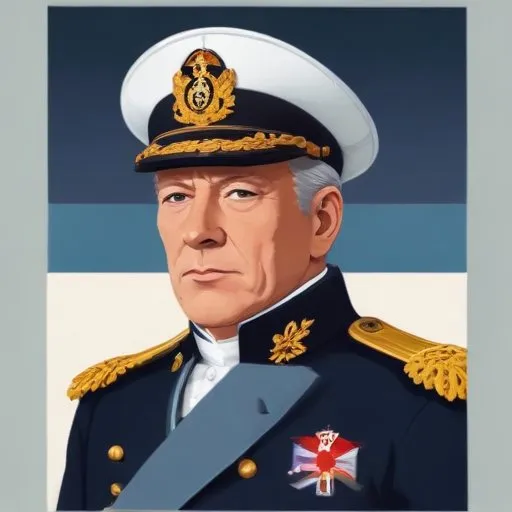
Karel Doorman: The Dutch Naval Officer Who Led the Fateful Battle of the Java Sea
A Heroic Stand Against Overwhelming Odds
Karel Doorman, a Dutch naval officer, is renowned for his bravery and leadership during World War II, particularly in the Battle of the Java Sea. He commanded the remnants of the American-British-Dutch-Australian (ABDA) naval strike forces against the Japanese invasion, ultimately sacrificing his life when his flagship, HNLMS De Ruyter, was torpedoed.
Early Life and Career
Born on April 23, 1889, in Utrecht, Netherlands, Doorman came from a military family and was raised as a Roman Catholic. He joined the Dutch Navy in 1906, along with his brother Lou, as midshipmen. By 1910, he was promoted to officer and stationed in the Dutch East Indies, where he served on various ships, including the cruiser Tromp and survey vessels HNLMS van Doorn and HNLMS Lombok.
Aviation Pioneer
In 1915, Doorman transferred to the Aviation Service, becoming one of the first naval officers to earn his pilot wings. Stationed at Soesterberg Air Base, he met Albert Plesman, an observer who later became a pilot. Doorman was awarded a civilian pilot's license in 1915 and a naval pilot's license in 1916. He served as an instructor at Soesterberg Air Base and later commanded the Naval Air Base De Kooy in Den Helder.
Rise to Prominence
During the interwar period, Doorman's reputation as an exceptional naval officer and aviator grew. He commanded various ships, including the cruiser HNLMS Sumatra, and played a crucial role in shaping the Dutch Navy's aviation capabilities.
The Fateful Battle of the Java Sea
On February 27, 1942, Doorman's flagship, HNLMS De Ruyter, led the ABDA naval strike forces against the Japanese invasion of Java. Despite being outnumbered and outgunned, Doorman's forces engaged the enemy in a fierce battle. When his ship was torpedoed, Doorman chose to go down with the vessel, refusing to abandon his crew.
Legacy and Honors
Doorman's bravery and sacrifice have been recognized with several honors, including the honorary title of Rear Admiral and posthumous awards, such as the Knight of the Military Order of William and the Bronze Cross.
Personal Milestones and Key Life Events
- 23 April 1889: Born in Utrecht, Netherlands
- 1906: Commissioned as midshipman in the Dutch Navy
- 1915: Transferred to the Aviation Service and earned pilot wings
- 1917-1921: Instructor at Soesterberg Air Base and Naval Air Base De Kooy
- 1942: Led the ABDA naval strike forces in the Battle of the Java Sea and died in action
Influence on Modern Society
Doorman's heroism and leadership during the Battle of the Java Sea have inspired generations of naval officers and aviators. His legacy serves as a testament to the bravery and sacrifice of those who have served in the armed forces.
Historical Context and Legacy
Doorman's actions during World War II are a significant part of the Netherlands' struggle against Nazi occupation and the Japanese invasion of Southeast Asia. His bravery and sacrifice have become an integral part of Dutch military history and a symbol of resistance against oppression.
FAQ
What was Karel Doormans role in the Dutch Navy?
Karel Doorman was a prominent Dutch admiral who played a significant role in the Dutch Navy during World War II. He commanded the combined American-British-Dutch-Australian Command, known as ABDACOM, during the early years of the war.
What were Karel Doormans military achievements?
Karel Doorman was a highly decorated naval officer who played a key role in several important battles during World War II, including the Battle of the Java Sea and the Battle of Sunda Strait.
What was Karel Doormans strategy during the Battle of the Java Sea?
Karel Doormans strategy during the Battle of the Java Sea was to attack the Japanese naval forces with a combined fleet of Dutch, American, British, and Australian ships. Although the battle was ultimately lost, Doormans bravery and leadership were widely admired.
How did Karel Doormans death affect the Dutch people?
Karel Doormans death during the Battle of Sunda Strait was a significant blow to the Dutch people and a symbol of the countrys losses during World War II. He is remembered as a national hero and a symbol of Dutch resistance against the German occupation.
What was Karel Doormans legacy in Dutch history?
Karel Doormans legacy in Dutch history is as a brave and courageous naval officer who fought against overwhelming odds to defend his country. He is remembered as a symbol of Dutch resistance and a hero of World War II.