


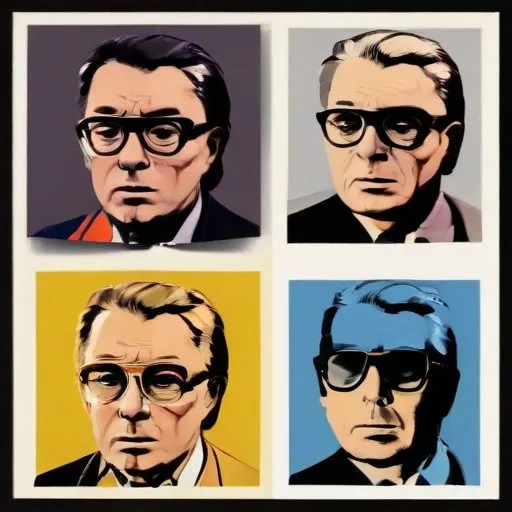
A pioneering filmmaker who made significant contributions to the German film industry, particularly in the 1920s and 1930s, known for his work on silent films and early talkies.
Karl Anton, a renowned Bohemian-born German film director, screenwriter, and producer, is best known for his lyrical dramas that captivated audiences worldwide. His distinctive storytelling style, which blended poetry and realism, earned him a reputation as a pioneer of Czech lyrical cinema.
Born on October 25, 1898, in Prague, Karl Anton grew up in a family of intellectuals. His father, Wilhelm Anton, a physician, had a significant influence on his early life. After his father's untimely death, Anton abandoned his medical studies to pursue a career in the arts.
Anton's foray into the world of cinema began as a stage actor and director in Vienna, Linz, and Prague. During World War I, he collaborated with friends Karel Lama and Otto Heller to create amateur documentaries, which laid the foundation for his future success.
In 1921, Anton directed his first feature film, Gypsies, a lyrical drama that showcased his unique storytelling style. This debut marked the beginning of his illustrious career, which spanned over five decades.
Anton's early success led to the establishment of his own production companies, Antonfilm (1923-1930) and Sonorfilm (1930-1932). These ventures enabled him to produce and direct films that reflected his artistic vision, earning him recognition in the Czech film industry.
The international success of Tonka of the Gallows (1930) catapulted Anton to global fame. This film's critical acclaim led to an offer from Paramount Pictures, and Anton worked in Paris from 1932 to 1935, directing films that further cemented his reputation as a master of lyrical cinema.
After leaving Paramount, Anton moved to Germany in 1935, where he continued to direct films until his passing on April 12, 1979, in Berlin. Throughout his career, Anton remained true to his artistic vision, creating a body of work that continues to inspire filmmakers and audiences alike.
Karl Anton's contributions to Czech lyrical cinema have left an indelible mark on the world of filmmaking. His legacy serves as a testament to the power of artistic vision and dedication, inspiring future generations of filmmakers and cinephiles alike.
Born in 1890
Pioneering filmmaker behind iconic sci-fi and noir classics, influencing generations of directors with his visual style and storytelling. 82
Born in 1906
Academy Award-winning filmmaker behind iconic movies like "Some Like It Hot" and "Sunset Boulevard", known for his witty dialogue and genre-bending storytelling.
Born in 1905
Austrian-American actor, director, and producer who helmed iconic films like "Laura" and "Anatomy of a Murder," known for his bold, provocative storytelling and innovative cinematography.
Born in 1899
Master of suspense, renowned for crafting iconic thrillers that blended psychological complexity with cinematic innovation, leaving an indelible mark on the film industry.
Born in 1902
A renowned German actor, celebrated for his versatility in playing a wide range of roles, from comedy to drama, in numerous films and stage productions.
Born in 1901
A glamorous and androgynous Hollywood icon, known for her sultry voice, striking features, and trailblazing gender-bending style on screen. She mesmerized audiences with her unique blend of European sophistication and American charm.
Born in 1905
A legendary actress who captivated audiences with her iconic performances on the silver screen, earning her the title of Hollywood's first female superstar.
Born in 1899
Iconic leading man of classic Hollywood cinema, starring in timeless films like Casablanca and The African Queen, embodying a tough, charismatic on-screen presence.
