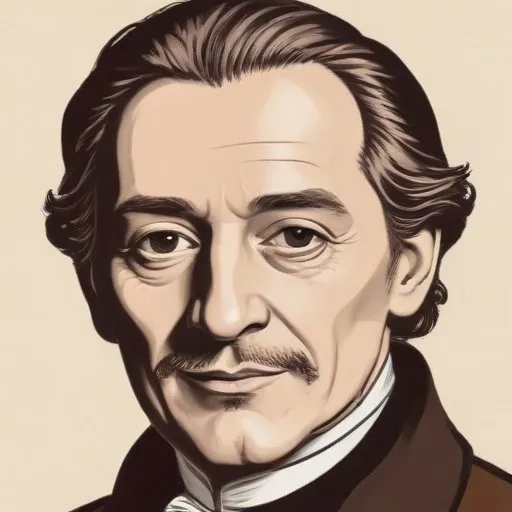
Karl Friedrich Curschmann: The Pioneer of Paleobotany
A Life Dedicated to Unveiling the Secrets of Ancient Plants
Karl Friedrich Curschmann, a German paleobotanist, is renowned for his groundbreaking research on fossilized plants, which revolutionized our understanding of the Earth's ancient flora. His meticulous work on the evolutionary history of plants has left an indelible mark on the field of paleobotany, earning him the title of a pioneer in his domain.
Early Life and Education
Born on November 14, 1804, in Magdeburg, Prussia (now part of Germany), Curschmann's fascination with the natural world began at a young age. He pursued his passion for botany at the University of Berlin, where he earned his Ph.D. in 1827. Under the guidance of renowned botanist, Karl Sigismund Kunth, Curschmann developed his skills in plant classification and description.
Contributions to Paleobotany
Curschmann's most significant contribution to paleobotany was his work on the classification and description of fossilized plants. He pioneered the use of microscopes to study the minute details of plant fossils, which enabled him to identify and describe new species. His research focused on the Carboniferous and Permian periods, during which he discovered numerous plant fossils that provided valuable insights into the evolution of plant life on Earth.
Major Works and Publications
Curschmann's most notable work is his multi-volume publication, "Die fossilen Pflanzen Westfalens" (Fossil Plants of Westphalia), which showcases his extensive research on the fossilized flora of Westphalia, a region in Germany. His other significant publications include "Über die fossilen Pflanzen der Steinkohlenformation" (On the Fossil Plants of the Coal Measures) and "Die Vegetationsverhältnisse des Oberkarbons und Perthrons" (The Vegetation Conditions of the Upper Carboniferous and Permian).
Influence on Modern Paleobotany
Curschmann's work laid the foundation for modern paleobotany, influencing generations of scientists to come. His research on fossilized plants has contributed significantly to our understanding of the Earth's history, climate change, and the evolution of life on our planet. His legacy continues to inspire paleobotanists, botanists, and geologists to explore the secrets of ancient plants.
Awards and Honors
Curschmann's contributions to paleobotany earned him several prestigious awards and honors. He was elected a member of the German Academy of Natural Scientists Leopoldina in 1842 and received the Royal Prussian Order of the Crown, 4th Class, in 1854.
Legacy and Impact
Karl Friedrich Curschmann's pioneering work in paleobotany has left a lasting impact on our understanding of the Earth's ancient history. His research has not only expanded our knowledge of fossilized plants but has also paved the way for future generations of scientists to explore the mysteries of the natural world. As we continue to unravel the secrets of ancient plants, we are reminded of Curschmann's groundbreaking contributions to the field of paleobotany.
FAQ
What kind of music did Karl Friedrich Curschmann compose?
Karl Friedrich Curschmann was a German composer and singer who wrote primarily liturgical music, including chorales and motets.
Who is Karl Friedrich Curschmann and what is his significance in music?
Karl Friedrich Curschmann was a German composer and singer who made significant contributions to the development of liturgical music in the 19th century. He is remembered for his beautiful and expressive compositions.
What are some of Karl Friedrich Curschmanns notable works?
Karl Friedrich Curschmann wrote several notable works, including Die Deutsche Messe and Die Hymnen des Kirchenjahres. His music is known for its beauty and expressiveness.
How does Karl Friedrich Curschmanns music reflect the spirit of his time?
Karl Friedrich Curschmanns music reflects the romantic and liturgical sentiments of 19th-century Germany, often expressing a sense of piety and devotion.
What is Karl Friedrich Curschmanns legacy in music?
Karl Friedrich Curschmanns music had a significant impact on the development of liturgical music in Germany, influencing future generations of composers and musicians. He is remembered as a key figure in the romantic movement in music.