


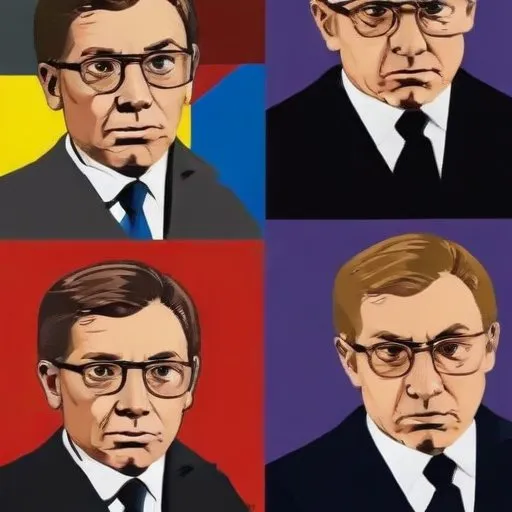
A Swedish lawyer and politician who served as the 11th Prime Minister of Sweden, known for his progressive reforms and efforts to establish universal suffrage. He played a key role in shaping Sweden's modern political landscape.
Karl Staaff, the Swedish liberal politician and lawyer, made history by becoming the country's first liberal prime minister in 1905. He served two non-consecutive terms, from 1905 to 1906 and again from 1911 to 1914, leaving an indelible mark on Sweden's political landscape.
Born on January 21, 1860, in Stockholm, Sweden, Staaff was the son of Albert Wilhelm Staaff and Fredrika Wilhelmina Mina Schne. He embarked on a career in law, eventually becoming a member of the Riksdag's Second Chamber (Parliament's lower house) in 1897, a position he held until 1915.
In 1905, Staaff's political career took a significant turn when he became a Minister without portfolio in Christian Lundeberg's cabinet. Later that year, he was appointed a delegate in Karlstad to negotiate the dissolution of the union between Norway and Sweden, showcasing his diplomatic prowess. This experience laid the foundation for his future prime ministerial roles.
As the Liberal Party's Prime Minister, Staaff championed universal suffrage for men in 1905, although his proposal for first-past-the-post voting was eventually scrapped in favor of a proportional system. His efforts, however, paved the way for Nils Edén, his successor, to introduce universal suffrage, including for women, in 1918-1919.
Staaff's progressive policies and advocacy for social change sparked intense conflict with the conservative Swedish establishment. A smear campaign was launched against him, portraying him as a hated figure in the conservative, promonarchic, and antidemocratic establishment.
Despite facing opposition, Staaff's tenure saw significant reforms, including the extension of maternity leave to six weeks in 1912 and the introduction of a tax-financed pension scheme in 1913. His commitment to social welfare and democracy has left a lasting impact on Swedish politics.
Staaff's personal relationships played a significant role in his political career. His working relationship with Hjalmar Hammarskjöld, whom he appointed ambassador to Copenhagen, was particularly noteworthy. Hammarskjöld would later succeed Staaff as prime minister in 1914.
Staaff's dedication to his craft and his country ultimately took a toll on his health. He passed away on October 4, 1915, leaving behind a legacy as Sweden's first liberal prime minister and a pioneer in the fight for democracy and social reform.
Staaff's contributions to Swedish politics and society have been recognized through various honors and awards. His commitment to democracy and social welfare continues to inspire generations of politicians and citizens alike.
Born in 1860
A Swedish journalist and politician who served as Prime Minister of Sweden and was awarded the Nobel Peace Prize for his efforts to promote international cooperation and peace. He played a key role in establishing the League of Nations.
