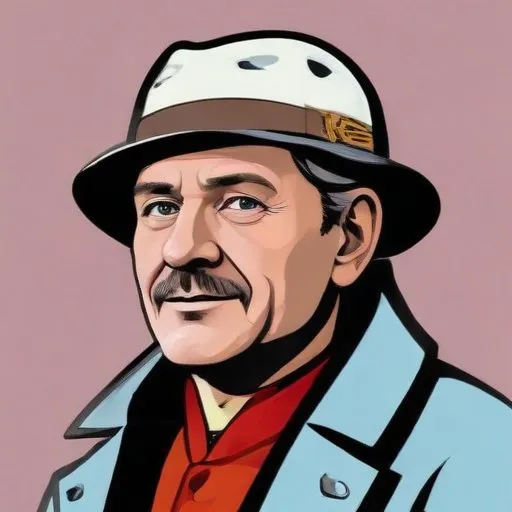
Karl von Ditmar: The Pioneering Baltic German Geologist and Explorer
A Life of Discovery and Contribution
Karl von Ditmar, a Baltic German geologist and explorer, is renowned for his groundbreaking contributions to the scientific understanding of Kamchatka, a region in eastern Russia. Through his extensive travels and research, Ditmar shed light on the geological wonders of Kamchatka, leaving an indelible mark on the field of geology.
Early Life and Education
Born on September 8, 1822, in Vändra, Estonia, Ditmar was the son of jurist Woldemar Friedrich Carl Ditmar and Charlotte Ditmar, née Stackelberg. He studied at the University of Tartu from 1841 to 1847, where he befriended notable figures such as Leopold von Schrenck and Karl Maximovich. Initially, Ditmar pursued agricultural science, but his interests soon shifted to mineralogy and geology under the guidance of Otto Wilhelm Hermann von Abich and Hermann Martin Asmuss.
Travels and Expeditions
After completing his master's degree, Ditmar embarked on a journey across Europe in 1846-1848, attending lectures at the Freiberg Mining Academy in present-day Germany. In 1848, he returned to Russia and Saint Petersburg, where he formed a crucial connection with Alexander von Middendorff at the Imperial Academy of Sciences.
The Kamchatka Expedition
Ditmar's most notable achievement was his voyage to Kamchatka, which lasted from 1851 to 1854. During this period, he conducted extensive scientific investigations, producing valuable insights into the region's geology. His account of the travels, published in 1890, remains a vital resource for scientists studying Kamchatka.
The Amur River Survey
In 1855-1856, Ditmar undertook a geographical survey trip along the Amur River, further expanding our understanding of the region's geography.
Personal Life and Legacy
In 1856, Ditmar settled in his estate at Kru, Livonia, and married Wilhelmina Stackelberg in 1858. The couple had four daughters. Ditmar's contributions to the field of geology have left a lasting legacy, with his work continuing to inspire scientific inquiry and exploration.
- Reisen und Aufenthalt in Kamtschatka in den Jahren 1851-1855 (Travel and Stay in Kamchatka in the Years 1851-1855)
- Beiträge zur Kenntniss des Russischen Reiches und der angrenzenden Länder Asiens (Contributions to the Knowledge of the Russian Empire and Neighboring Countries of Asia)
Through his remarkable travels and research, Karl von Ditmar has cemented his place as a pioneering figure in the history of geology, leaving an enduring impact on our understanding of the natural world.
FAQ
What were Karl von Ditmars contributions to geology?
Karl von Ditmar made significant contributions to the field of geology, particularly in the study of volcanic rocks and geological formations. His work laid the foundation for future research in the field.
Where did Karl von Ditmar conduct his geological expeditions?
Ditmar conducted his geological expeditions in the Caucasus region, Siberia, and other parts of Russia, where he studied the local geology and made important discoveries.
How did Karl von Ditmars work influence the development of geology?
Ditmars work influenced the development of geology by providing new insights into the formation of volcanic rocks and geological structures. His research laid the groundwork for future geologists to build upon.
What was Karl von Ditmars significance in the history of geology?
Karl von Ditmar is significant in the history of geology because he was one of the first scientists to study the geology of the Caucasus region and Siberia. His work opened up new areas of research in the field.
What awards did Karl von Ditmar receive for his work?
Ditmar received several awards and honors for his work, including the Constantin Medal from the Russian Geographical Society. His contributions to geology were widely recognized and respected.