


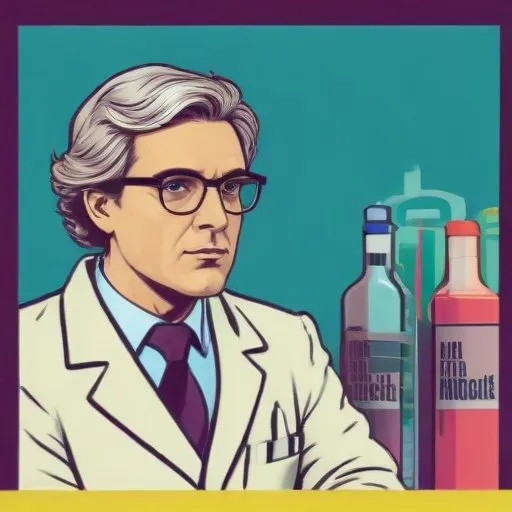
A renowned expert in the field of microbiology, particularly in the study of trypanosomes, a type of parasitic protozoa that causes sleeping sickness. His work has led to significant advances in understanding and combating tropical diseases.
Professor Keith Gull is a renowned British molecular microbiologist, recognized for his groundbreaking research on Trypanosoma brucei and Trypanosoma cruzi, two parasitic protozoa that cause devastating diseases in humans and animals. As a Wellcome Trust Principal Research Fellow and Professor of Molecular Microbiology at the Sir William Dunn School of Pathology, University of Oxford, Gull has made significant contributions to the field of microbiology, inspiring generations of scientists and researchers.
Gull was born on May 29, 1948, and educated at Eston Grammar School. He later attended King's College London, where he earned a first-class Bachelor of Science degree in 1969, followed by a Ph.D. in 1973. This solid academic foundation laid the groundwork for his future success in the field of molecular microbiology.
After completing his Ph.D., Gull began his academic career as a lecturer at the University of Kent. He later moved to the University of Manchester, where he played a pivotal role in developing the School of Biological Sciences as Head of Biochemistry and Research Dean. In 2002, he joined the University of Oxford, where he has continued to advance our understanding of microbiology and disease.
Gull's research has focused on the molecular biology of trypanosomes, with a particular emphasis on the cell biology of Trypanosoma brucei and Trypanosoma cruzi. His work has shed light on the complex mechanisms underlying these parasitic infections, informing the development of novel therapeutic strategies. According to Google Scholar and Scopus, his most cited scientific papers are on these topics.
Gull has received numerous awards and honors for his contributions to microbiology. He was Chairman of the Biochemical Society from 1999 to 2002 and is a trustee of Cancer Research UK. His commitment to advancing our understanding of microbiology has earned him a reputation as a leading authority in the field.
In 2015, Gull faced criticism for his decision to spend £15,000 on a college snowdrop garden amidst budget cuts. He defended the decision, arguing that the snowdrops would be "fantastic" but apologized for the way the decision was made. Additionally, he was accused of exploiting college finances by claiming £500 in Christmas presents and gifts between November and December 2015, and £185 on a desk lamp in November 2017. Gull defended his Christmas expenses claims but not the desk lamp claim.
Throughout his illustrious career, Gull has inspired a new generation of microbiologists and researchers. His work has contributed significantly to our understanding of microbiology and disease, informing the development of novel therapeutic strategies. As a testament to his dedication and commitment, he was appointed Principal of St Edmund Hall, Oxford, a position he held from 2009 to 2018.
In conclusion, Professor Keith Gull is a pioneer in the field of molecular microbiology, recognized for his groundbreaking research and contributions to our understanding of microbiology and disease. His commitment to advancing our knowledge in this field has earned him a reputation as a leading authority, and his legacy will continue to inspire future generations of scientists and researchers.
77 Years Old
A renowned geneticist and biologist who discovered the cyclin-dependent kinases, a crucial component of cell cycle regulation, earning a Nobel Prize in Physiology or Medicine in 2001.
83 Years Old
A British biochemist and academic who discovered the cyclin-dependent kinases, a crucial component in cell division, earning him a Nobel Prize in Physiology or Medicine in 2001.
85 Years Old
A British chemist and academic who won the Nobel Prize in Chemistry in 1997 for his work on the mechanism of ATP synthase, a crucial enzyme that generates energy in cells.
Born in 1913
The 37th President of the United States, a polarizing figure who led the country through significant domestic and foreign policy changes, infamous for his involvement in the Watergate scandal.
Born in 1920
A pioneering biologist who applied game theory to evolution, shedding light on the strategic nature of natural selection and its role in shaping species' traits.
Born in 1916
Pioneering scientist who discovered the structure of DNA, revolutionizing our understanding of genetics and life itself.
98 Years Old
Discovered the structure of DNA, revolutionizing our understanding of genetics and earning a Nobel Prize. Pioneering work in molecular biology has far-reaching implications for medicine and beyond.
