


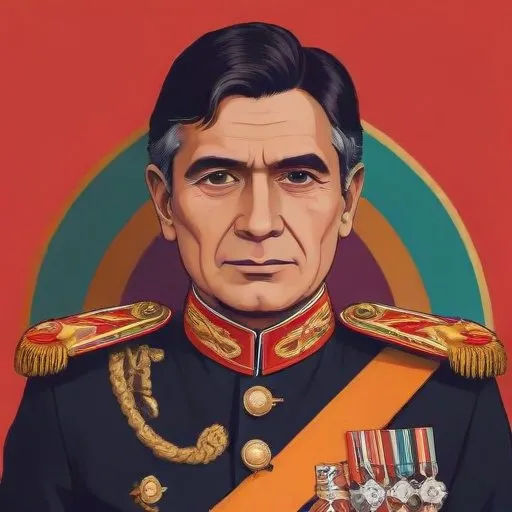
A British Army officer who served as Governor of Gibraltar from 1947 to 1952, known for his military leadership during World War II and post-war administration.
Kenneth Anderson is best known for his exemplary leadership as the commander of the British First Army during Operation Torch, the Allied invasion of North Africa, and the subsequent Tunisian campaign. Under his command, the Allies captured almost 250,000 Axis soldiers, a feat that would go on to shape the course of the war.
Kenneth Anderson was born on December 25, 1891, in Madras, British India, to Arthur Robert Anderson, a Scottish railway engineer, and Charlotte Gertrude Isabella Duffy Fraser. He was sent to England, where he received his education at Charterhouse School and the Royal Military College, Sandhurst.
Anderson was commissioned as a second lieutenant in the Seaforth Highlanders, a line infantry regiment of the British Army, on September 19, 1911. He was promoted to lieutenant on November 29, 1913, and served in India until the outbreak of World War I. During the war, he saw action on the Western Front, where he was promoted to acting captain on April 10, 1915, and captain on October 1, 1915.
In 1939, Anderson was appointed as the commander of the 11th African Division, and in 1941, he became the commander of the Eighth Army's XII Corps. His leadership skills and strategic thinking earned him the respect of his peers and superiors, including General Dwight D. Eisenhower, who described him as "blunt, at times to the point of rudeness."
In 1942, Anderson was appointed as the commander of the British First Army, which played a crucial role in Operation Torch, the Allied invasion of North Africa. Under his leadership, the Allies captured Tunis and Axis forces surrendered, leading to the capture of almost 250,000 soldiers. This campaign marked a significant turning point in the war.
Kenneth Anderson's contributions to World War II have often been overshadowed by those of his contemporaries. However, his leadership and strategic thinking played a vital role in shaping the course of the war. His legacy serves as a testament to the importance of competent and effective leadership in times of crisis.
Anderson was awarded the Knight Grand Cross of the Order of the Bath, the Knight Commander of the Order of the British Empire, and the Distinguished Service Order for his services during World War II. He was also mentioned in dispatches four times.
Anderson was known to be a reserved character who did not court popularity with his superiors or the public. Despite this, he was respected by his peers and subordinates for his leadership skills and tactical thinking.
Born in 1884
A British field marshal who played a crucial role in World War II, particularly in North Africa and the Middle East, and is remembered for his leadership and strategic decisions during the war.
