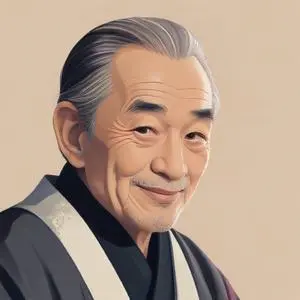
Kenzaburō Ōe: The Nobel Laureate Who Confronted Japan's Dark Past
Confronting the Human Predicament
Kenzaburō Ōe, the renowned Japanese writer, is known for his thought-provoking novels, short stories, and essays that delve into the complexities of human existence, societal norms, and the darker aspects of Japan's history. Awarded the 1994 Nobel Prize in Literature, Ōe's works are a testament to his unwavering commitment to exploring the human condition, often by confronting the painful realities of his country's past.
Early Life and Influences
Born on January 31, 1935, in Ōse, a village in Ehime Prefecture, Shikoku, Ōe was the third of seven children. His childhood was marked by the oral traditions of his grandmother, a skilled storyteller who regaled him with myths, folklore, and the region's history, including the two uprisings before and after the Meiji Restoration. This early exposure to storytelling had a profound impact on his writing style and thematic concerns.
Education and Formative Years
Ōe's father, Kōtarō Ōe, owned a barkstripping business, which supplied paper currency. However, his father's death in 1944 during the Pacific War had a profound effect on the young Ōe. His mother, Kōseki, played a pivotal role in his education, introducing him to Western literature, including
Mark Twain's
The Adventures of Huckleberry Finn and
Selma Lagerlöf's
The Wonderful Adventures of Nils. These works instilled in him a love for literature and a critical perspective on the world.
Path to Literary Prominence
Ōe attended the University of Tokyo, where he studied French literature under the guidance of Professor Kazuo Watanabe, a specialist on François Rabelais. This period marked the beginning of his literary career, as he began writing critically acclaimed works that probed the depths of human existence, nuclear power, social nonconformism, and existentialism.
- A Personal Matter (1964), a novel that explores the complexities of responsibility and moral obligation
- The Silent Cry (1967), a semi-autobiographical novel that delves into Japan's post-war identity crisis
- Rouse Up, O Young Men of the Factory! (1983), a series of essays that critiqued Japan's nuclear energy policy
Philosophical Contributions and Beliefs
Ōe's works are characterized by a deep sense of existential inquiry, often questioning the notion of progress and modernity. Through his writing, he has contributed significantly to the discourse on social nonconformism, emphasizing the importance of individual freedom and critiques of established power structures.
Influence on Modern Society
Ōe's literary legacy extends beyond the realm of Japanese literature, influencing contemporary thought and activism worldwide. His works have inspired generations of writers, thinkers, and social activists, encouraging them to confront the darker aspects of human history and advocate for social change.
Awards and Honors
- 1994 Nobel Prize in Literature
- 1983 Noma Literary Prize for Rouse Up, O Young Men of the Factory!
- 1967 Tanizaki Prize for The Silent Cry
Legacy and Historical Context
Kenzaburō Ōe's literary journey is a testament to his unwavering commitment to exploring the complexities of human existence. His works serve as a reflection of Japan's tumultuous past, confronting the nation's dark history and encouraging critical introspection. Through his writing, Ōe has left an indelible mark on Japanese literature, cementing his position as one of the most important writers of the 20th century.
FAQ
What inspired Kenzaburō Ōes writing style?
Kenzaburō Ōes writing style was heavily influenced by his experiences growing up in rural Japan and his interest in existentialism and pacifism. His works often explore themes of identity, morality, and the human condition.
What is Kenzaburō Ōes most famous novel?
Kenzaburō Ōes most famous novel is A Personal Matter, which won the Nobel Prize in Literature in 1994. The novel explores the themes of identity, morality, and the human condition in post-war Japan.
What is Kenzaburō Ōes stance on nuclear disarmament?
Kenzaburō Ōe is a strong advocate for nuclear disarmament and has been involved in the anti-nuclear movement in Japan. He has spoken out against the use of nuclear weapons and has called for international cooperation to achieve disarmament.
What is Kenzaburō Ōes relationship with his son, Hikari Ōe?
Kenzaburō Ōes son, Hikari Ōe, is a well-known musician and composer. Kenzaburō Ōe has written about his sons intellectual disability and has been involved in advocacy efforts for people with disabilities.
What awards has Kenzaburō Ōe won?
Kenzaburō Ōe has won numerous awards for his writing, including the Nobel Prize in Literature in 1994 and the Franz Kafka Prize in 2005. He has also been awarded the Order of Culture, Japans highest cultural honor.