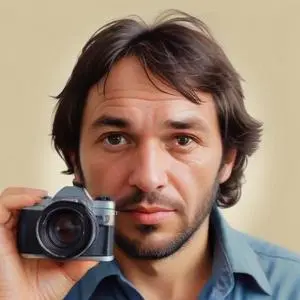
Kevin Carter: The Pulitzer Prize-Winning Photojournalist Who Captured the Darkest Realities
A Haunting Legacy of Visual Testimony
Kevin Carter, a South African photojournalist, is best known for his heart-wrenching and provocative images that exposed the brutal realities of apartheid and human suffering. His 1994 Pulitzer Prize-winning photograph, depicting a vulture waiting to scavenge the body of a starving Sudanese child, is an iconic representation of the devastating famine that ravaged Sudan in 1993.
Early Life and the Roots of Activism
Born on September 13, 1960, in Johannesburg, South Africa, Carter grew up in a middle-class, whites-only neighborhood. As a child, he witnessed police raids to arrest black people living illegally in the area, sparking a sense of moral outrage that would shape his future as a journalist. Carter's Catholic, liberal family, though well-intentioned, seemed complacent in the face of apartheid, which only fueled his determination to challenge the status quo.
A Turbulent Journey to Becoming a Photojournalist
After dropping out of his pharmacy studies, Carter was drafted into the army. To escape the infantry, he joined the Air Force, where he served for four years. A pivotal incident in 1980, in which he defended a black mess-hall waiter from insults, resulted in him being badly beaten by fellow servicemen. Carter went absent without leave, attempting to start a new life as a radio disc jockey named "David." However, this proved unsuccessful, and he eventually returned to serve out the rest of his military service.
The Birth of a Photojournalist
The 1983 Church Street bombing in Pretoria catalyzed Carter's decision to become a news photographer and journalist. He started working as a weekend sports photographer in 1983 and later moved to the Johannesburg Star in 1984, where he exposed the brutality of apartheid. Carter was the first to photograph a public "necklacing" execution by black Africans in South Africa in the mid-1980s, an experience that left him appalled but ultimately galvanized his commitment to documenting the truth.
Controversy and Criticism
Carter's unflinching portrayal of human suffering led to controversy and criticism. Some accused him of crossing the line between observer and participant, citing his proximity to his subjects and the perceived sensationalism of his work. Carter's response was unequivocal: "I was appalled at what they were doing. But then people started talking about those pictures... then I felt that maybe my actions hadn't been at all bad."
Awards and Recognition
In 1994, Carter received the Pulitzer Prize for Feature Photography for his Sudanese famine photograph. This distinction not only validated his work but also brought international attention to the crisis.
A Tragic Demise and Lasting Impact
On July 27, 1994, at the age of 33, Kevin Carter died by suicide, leaving behind a legacy of powerful images that continue to haunt and inspire. His story, as depicted in the book "The Bang-Bang Club" (2000), serves as a testament to the unrelenting passion and sacrifice required to expose the darkest realities of humanity.
Legacy and Influence
Carter's work has influenced generations of photojournalists, inspiring them to push the boundaries of visual storytelling. His images have become synonymous with the struggle against apartheid and the fight against human suffering. As we reflect on his life and work, we are reminded of the power of photography to awaken our consciences and spark positive change.
Quotes and Memorable Sayings
"I was appalled at what they were doing. But then people started talking about those pictures... then I felt that maybe my actions hadn't been at all bad."
"I'm a white, liberal, middle-class South African, and I'm saying I'm guilty. I'm part of the problem."
A Visual Timeline of Kevin Carter's Life and Work
- 1960: Born in Johannesburg, South Africa
- 1980: Witnesses a black mess-hall waiter being insulted and defends him
- 1983: Church Street bombing in Pretoria inspires him to become a news photographer and journalist
- 1984: Starts working for the Johannesburg Star, exposing apartheid brutality
- Mid-1980s: Photographs public "necklacing" execution by black Africans in South Africa
- 1993: Captures the iconic image of a vulture waiting to scavenge a starving Sudanese child's body
- 1994: Receives the Pulitzer Prize for Feature Photography
- July 27, 1994: Dies by suicide at the age of 33
Final Thoughts
Kevin Carter's life and work serve as a powerful reminder of the importance of bearing witness to humanity's darkest moments. His courage, passion, and sacrifice have left an indelible mark on the world of photojournalism and beyond. As we reflect on his legacy, we are compelled to confront the harsh realities he exposed, and to continue the fight against suffering and injustice.