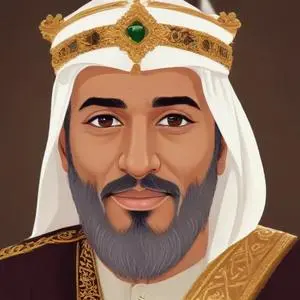
Khalid of Saudi Arabia

Khalid of Saudi Arabia

Khalid of Saudi Arabia was born on February 13th, 1913

Full Name: Khalid bin Abdulaziz Al Saud
Place of Birth: Riyadh, Saudi Arabia
Profession: King of Saudi Arabia
Known For: Modernization of Saudi Arabia
Reign: 1975-1982
Predecessor: Faisal of Saudi Arabia
Successor: Fahd of Saudi Arabia
Death: June 13, 1982

The fourth King of Saudi Arabia, ruling from 1975 to 1982, known for his efforts to modernize and diversify the country's economy, while maintaining its traditional Islamic values.

Written by: Emma Thompson Emma Thompson

Khalid of Saudi Arabia: The King Who Shaped a Nation

Khalid bin Abdulaziz Al Saud, the fifth son of King Abdulaziz, is renowned for his transformative reign as King and Prime Minister of Saudi Arabia from 1975 to 1982. During his tenure, he oversaw unprecedented economic growth, navigated regional politics, and strengthened international relations, earning him a permanent place in the annals of Saudi Arabian history.

Early Life and Education

Khalid was born on February 13, 1913, in Qasr Al Hukm, Riyadh, to King Abdulaziz and Al Jawhara bint Musaed Al Saud. As a member of the influential Al Jiluwi clan, Khalid's family ties played a significant role in shaping his future.

Rise to Power

Khalid's accession to the throne was a gradual one. He served as Crown Prince of Saudi Arabia from 1965 to 1975, assisting his half-brother King Faisal in his duties as foreign minister. He also held the position of viceroy of the Hejaz region in the 1930s and was appointed deputy prime minister in 1962. Following King Faisal's assassination in 1975, Khalid ascended to the throne.

Reign and Legacy

Khalid's reign was marked by significant economic growth, thanks to the oil boom of the 1970s. He invested heavily in infrastructure development, modernizing Saudi Arabia's transportation, education, and healthcare systems. His leadership also saw the country play a more prominent role in regional politics, particularly during the 1979 Iran-Iraq War.

One of the most dramatic events of his reign was the 1979 seizure of the Grand Mosque of Mecca by a group of civilians. Although the attempt was ultimately foiled, it led to the introduction of stricter religious policies in Saudi Arabia.

Influence on Modern Society

Khalid's reign had a profound impact on modern Saudi Arabian society. His economic reforms and investments in education and healthcare helped create a more prosperous and educated population. His leadership also played a crucial role in shaping the country's foreign policy, fostering stronger ties with Western nations and regional allies.

Personal Milestones and Key Life Events

Philosophical Contributions and Beliefs

Khalid's leadership was guided by a strong sense of duty to his country and his people. He was committed to modernizing Saudi Arabia while maintaining its cultural heritage and Islamic traditions. His tenure was marked by a focus on economic development, social reform, and regional cooperation.

Khalid's legacy is a testament to his vision and leadership. He will be remembered as a king who transformed Saudi Arabia, navigating the complexities of regional politics and international relations while remaining true to his country's values and traditions.

Timeline
1913
Born in Riyadh, Saudi Arabia
Khalid of Saudi Arabia was born in Riyadh, Saudi Arabia. He would go on to become the King of Saudi Arabia.
1965
Became Crown Prince of Saudi Arabia
Khalid became the Crown Prince of Saudi Arabia, next in line to the throne.
1975
Ascended to the throne after King Faisals assassination
Khalid ascended to the throne after the assassination of King Faisal, becoming the fourth King of Saudi Arabia.
1979
Played a key role in the Grand Mosque seizure
Khalid played a key role in the Grand Mosque seizure, a crisis that led to the deaths of hundreds of pilgrims and militants.
1982
Died in Riyadh, Saudi Arabia
Khalid of Saudi Arabia passed away in Riyadh, Saudi Arabia, leaving behind a legacy of leadership and reform.
Khalid of Saudi Arabia

Khalid of Saudi Arabia Quiz

Khalid of Saudi Arabia's economic efforts focused on

Score: 0/5
FAQ
What were the key policies of King Khalid of Saudi Arabia?
King Khalid of Saudi Arabia implemented several key policies during his reign, including modernizing the countrys infrastructure, expanding education and healthcare, and strengthening ties with Western nations. He also played a crucial role in mediating regional conflicts.
How did King Khalid of Saudi Arabia respond to the 1973 oil embargo?
King Khalid of Saudi Arabia played a key role in responding to the 1973 oil embargo, which was sparked by the Yom Kippur War. He worked closely with other OPEC nations to coordinate a unified response, which had a significant impact on the global economy.
What was King Khalid of Saudi Arabias relationship with the United States?
King Khalid of Saudi Arabia enjoyed a strong relationship with the United States, which was based on mutual cooperation and respect. He worked closely with American leaders to promote regional stability and security.
How did King Khalid of Saudi Arabia support Islamic causes?
King Khalid of Saudi Arabia was a strong supporter of Islamic causes, and he worked to promote Islamic solidarity and cooperation. He was a key player in the establishment of the Organization of the Islamic Conference, which aimed to promote Muslim unity and cooperation.
What is King Khalid of Saudi Arabias legacy in the Middle East?
King Khalid of Saudi Arabias legacy in the Middle East is one of statesmanship, diplomacy, and vision. He played a crucial role in shaping the regions politics, economy, and cultural identity, and he remains one of the most respected leaders in Saudi Arabian history.

Related People:

Faisal of Saudi Arabia

Born in 1906

Unified the Arabian Peninsula, establishing the modern Saudi state and promoting Islamic unity, while also playing a key role in the region's oil industry development.

Abdullah of Saudi Arabia

Born in 1924

The sixth monarch of Saudi Arabia, known for his efforts to modernize the country and promote interfaith dialogue, while maintaining its traditional values and Islamic heritage.

Saud of Saudi Arabia

Born in 1902

Founded the modern Saudi state in 1932, uniting various tribes and establishing a powerful monarchy that still reigns today.