


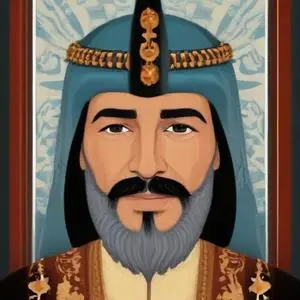
Founded the modern Saudi state in 1932, uniting various tribes and establishing a powerful monarchy that still reigns today.
Saud bin Abdulaziz Al Saud, the second son of King Abdulaziz, is renowned for his profound impact on Saudi Arabia's development, serving as the country's king from 1953 to 1964 and prime minister from 1953 to 1954 and 1960 to 1962. During his reign, he spearheaded significant reforms, established crucial institutions, and navigated complex international relationships.
Born on January 15, 1902, Saud was the second son of King Abdulaziz and Wadha bint Muhammad Al Orair. Following the death of his elder brother, Prince Turki, in 1919, Saud became the heir apparent to the throne. He was appointed crown prince in 1933 and played a vital role in his father's conquests, leading to the establishment of Saudi Arabia in 1932.
Upon ascending the throne in 1953, Saud reorganized the government, establishing the convention that the king presides over the Council of Ministers. He oversaw significant infrastructural development, preparing the first state budget in 1948 and founding the Saudi Central Bank in 1952. Saud also maintained friendly relations with the United States while supporting other Arab countries in their conflicts against Israel.
During his reign, Saud faced mounting financial difficulties, struggling to counter the national debt. This led to a power struggle with his half-brother and crown prince, Faisal, culminating in Saud's forced abdication in 1964. He was replaced by Faisal, and Saud went into exile, making an unsuccessful attempt to reclaim the throne.
Saud's legacy extends beyond his reign, shaping the course of Saudi Arabia's history. He played a crucial role in the country's financial reforms, infrastructural development, and international relations. His abdication marked a significant turning point in the country's history, paving the way for Faisal's reforms and modernization efforts.
Saud had numerous wives and children, with some of his sons playing important roles in Saudi politics. His personal life was marked by a strong sense of family loyalty and a commitment to upholding the values of his father, King Abdulaziz.
Saud's reign coincided with a pivotal moment in Middle Eastern history, with the rise of Arab nationalism and the Cold War. His leadership style and policies can be compared to those of his contemporaries, such as Gamal Abdel Nasser of Egypt and Habib Bourguiba of Tunisia, highlighting the complexities of regional politics during the 1950s and 1960s.
"The unity of the Arabian Peninsula is the cornerstone of our foreign policy." – Saud bin Abdulaziz Al Saud
Saud's life and reign serve as a testament to the complexities of Saudi Arabia's development, highlighting the balancing act between modernization, traditional values, and international relations. His legacy continues to shape the country's history, making him an essential figure in understanding the nation's evolution.
Born in 1906
Unified the Arabian Peninsula, establishing the modern Saudi state and promoting Islamic unity, while also playing a key role in the region's oil industry development.
Born in 1913
The fourth King of Saudi Arabia, ruling from 1975 to 1982, known for his efforts to modernize and diversify the country's economy, while maintaining its traditional Islamic values.
Born in 1924
The sixth monarch of Saudi Arabia, known for his efforts to modernize the country and promote interfaith dialogue, while maintaining its traditional values and Islamic heritage.
Born in 1919
The last monarch of the Pahlavi dynasty, ruling Iran from 1941 until the 1979 revolution, known for his modernization efforts and close ties to the West. His regime was marked by controversy, including a CIA-backed coup and brutal suppression of dissent.
Born in 1918
Led Egypt through a period of rapid modernization and nationalism, becoming a symbol of Arab unity and resistance to Western influence. He nationalized the Suez Canal and implemented socialist reforms.
