


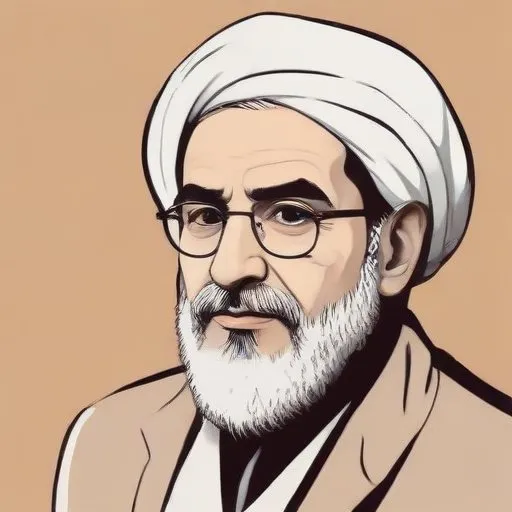
A pioneering Iranian journalist, poet, and activist who fearlessly critiqued the Shah's regime, advocating for social justice and democracy through his writing and activism.
Khosrow Golsorkhi was a prominent Iranian journalist, poet, and communist who left an indelible mark on the country's history. Famous for his leftist and revolutionary poetry, Golsorkhi's bold stance against the Iranian monarchy and his unwavering commitment to the Marxist ideology made him a beacon of hope for many young Iranians during the tumultuous 1970s.
Born on January 23, 1944, in Iran, Golsorkhi was drawn to the world of literature and politics from an early age. His passion for social justice and equality led him to become a vocal critic of the Iranian monarchy, which was known for its brutal suppression of dissenting voices.
In 1974, Golsorkhi was arrested along with his friend, Keramat Daneshian, a director, on charges of plotting to kidnap Reza Pahlavi, the Crown Prince of Iran. The highly publicized trial was televised live, amidst the backdrop of the Conference for Human Rights in Tehran, which the Shah's regime was hosting.
The trial was a turning point in Golsorkhi's life, as he used the platform to boldly defy the military court and assert his Marxist ideology. In a memorable statement, he declared, "In the glorious name of the people, I will defend myself in a court which I neither recognize its legality nor its legitimacy. As a Marxist, my address is to the people and history."
Golsorkhi's courageous stand and his eventual execution on February 18, 1974, made him a martyr for the Iranian left and a symbol of resistance against the monarchy. His poetry and writings continue to inspire generations of Iranians, and his name is often mentioned alongside other prominent figures of the Iranian revolution, such as Ali Shariati and Samad Behrangi.
Golsorkhi's Marxist ideology was deeply rooted in his belief in the power of the people and his conviction that the ruling elite was responsible for the suffering of the masses. His poetry and writings often reflected his unwavering commitment to social justice and equality, and his willingness to challenge the status quo.
Golsorkhi's legacy extends beyond Iran's borders, inspiring socialist and communist movements across the world. His poetry and writings have been translated into multiple languages, and his ideas continue to resonate with those seeking social change and revolution.
Golsorkhi's words continue to inspire and motivate, serving as a testament to his unwavering commitment to the cause of social justice and Marxism.
Golsorkhi's life and death must be viewed within the context of Iran's tumultuous history, marked by the Shah's regime's brutal suppression of dissent and the subsequent Islamic Revolution of 1979. His legacy serves as a reminder of the power of ideas and the importance of standing up against oppression, even in the face of adversity.
In conclusion, Khosrow Golsorkhi's life was a testament to his unwavering commitment to social justice and Marxism. His poetry, writings, and courageous stand against the Iranian monarchy continue to inspire generations, serving as a beacon of hope for those seeking a more just and equal world.
Born in 1882
The first democratically elected Prime Minister of Iran, who nationalized the country's oil industry, leading to a CIA-backed coup that overthrew him. He's a symbol of resistance against foreign intervention.
92 Years Old
A pioneering thinker who merged Islamic ideology with socialism and Marxism, inspiring Iran's 1979 revolution and shaping modern Islamic thought.
Born in 1921
A pioneering female writer and educator who broke literary ground with her Persian novels and short stories, exploring themes of social justice and women's rights.
