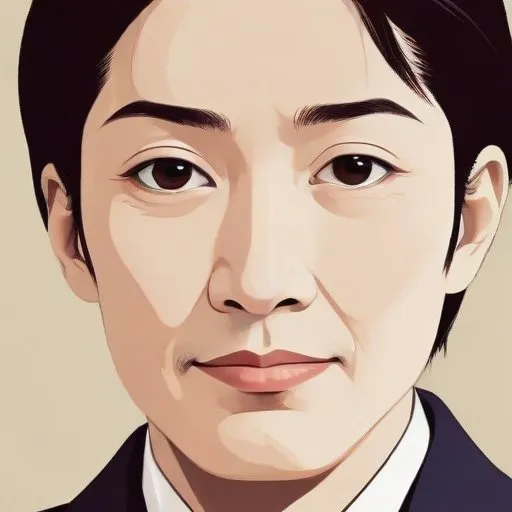
Kiku Amino: A Pioneering Japanese Writer and Translator
A Literary Icon of Modern Japan
Kiku Amino was a renowned Japanese writer and translator, celebrated for her profound contributions to English and Russian literature. She was a trailblazer in her field, earning a plethora of prestigious awards, including the Women's Literature Prize, the Yomiuri Prize, and the Japan Academy of the Arts prize.
Early Life and Education
Born on January 16, 1900, in Azabu Mamianacho, Tokyo, Amino was raised in a cultured family. Her father, a well-to-do saddler, played a significant role in nurturing her love for literature. After her mother's departure when Amino was just six, she was exposed to a series of stepmothers, an experience that would later influence her writing. Amino graduated from the Japan Women's University in 1920 with a degree in English, laying the foundation for her future literary pursuits.
Literary Career and Significant Works
Amino's literary journey began with the publication of her self-financed collection of stories,
Aki Autumn, in 1921. This debut work marked the beginning of a remarkable career, during which she would go on to publish numerous acclaimed works. Her association with the prominent author Shiga Naoya, whom she met in 1923, further solidified her position in the Japanese literary circle. Notable among her works are
Kisha no nakade (
On the Train, 1940),
Kin no kan (
A Golden Coffin, 1947), and
Ichigo ichie (
Once in a Lifetime, 1967), which earned her the Yomiuri Prize and Japan Academy of the Arts prize.
Awards and Honors
Amino's contributions to Japanese literature were recognized with several prestigious awards, including:
- Women's Literature Prize (1947)
- Yomiuri Prize (1967)
- Japan Academy of the Arts prize (1967)
Personal Life and Legacy
Amino's personal life was marked by significant events, including her marriage in 1930 and subsequent divorce in 1936. During her married life, she suspended her writing activities, only to return to her passion after her divorce. Amino's legacy extends beyond her literary achievements, as she played a vital role in promoting Japanese literature globally. She was a member of the Japan Art Academy and left an indelible mark on the country's literary landscape.
Historical Context and Impact
Amino's work was deeply rooted in the cultural and social context of modern Japan. Her stories often explored themes of identity, family, and social change, resonating with the Japanese people during a time of rapid transformation. Her contributions to Japanese literature have had a lasting impact, inspiring generations of writers and translators.
Conclusion
Kiku Amino's remarkable life and literary achievements have cemented her position as a pioneering figure in Japanese literature. Through her works, she has left an enduring legacy, one that continues to captivate readers and inspire writers around the world.
FAQ
What is Kiku Aminos claim to fame as a Japanese author?
Kiku Amino is known for her exceptional skills as a writer and translator. She was one of the first Japanese women to achieve international recognition as a writer.
What kind of writing did Kiku Amino do?
Kiku Amino wrote a range of works, including novels, short stories, and essays. She was particularly known for her work on Japanese literature and culture.
What is Kiku Aminos legacy in Japanese literature?
Kiku Aminos legacy in Japanese literature is that of a pioneering woman who broke down barriers and paved the way for future generations of female writers. Her work continues to be admired and studied by scholars and enthusiasts.
What awards did Kiku Amino receive for her work?
Kiku Amino received several awards for her work, including the prestigious Akutagawa Prize. She was also honored by the Japanese government for her contributions to Japanese literature.
What is Kiku Aminos contribution to Japanese translation?
Kiku Aminos contribution to Japanese translation is immense. She was one of the first Japanese translators to translate Western literature into Japanese, and her work helped to introduce Japanese readers to Western literature.