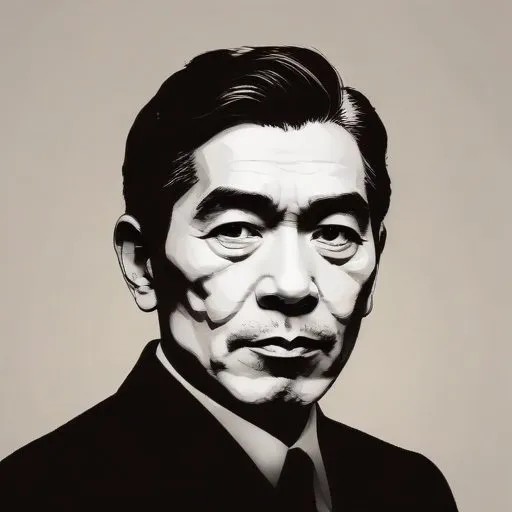
Yasunari Kawabata: The inaugural Japanese Nobel Laureate in Literature
A Novelistic Legacy
Yasunari Kawabata, a Japanese novelist and short story writer, is renowned for his distinctive, lyrical prose that has captivated readers worldwide. His remarkable literary contributions earned him the prestigious Nobel Prize in Literature in 1968, a milestone that marked the first time a Japanese author received this esteemed award.
Early Life and Formative Influences
Born on June 11, 1899, in Osaka, Japan, Kawabata's life was beset by tragedy from an early age. Orphaned by the time he was four, he was taken in by his grandparents, who played a significant role in shaping his formative years. The loss of his grandparents, particularly his grandmother in 1906, had a profound impact on Kawabata's life and later informed his writing.
Literary Career and Major Works
Kawabata's literary career was marked by a series of notable works, including his debut novel, "The Dancing Girl of Izu" (1926), which showcased his unique lyrical style. This was followed by "Palm-of-the-Hand Stories" (1926-1937), a collection of short stories that cemented his reputation as a master of concise, evocative narrative.
Other significant works include "Snow Country" (1935-1937), a poignant novel that explores the complexities of human relationships, and "Thousand Cranes" (1949-1951), a powerful exploration of love, loss, and redemption.
Philosophical Contributions and Beliefs
Kawabata's writing is characterized by a profound introspection and a deep understanding of human nature. His works often grapple with the contradictions of modernity, love, and the human condition, revealing a philosophical depth that resonates with readers.
Influence on Modern Society
Kawabata's literary legacy extends beyond the Japanese literary circle, influencing authors and writers worldwide. His unique style, which blends elements of Japanese aesthetics with a modernist sensibility, has inspired generations of writers, including Nobel laureates like
Gabriel García Márquez and
Toni Morrison.
Personal Milestones and Key Life Events
Kawabata's life was punctuated by significant personal milestones, including his engagement to Hatsuyo Ito, which ended abruptly in 1921. This painful episode had a lasting impact on his writing, with many of his works reflecting the emotional depth of this experience.
Historical Context and Legacy
Kawabata's literary contributions are deeply rooted in Japan's cultural and historical context. His writing reflects the country's complex modernization process, as well as its aesthetic traditions, such as the concept of "wabi-sabi" (acceptance of transience). His legacy continues to inspire writers, scholars, and readers, ensuring his place as one of the most important literary figures of the 20th century.
Comparative Analysis with Contemporaries
Kawabata's writing style and thematic concerns can be compared to those of his contemporaries, such as Junichirō Tanizaki and
Ryūnosuke Akutagawa. While sharing similarities with these authors, Kawabata's unique voice and perspective set him apart, solidifying his position as a leading figure in Japanese literature.
Awards and Honors
In addition to the Nobel Prize in Literature (1968), Kawabata received numerous awards and honors, including the Goethe Prize (1969) and the Japanese Cultural Medal (1954).
Trivia and Fun Facts
- Kawabata was an avid collector of Japanese art and artifacts, with a particular fondness for ukiyo-e woodblock prints.
- He was known for his love of traditional Japanese tea ceremonies, which inspired some of his most poignant works.
- Kawabata's writing was heavily influenced by his admiration for Rabindranath Tagore, the Indian Nobel laureate.
Legacy and Impact
Yasunari Kawabata's remarkable literary legacy continues to inspire generations of writers, scholars, and readers. His unique prose, profound philosophical insights, and masterful storytelling have ensured his place as one of the most important literary figures of the 20th century.
FAQ
What is Yasunari Kawabatas literary style?
Kawabatas writing is characterized by lyricism, subtlety, and a focus on the human condition, often exploring themes of loneliness, love, and the human relationship with nature.
What is Yasunari Kawabatas most famous work?
Kawabatas most celebrated novel is Snow Country, which won the Nobel Prize in Literature in 1968 and is widely regarded as a masterpiece of Japanese literature.
How did Yasunari Kawabatas work influence Japanese literature?
Kawabatas innovative style and exploration of themes helped shape modern Japanese literature, inspiring a generation of writers and cementing his place as a leading figure in Japanese literary history.
What are some common themes in Yasunari Kawabatas work?
Kawabatas work often explores the human condition, love, loneliness, and the relationship between individuals and nature, as well as the decline of traditional Japanese culture.
How did Yasunari Kawabatas Nobel Prize impact Japanese literature?
Kawabatas Nobel Prize marked a significant milestone in Japanese literary history, recognizing the countrys rich cultural heritage and influencing the global reception of Japanese literature.