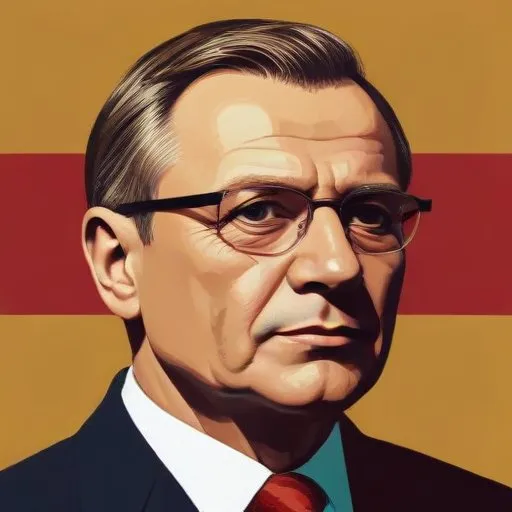
Krlis Ulmanis: The Controversial Leader of Interwar Latvia
A Life of Politics and Agriculture
Krlis Ulmanis is known for his complex and multifaceted role in Latvian politics, serving as the country's first prime minister and later adopting the title of President of Latvia. His four terms as prime minister, particularly his last term as the head of an authoritarian regime, continue to divide public opinion in Latvia today.
Early Life and Education
Born on September 4, 1877, in a prosperous farming family, Ulmanis studied agriculture at the Swiss Federal Institute of Technology Zurich and Leipzig University. His interest in agriculture led him to work in Latvia as a writer, lecturer, and manager in agricultural positions. However, it was during the 1905 Revolution that Ulmanis became politically active, which eventually led to his brief imprisonment in Pskov and subsequent exile to avoid further incarceration by the Russian authorities.
Exile and Return to Latvia
During his exile, Ulmanis traveled to the United States, where he studied at the University of Nebraska-Lincoln, earning a Bachelor of Science degree in agriculture under the name Karl August Ulmann. He worked briefly as a lecturer at the university before moving to Houston, Texas, where he bought a dairy business that ultimately ran into financial difficulties. In 1913, Ulmanis returned to Latvia after being informed that it was safe for political exiles to return due to a general amnesty by
Nicholas II of Russia.
Pолитical Career and Authoritarian Regime
In the last stages of World War I, Ulmanis founded the Latvian Farmers Union, one of the two most prominent political parties in Latvia at the time. He was one of the principal founders of the Peoples Council, which proclaimed Latvia's independence in 1918. Ulmanis served as the country's first prime minister and went on to serve three more terms, with his last term being marked by authoritarianism and the eventual adoption of the title of President of Latvia.
Legacy and Controversy
Ulmanis' legacy continues to be a subject of debate in Latvia, with some viewing him as a national hero who stabilized the country during a tumultuous period, while others see him as a dictator who suppressed political opposition and restricted civil liberties. Despite the controversy, Ulmanis remains an important figure in Latvian history, and his impact on the country's development during the interwar period cannot be ignored.
Key Life Events and Milestones
- 1877: Born on September 4th in a prosperous farming family
- 1905: Became politically active during the Revolution, leading to brief imprisonment and exile
- 1913: Returned to Latvia after being informed of a general amnesty by Nicholas II of Russia
- 1918: Founded the Latvian Farmers Union and became one of the principal founders of the Peoples Council
- 1918-1940: Served as prime minister of Latvia four times, with his last term marked by authoritarianism
- 1942: Died on September 20th
Personal Quotes and Beliefs
Ulmanis was known for his strong nationalist beliefs and his emphasis on the importance of agriculture in Latvia's development. He once said, "Latvia's prosperity depends on the prosperity of its farmers," reflecting his commitment to the country's agricultural sector.
Historical Context and Comparative Analysis
Ulmanis' rise to power and his subsequent authoritarian regime can be seen as a response to the unstable political climate of interwar Latvia. His regime was marked by nationalism and a focus on economic development, similar to other authoritarian regimes in Europe at the time. However, his unique blend of agricultural expertise and political savvy set him apart from other leaders of the era.
FAQ
What was Kārlis Ulmanis role in Latvian politics?
Kārlis Ulmanis was a prominent figure in Latvian politics, serving as the countrys prime minister and president from 1934 to 1940. He played a key role in shaping Latvias early years of independence.
What was Kārlis Ulmanis stance on authoritarianism?
Kārlis Ulmanis implemented authoritarian policies during his rule, suspending parliament and restricting civil liberties in an effort to stabilize the country.
What was Kārlis Ulmanis relationship with Nazi Germany?
Kārlis Ulmanis pursued a policy of cooperation with Nazi Germany, which ultimately led to Latvias occupation during World War II.
What was Kārlis Ulmanis legacy in Latvia?
Kārlis Ulmanis legacy in Latvia is complex, marked by both his role in stabilizing the country during a tumultuous period and his authoritarian policies, which have been widely criticized.
What happened to Kārlis Ulmanis during World War II?
Kārlis Ulmanis was deported to the Soviet Union during World War II and died in prison in 1942, reportedly due to poor health.