


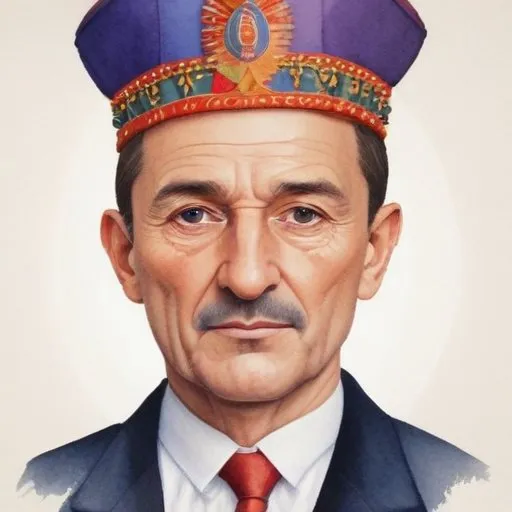
A Hungarian-Romanian architect, ethnologist, and politician who designed iconic buildings and documented folk culture, leaving a lasting impact on Eastern European cultural heritage.
Kroly Ks, a Hungarian architect, writer, illustrator, ethnologist, and politician, is renowned for his profound impact on cultural preservation and architectural innovation in Eastern Europe during the early 20th century. His works, characterized by a unique blend of traditional folk elements and modernist sensibilities, continue to inspire admiration and awe.
Born as Kroly Kosch in 1883 in Temesvr, Austria-Hungary (now Timioara, Romania), Ks grew up in a region rich in cultural diversity. He pursued engineering at the Royal University of Technology Jzsef, and later turned to architecture, graduating from the Budapest Architecture School in 1907. It was during this period that he developed a deep fascination for historical and traditional folk architecture, which would become a hallmark of his work.
Ks' early projects, such as the Roman Catholic church in Zebegny (1909), the Budapest Reformed parochial building (1909), and the Budapest Zoo complex (1910), showcased his unique ability to merge traditional and modernist elements. His designs often featured intricate ornamentation, reminiscent of folk art, while incorporating innovative materials and techniques.
In the 1910s, Ks completed several notable projects, including the Reformed Rooster Church in Kolozsvr (now Cluj-Napoca) and the hospital in Sepsiszentgyrgy (now Sfntu Gheorghe). His work during this period was heavily influenced by the Vienna Secession and Art Nouveau movements.
In 1914, with the outbreak of World War I, Ks moved to Sztna Stana. He was drafted the following year but soon discharged on request from the Ministry of Culture. Between 1917 and 1918, he was sent on a study trip to Istanbul, where he deepened his understanding of Eastern European cultural heritage.
In 1918, Ks was invited to become a professor at the College for Applied Arts of Budapest, but he declined, opting instead to return to Transylvania. He then embarked on a political career, accepting the Romanian Kingdom's administration in the region and engaging in active opposition within its legal framework. He co-founded the Transylvanian Peoples Party in 1921, which later became the Magyar Party.
Kroly Ks' contributions to cultural preservation and architectural innovation have left an indelible mark on Eastern Europe. His commitment to promoting traditional folk architecture and his fusion of modernist and folk elements continue to inspire architects, designers, and cultural enthusiasts alike.
Through his life's work, Ks demonstrated a profound respect for the cultural heritage of his region, while also pushing the boundaries of modernist design. His legacy serves as a testament to the power of cultural fusion and innovation in shaping our understanding of the built environment.
A life dedicated to preserving cultural heritage and pushing the boundaries of modernist design, Kroly Ks' legacy continues to inspire and awe.
Born in 1845
A Hungarian architect renowned for designing iconic buildings, including the Museum of Applied Arts and the Church of St Elisabeth, showcasing a unique blend of Art Nouveau and Hungarian folk elements.
90 Years Old
Organic and futuristic buildings that blend into their surroundings, often featuring natural and mythical elements, are the hallmark of this Hungarian architect's unique style. Their work is a fusion of traditional craftsmanship and modern technology.
