


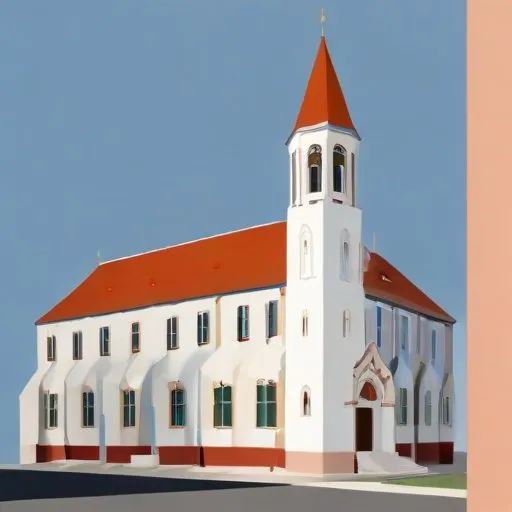
A Hungarian architect renowned for designing iconic buildings, including the Museum of Applied Arts and the Church of St Elisabeth, showcasing a unique blend of Art Nouveau and Hungarian folk elements.
Ödön Lechner, born Eugen Lechner, is renowned for his pioneering work in shaping the distinctive Hungarian Szecesszió style, a unique variant of Art Nouveau that swept across Europe in the late 19th and early 20th centuries. His ingenious fusion of traditional folk art patterns with modern materials and techniques has left an indelible mark on the country's architectural landscape.
Lechner was born into a bourgeois family in Pest, Hungary, on August 27, 1845. His father, János Lechner, was a certified lawyer, capital tax collector, and brick factory owner, while his mother, Terézia Schummayer, came from a family of modest means. This middle-class upbringing would later influence Lechner's approach to architecture, which emphasized accessibility and functionality.
After completing his secondary education at the Real School of Downtown Pest, Lechner enrolled in the József Ipartanoda (now the Budapest University of Technology and Economics) to study architecture. It was during this period that he was exposed to the teachings of Antal Szkalnitzky, a prominent figure responsible for many of Budapest's major public buildings.
In 1866, Lechner departed for Berlin, where he spent three years at the Academy of Architecture under the tutelage of Karl Bötticher. This experience had a profound impact on his approach to building design, particularly in his adoption of iron-framed structures. Lechner's travels continued in 1868, when he embarked on a one-year study tour of Italy with his wife, Irma Primayer. This exposure to Renaissance and Baroque architecture further refined his aesthetic sensibilities.
Upon his return to Hungary, Lechner established a partnership with Gyula Pártos, and their architecture firm quickly gained momentum during the 1870s construction boom. Some of his most notable works include:
Lechner's work has been recognized for its significance, with several of his buildings nominated for inclusion on the UNESCO World Heritage List in 2008. His unique blend of traditional Hungarian folk art and modern architectural techniques has left a lasting legacy, inspiring generations of architects, designers, and artists.
Lechner's work was guided by a deep respect for Hungarian cultural heritage and a commitment to creating architecture that was both functional and aesthetically pleasing. His philosophy can be summed up in his own words: "The beauty of a building lies not in its grandiosity, but in its ability to serve the people."
Lechner's personal life was marked by tragedy, including the loss of his wife, Irma, in 1878. He later remarried and had two children, but his family life was cut short when he passed away on June 10, 1914, at the age of 68.
Lechner's work was not without controversy, with some critics accusing him of being overly ornate and elaborate in his designs. However, his dedication to preserving Hungarian cultural identity and promoting national pride earned him widespread recognition and acclaim.
"Architecture is not just about building structures, it's about building a sense of community and belonging." - Ödön Lechner
Born in 1845
A Hungarian architect renowned for designing iconic buildings, including the Museum of Applied Arts and the Church of St Elisabeth, showcasing a unique blend of Art Nouveau and Hungarian folk elements.
Born in 1883
A Hungarian-Romanian architect, ethnologist, and politician who designed iconic buildings and documented folk culture, leaving a lasting impact on Eastern European cultural heritage.
