


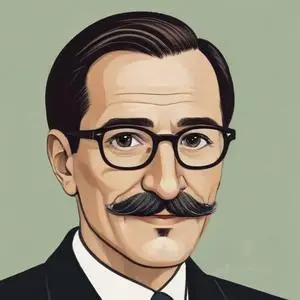
Creator of Esperanto, a constructed language designed to be a simple and easy-to-learn tongue for people from different countries, aiming to promote international understanding and communication.
Ludwik Lejzer Zamenhof, commonly known as L.L. Zamenhof, is renowned for creating Esperanto, the most widely spoken constructed international auxiliary language in the world. His incredible journey began in 1873, when, as a teenager, he started developing Esperanto with the vision of uniting people across the globe through a neutral, fair, and equitable means of communication.
Zamenhof was born on December 15, 1859, in Białystok, Poland, to a multilingual family. His name, which has been transliterated into various languages, reflects the cultural diversity of his upbringing. Growing up in a region where Polish, Russian, German, and Yiddish were spoken, Zamenhof witnessed firsthand the challenges of language barriers.
During his school days, Zamenhof became fascinated with the idea of a world without war, believing that a common language could bring people together. He spent years perfecting Esperanto, which was initially known as "Lingwe universala." The language was designed to be simple, logical, and easy to learn, with the goal of facilitating international understanding and communication.
Despite the challenges of promoting a new language, Zamenhof's efforts paid off. The first Esperanto textbook was published in 1887, and soon, a thriving community of speakers emerged. Today, there are an estimated 2 million Esperanto speakers worldwide, including around 1,000 native speakers.
Zamenhof's vision went beyond creating a language; he sought to promote peace, understanding, and unity among nations. He believed that Esperanto could facilitate international dialogue, breaking down barriers and fostering global cooperation.
Zamenhof's legacy extends far beyond the Esperanto community. His language has inspired the creation of other constructed languages, and his vision of a united world has inspired generations of language learners and diplomats.
In 2017, on the 100th anniversary of Zamenhof's death, UNESCO recognized him as one of its eminent personalities, celebrating his contributions to intercultural dialogue and understanding.
Zamenhof's incredible story serves as a testament to the power of vision, perseverance, and innovation. His creation, Esperanto, continues to inspire language learners, diplomats, and anyone seeking to bridge cultural divides.
Born in 1912
A Hungarian lawyer, explorer, and author who traveled extensively, documenting his experiences and writing books about his adventures, particularly in South America. He's known for his ethnographic research and travelogues.
