


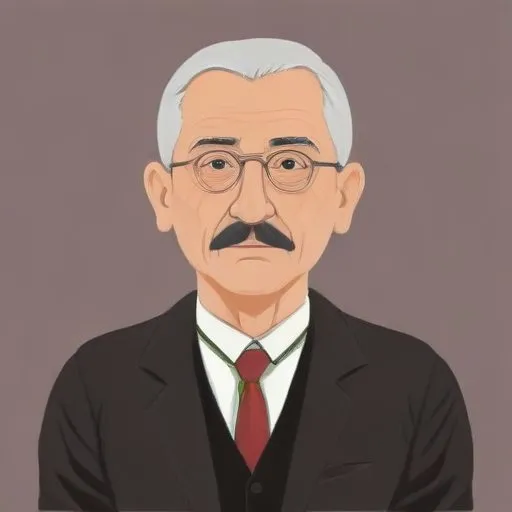
A Hungarian lawyer, explorer, and author who traveled extensively, documenting his experiences and writing books about his adventures, particularly in South America. He's known for his ethnographic research and travelogues.
Tibor Sekelj, a Hungarian-born polymath, left an indelible mark on the world through his extraordinary linguistic abilities, fascinating travelogues, and captivating literary works. As a renowned polyglot, explorer, author, and citizen of the world, Sekelj's remarkable life spanned numerous countries, languages, and cultures, earning him recognition as one of the most intriguing figures of the 20th century.
Sekelj's early life was marked by a series of relocations, which laid the foundation for his linguistic prowess. Born on February 14, 1912, in Hungary, Sekelj's family moved to Cenei (now in Romania) when he was just a few months old, where he spent his formative years surrounded by German-speaking communities. He later settled in Kikinda, part of the Kingdom of Yugoslavia (now in Serbia), where he learned Serbo-Croatian and began teaching French to his fellow students at the tender age of 16.
Sekelj's linguistic journey continued as he learned a new language every four years, mastering multiple tongues including French, German, Italian, Spanish, Portuguese, and many more. His incredible linguistic abilities enabled him to converse with people from diverse backgrounds, fostering a deep understanding of various cultures and traditions.
After graduating from the University of Zagreb's law school in 1933, Sekelj soon became disillusioned with the practice of law and turned his attention to writing. He began working as a journalist in Zagreb, where his travels and experiences inspired a wealth of literary works, including novels, travel books, and essays.
One of Sekelj's most notable works is the novella "Kumeaa, la filo de la angalo Kumewawa" (The Son of the Jungle), a children's book that explores the lives of Brazilian Indians. Translated into 17 languages, this captivating tale won the hearts of readers worldwide and was voted the best children's book in Japan in 1987.
In recognition of his outstanding contributions to literature and language, Sekelj was elected a member of the Academy of Esperanto and an honorary member of the World Esperanto Association in 1986. In 2011, the European Esperanto Union declared 2012 "The Year of Tibor Sekelj" to commemorate the 100th anniversary of his birth.
Tibor Sekelj's remarkable life serves as a testament to the power of linguistic and cultural exchange. Through his words and deeds, he bridged gaps between nations and fostered a deeper understanding of the world's rich cultural tapestry. As we reflect on his extraordinary journey, we are reminded of the boundless potential that lies within each of us, waiting to be unlocked.
Born in 1872
First person to reach the South Pole, leading a Norwegian expedition in 1911, and a pioneer in Arctic and Antarctic exploration.
Born in 1868
Led a British expedition to the South Pole, racing against a Norwegian team, and tragically perished on the return journey. He is remembered for his bravery and sacrifice in the pursuit of scientific discovery.
Born in 1874
Led expeditions to the Antarctic, famously surviving a disastrous shipwreck and trekking to safety, earning a legendary reputation for bravery and leadership.
Born in 1914
A pioneering explorer who sailed ancient-style boats across oceans to prove migration theories, and led the famous Kon-Tiki expedition across the Pacific.
Born in 1910
A pioneering oceanographer who co-developed the aqua-lung, allowing humans to explore the underwater world, and documented his discoveries through captivating films and books.
Born in 1838
A German general and entrepreneur who pioneered the development of rigid airships, revolutionizing aviation and transportation in the late 19th and early 20th centuries. He founded a company that bore his name and built iconic airships that dominated the skies.
Born in 1888
Led the first flights over the North and South Poles, and explored Antarctica, expanding our knowledge of the world's most remote regions.
