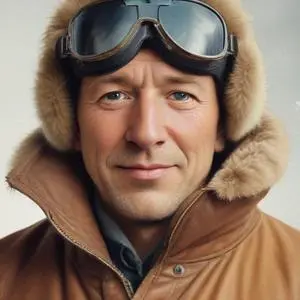
Roald Amundsen: The Fearless Pioneer of Polar Exploration
The Conqueror of the South and North Poles
Roald Amundsen, a Norwegian explorer, etched his name in history by becoming the first person to reach the South Pole, and later, the first to traverse the Northwest Passage and reach the North Pole. His unwavering determination and unrelenting spirit have inspired generations of explorers and scientists.
Early Life and Influences
Born on July 16, 1872, in Borge, Norway, Amundsen was the fourth son of Jens Amundsen and Hanna Sahlqvist. His family's maritime trade and his mother's dreams of him becoming a doctor shaped his early life. However, it was the Arctic expeditions of
Fridtjof Nansen that sparked Amundsen's passion for exploration.
Career Highlights and Major Works
- 1897-1899: Amundsen served as first mate on Adrien de Gerlache's Belgian Antarctic Expedition, where he gained invaluable experience and honed his skills as a polar explorer.
- 1903-1906: Amundsen led the first expedition to successfully traverse the Northwest Passage on the sloop Gjøa, a feat that marked a significant milestone in Arctic exploration.
- 1910-1912: Amundsen's South Pole expedition aboard the Fram resulted in him becoming the first person to reach the South Pole on December 14, 1911.
- 1926: Amundsen became the first explorer to reach the North Pole by flying over it in the airship Norge.
Philosophical Contributions and Beliefs
Amundsen's expeditions were not just about conquering the unknown, but also about advancing scientific knowledge. He believed in the importance of meticulous planning, adaptation, and innovation in the face of adversity. His expeditions contributed significantly to our understanding of the polar regions, their geography, and the effects of climate change.
Personal Milestones and Key Life Events
- 1896: Amundsen's mother passed away, prompting him to abandon his medical studies and pursue a life at sea.
- 1906: Amundsen was awarded the Royal Geographical Society's Founder's Medal for his Northwest Passage expedition.
- 1912: Amundsen published his bestselling book, The South Pole, detailing his South Pole expedition.
Influence on Modern Society
Amundsen's pioneering spirit and achievements have inspired generations of scientists, explorers, and adventurers. His expeditions have contributed to a greater understanding of the polar regions, paving the way for modern scientific research and environmental awareness.
Controversies and Public Perception
Amundsen's rivalry with
Robert Falcon Scott, a British explorer, has been a subject of debate and controversy. While Amundsen's success was celebrated, Scott's tragic death on the return journey from the South Pole sparked a wave of sympathy and criticism towards Amundsen.
Quotes and Memorable Sayings
- "I may not have gone where I intended to go, but I think I have ended up where I needed to be."
- "Adventure is worthwhile."
Historical Context and Legacy
Roald Amundsen's expeditions took place during the Heroic Age of Antarctic Exploration, a period marked by intense competition and groundbreaking discoveries. His legacy extends beyond his achievements, as he paved the way for future generations of explorers, scientists, and environmentalists.
Trivia and Fun Facts
- Amundsen was an avid skier and excellent dog sledder.
- He was known for his meticulous planning and attention to detail, earning him the nickname "The Great Planner."
Final Journey and Disappearance
In June 1928, Amundsen embarked on a rescue mission for the airship Italia, which had crashed in the Arctic. He disappeared during the mission, and despite extensive searches, his remains were never found. Amundsen's final journey remains a mystery, but his legacy continues to inspire and captivate people around the world.
FAQ
What was Roald Amundsens role in the exploration of the Arctic and Antarctica?
Roald Amundsen was a Norwegian pilot and explorer who led the first successful expedition to reach the South Pole in 1911. He was also the first person to navigate the Northwest Passage and reach both the North and South Poles.
What were Roald Amundsens early life and education?
Amundsen was born in 1872 in Norway. He studied medicine but abandoned his studies to pursue a career in exploration, eventually becoming a skilled sailor and navigator.
What was Roald Amundsens approach to exploration?
Amundsen was a meticulous planner who emphasized preparation and adaptability. He developed innovative techniques for navigating extreme environments and was known for his leadership skills and ability to inspire his team.
What were some of Roald Amundsens notable achievements?
Amundsens achievements include reaching the South Pole, navigating the Northwest Passage, and being the first person to reach both the North and South Poles. He was also a pioneer in the use of airships for exploration.
What is Roald Amundsens legacy in modern exploration?
Amundsens legacy is a testament to the power of human curiosity and determination. His achievements have inspired generations of explorers, and his approach to exploration remains a model for modern adventurers and scientists.