


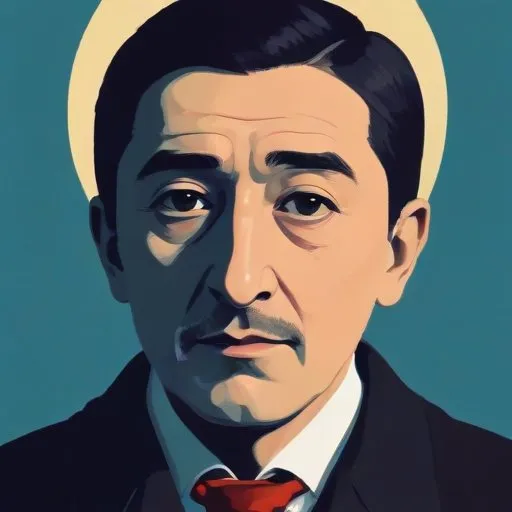
A Greek-Japanese historian and author who wrote extensively on Japanese culture and folklore, introducing Western readers to the country's rich heritage through his vivid storytelling. His works remain a valuable window into Japan's past.
Lafcadio Hearn, a literary pioneer, is renowned for introducing the mystique of Japanese culture to the Western world through his fascinating writings. His remarkable works, such as Kwaidan: Stories and Studies of Strange Things, offered an unprecedented glimpse into the myths, legends, and ghost stories of Japan, captivating readers worldwide.
Born on the Greek island of Lefkada on June 27, 1850, Lafcadio Hearn's life was marked by a series of tumultuous events. His mother, Rosa Cassimati, was a native Greek, while his father, Charles Bush Hearn, was a British Army medical officer of Anglo-Irish descent. The family's nomadic lifestyle led them to Dublin, where Lafcadio was eventually abandoned by his mother, then his father, and finally by his father's aunt, who had been appointed his official guardian.
At the tender age of 19, Hearn emigrated to the United States, where he found work as a newspaper reporter in Cincinnati and later in New Orleans. His decadelong stay in New Orleans inspired his writings about the city, which are still celebrated today. As a correspondent, he was sent to the French West Indies, where he spent two years before being dispatched to Japan, a country that would become his adopted home.
In Japan, Hearn married Setsuko Koizumi, with whom he had four children. He immersed himself in the culture, adopting the name Yakumo Koizumi, and becoming a Japanese citizen. His writings about Japan, infused with a deep understanding and respect for the culture, introduced the West to the country's rich heritage, myths, and legends.
Hearn's literary mastery is evident in his collections of Japanese folklore, including Kwaidan, Shadowings, and The Dream of Akinosuke. His works have been widely translated and continue to enchant readers worldwide. Hearn's legacy extends beyond his writings, as he is credited with fostering a deeper appreciation for Japanese culture in the West.
Hearn's writings often explored the intersection of Eastern and Western philosophies. He was drawn to the concept of yūgen, a Japanese aesthetic that values the profound and mysterious. His work reflects a deep respect for the integrity of Japanese culture, and his writings often blurred the lines between reality and fantasy, creating a unique narrative voice.
Hearn's work has inspired generations of writers, scholars, and artists. His writings have influenced the development of Japanese studies in the West and continue to shape our understanding of Japanese culture. His legacy extends beyond academia, as his stories and legends have captivated audiences in various forms of media, from film to literature.
If Hearn were alive today, he would likely be fascinated by the global interconnectedness of cultures and the digital age. He would probably be an avid explorer of social media, using it as a platform to share his thoughts and stories with a global audience.
Lafcadio Hearn's remarkable life and works have left an indelible mark on our understanding of Japanese culture and its rich heritage. His writings continue to enchant readers, inspiring a deeper appreciation for the beauty and mystery of the East. As a literary pioneer, he will forever be remembered as the griot of the East, a master storyteller who bridged two cultures and enriched our understanding of the world.
Born in 1890
Creator of cosmic horror, crafting eerie tales of ancient deities and supernatural entities that lurk in the shadows, exploring the darker aspects of human nature. 82
Born in 1809
A master of dark and atmospheric storytelling, crafting haunting tales of mystery and horror that continue to captivate readers to this day.
Born in 1847
Creator of the iconic vampire Count Dracula, a character that has become a cultural phenomenon, inspiring countless adaptations and influencing the horror genre as a whole.
Born in 1797
Author of Gothic novels, particularly the iconic "Frankenstein", which has become a cultural phenomenon and influenced countless adaptations and reinterpretations.
Born in 1850
A Scottish novelist, poet, and essayist who wrote iconic adventure novels, including "Treasure Island" and "Dr. Jekyll and Mr. Hyde", that have captivated readers for generations.
Born in 1854
A witty and flamboyant literary mastermind, renowned for crafting clever, humorous, and poignant works that continue to delight audiences with their clever wordplay and societal commentary.
Born in 1783
Author of the iconic tales "The Legend of Sleepy Hollow" and "Rip Van Winkle", credited with creating the first American folklore and shaping the country's literary identity.
Born in 1812
A renowned author of timeless classics, crafting vivid stories that exposed social injustices and explored the human condition, leaving an indelible mark on literature.
