


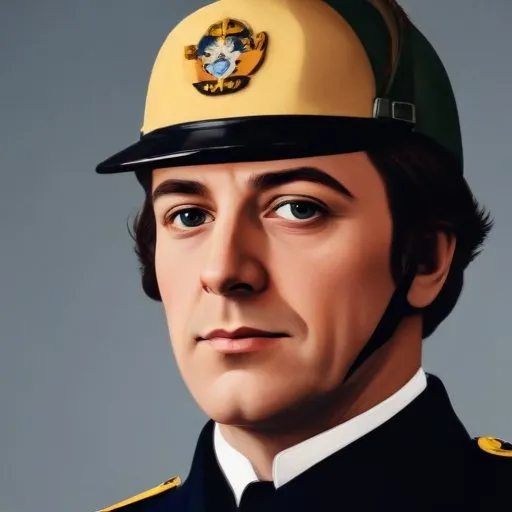
A British Royal Air Force officer who flew combat missions during World War I and later became a pioneer in aerial photography. He's credited with capturing iconic images of the war from the air.
Laurence W. Allen, a British flying ace, is renowned for his exceptional bravery and aerial prowess during World War I. With an impressive record of ten confirmed victories, he played a significant role in the war, leaving an indelible mark on the annals of military history.
Born on September 14, 1892, in Coventry, England, Allen was originally a member of the Territorial Army. He was commissioned as a second lieutenant in the Warwickshire Regiment on November 20, 1915, before switching to aviation.
Allen's journey to becoming a flying ace began on April 5, 1917, when he scored his first aerial victory while serving as an observer-gunner in a Bristol F.2 Fighter, crewed with pilot Captain Alan Wilkinson. This marked the beginning of a remarkable streak, with Allen going on to achieve seven victories by the end of "Bloody April."
On May 24, 1917, Allen was wounded in action while downing his ninth foe. His bravery was recognized, and he was awarded the Military Cross, which was gazetted two days later. He would go on to score three more victories, bringing his total tally to ten.
Allen's aerial exploits are a testament to his skill and bravery. His final tally includes:
After the war, Allen was transferred to the Class A Reserves of the Royal Air Force on September 1, 1922. He suffered a minor injury in a plane crash on February 17, 1926, and later transferred to the Class C Reserves on March 30, 1926. Allen completed his military service and relinquished his commission on September 1, 1926.
Laurence W. Allen passed away in 1968 in Coventry, leaving behind a legacy as one of the most decorated flying aces of World War I.
Born in 1910
A British Royal Air Force flying ace during World War II, known for his bravery and flying skills despite having two prosthetic legs. He was a symbol of inspiration and determination.
Born in 1871
Prolific writer of historical novels and adventure stories, also a talented landscape painter.
Born in 1869
The Prime Minister who infamously appeased Nazi Germany with the Munich Agreement, hoping to avoid war, but ultimately contributing to its outbreak. He's a symbol of failed diplomacy and naivety in the face of aggression.
Born in 1883
Led the Labour Party to a landslide victory in 1945, implementing significant social and economic reforms, including the creation of the National Health Service. He played a crucial role in shaping post-war Britain.
