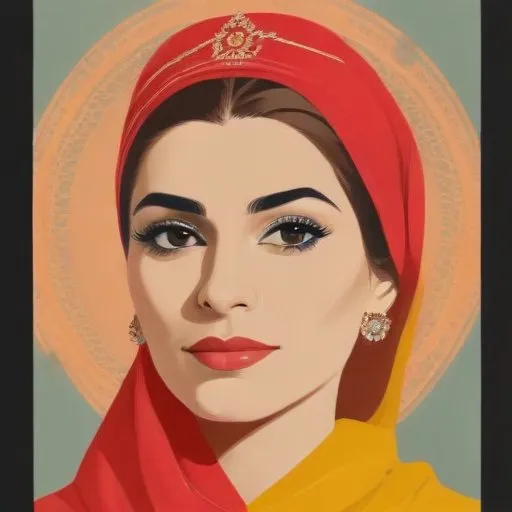
Leila Pahlavi: The Tragic Princess of Iran
A Life of Privilege and Struggle
Leila Pahlavi, the youngest daughter of
Mohammad Reza Pahlavi, Shah of Iran, and his third wife,
Farah Pahlavi, was known for her striking beauty, her struggles with mental health, and her untimely death at the age of 31. As a member of the Iranian royal family, Leila's life was marked by privilege and luxury, but also by exile, personal struggles, and tragic circumstances.
Early Life and Exile
Born on March 27, 1970, in Tehran, Iran, Leila was the fourth and youngest child of the Shah and the Empress. She had two elder brothers, an elder sister, and an elder half-sister. In 1979, at the age of nine, Leila's family was forced into exile as a result of the Iranian Revolution. Following her father's death in 1980, the family settled in the United States, where Leila attended the United Nations International School in New York City and later graduated from Rye Country Day School in 1988.
Education and Career
Leila studied literature and philosophy at Brown University, although some sources suggest that she left university before graduating due to her declining health. She was a talented linguist, speaking Farsi, English, and French fluently, as well as some Spanish and Italian. During her time in Paris, where her mother was living, Leila worked as a model for the renowned designer Valentino.
Personal Struggles
Leila's life was marked by personal struggles, including anorexia nervosa, chronic low self-esteem, severe depression, and chronic fatigue syndrome. Her struggles with mental health were further complicated by her struggles with food intolerances and bulimia.
Death and Legacy
On June 10, 2001, Leila was found dead in her room at the Leonard Hotel in London, with more than five times the lethal dose of Seconal, a barbiturate, in her system, along with a non-lethal amount of cocaine. Her death was a tragic end to a life marked by struggle and privilege. Leila's legacy serves as a reminder of the importance of mental health awareness and the dangers of addiction.
Philosophical Contributions and Beliefs
Despite her personal struggles, Leila's studies in philosophy and literature suggest that she was a thoughtful and introspective individual. Her struggles with mental health and addiction may have influenced her philosophical beliefs, although these remain unclear.
Impact on Modern Society
Leila's story serves as a reminder of the importance of mental health awareness and the dangers of addiction. Her struggles and tragic death have shed light on the importance of seeking help and support for mental health issues.
Trivia and Fun Facts
- Leila was known for her striking beauty and was often referred to as the "princess of Iran."
- She was a talented linguist, speaking multiple languages fluently.
- Leila's struggles with mental health and addiction were largely hidden from the public eye during her lifetime.
Influence on Pop Culture
Leila's story has inspired various artistic works, including films and literature. Her tragic death has also sparked conversations about mental health awareness and the dangers of addiction.
Charitable Work and Social Contributions
Although Leila's life was cut short, her story has inspired charitable work and social contributions in the areas of mental health awareness and addiction support.
Inspirational Stories and Motivations
Leila's story serves as a reminder of the importance of seeking help and support for mental health issues. Her struggles and tragic death have inspired many to speak out about their own struggles and to seek help.
Historical Context and Legacy
Leila's life and death are a poignant reminder of the complexities of privilege and struggle. Her story serves as a reminder of the importance of mental health awareness and the dangers of addiction, and her legacy continues to inspire conversations and charitable work in these areas.