


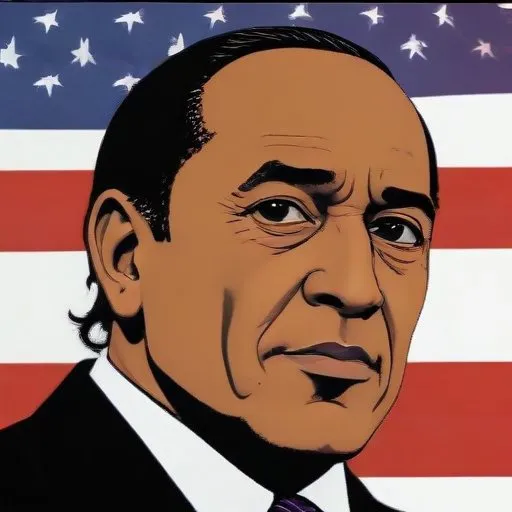
Governor of Rhode Island from 1831 to 1833, known for his strong anti-slavery stance and advocating for the rights of African Americans.
Lemuel Hastings Arnold, an American politician from Rhode Island, left an indelible mark on the country's political landscape, serving as the 12th Governor of Rhode Island and a member of the U.S. House of Representatives. Known for his dedication to public service, Arnold's storied career spanned over three decades, influencing the course of American politics during the 19th century.
Born on January 29, 1792, in St. Johnsbury, Vermont, Arnold's life was shaped by his father's legacy, Jonathan Arnold, a delegate to the Congress of the Confederation. After his father's untimely death, Arnold's mother moved the family to Rhode Island, where he attended local schools and graduated from Dartmouth College in 1811. He then pursued a career in law, studying under prominent lawyers and eventually being admitted to the bar in 1814.
Arnold's political journey began in 1826, when he was elected to the Rhode Island House of Representatives, serving for five years. This experience laid the groundwork for his subsequent rise to prominence, as he was elected Governor of Rhode Island in 1831, serving two terms until 1833. During this period, he navigated the state through the Dorr Rebellion, displaying his ability to manage crisis and maintain order.
In 1842, Arnold served on the Rhode Island Executive Council, further solidifying his reputation as a seasoned politician. His dedication to public service led to his election to the U.S. House of Representatives in 1845, where he served one term as a member of the Whig Party until 1847.
Arnold's personal life was marked by tragedy and resilience. He married Sally Lyman and had nine children, including Richard Arnold, a brigadier general in the Union Army during the Civil War, and Sally Lyman Arnold, whose husband, Isaac P. Rodman, was mortally wounded at the Battle of Antietam. After Sally's death, Arnold married Catherine Shannard.
Arnold's legacy extends beyond his political accomplishments. He is remembered as the great-great-uncle of U.S. Senator Theodore F. Green, ensuring his influence on American politics continued for generations. His commitment to public service, negotiation, and leadership has inspired countless individuals to enter the realm of politics.
Lemuel H. Arnold's remarkable life came to an end on June 27, 1852, when he passed away at the age of 60. He was laid to rest in Swan Point Cemetery in Providence, Rhode Island, a testament to his enduring legacy in the state he served with dedication and passion.
Today, Arnold's impact on American politics remains palpable. His life serves as a testament to the power of commitment, perseverance, and dedication to public service. As a politician, leader, and statesman, Lemuel H. Arnold's contributions continue to shape the course of American history, inspiring future generations to strive for excellence in public office.
Born in 1858
A pioneering leader who championed progressive reforms, trust-busting, and conservation, earning a Nobel Peace Prize for mediating the Russo-Japanese War. He's also famous for his rugged outdoorsmanship and "big stick" diplomacy.
Born in 1857
The 27th President of the United States was a lawyer and jurist who served as the only person to hold the offices of President and Chief Justice of the United States. He's known for his significant contributions to the country's judicial system.
Born in 1865
The 29th President of the United States, a journalist-turned-politician, led the country through a period of post-war prosperity and scandalous corruption. He's infamous for his administration's numerous scandals and his own extramarital affairs.
Born in 1872
The 30th President of the United States, a lawyer and politician, led the country through a period of economic prosperity and limited government intervention, earning the nickname "Silent Cal" for his frugal and humble nature. He's most known for his minimalist approach to governance and tax cuts.
Born in 1874
The 31st President of the United States was a humanitarian and politician who led the country through the Great Depression and is known for his humanitarian efforts and infrastructure development. He's also infamous for his inability to mitigate the economic crisis.
Born in 1882
Led the United States through the Great Depression and World War II, implementing a series of reforms known as the New Deal and helping to establish the country as a global superpower.
Born in 1884
The 33rd President of the United States, a strong leader who made tough decisions, including dropping atomic bombs on Japan and establishing the Marshall Plan to rebuild Europe after WWII.
Born in 1890
Led the Allied forces to victory in World War II and later served as President, maintaining peace and prosperity during the Cold War era. He's known for his strategic leadership and diplomatic skills.
