


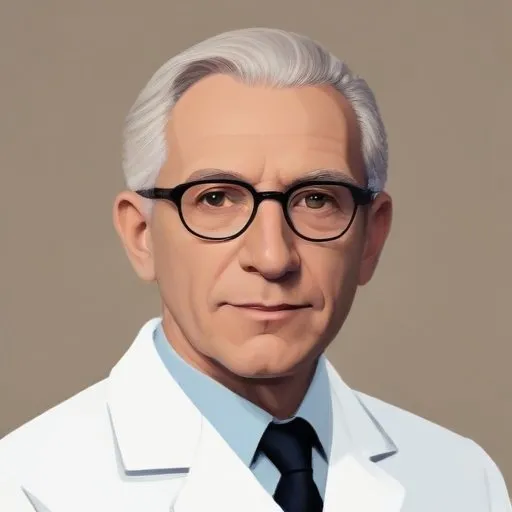
A physician, scientist, and educator who chaired the President's Council on Bioethics and is known for his controversial views on human cloning and stem cell research.
Leon Kass, a renowned American physician, scientist, educator, and public intellectual, is best known for his staunch opposition to human cloning, life extension, euthanasia, and embryo research. As a prominent critic of these controversial practices, Kass has spent his illustrious career advocating for the preservation of human dignity and the importance of liberal arts education.
Born on February 12, 1939, in Chicago to Jewish immigrants from Eastern Europe, Kass was raised in a secular, socialist household that instilled in him a strong sense of morality and social justice. This upbringing would later shape his philosophical beliefs and inform his critiques of modern society.
Kass is a staunch proponent of liberal arts education, with a particular emphasis on the Great Books. He believes that these foundational texts hold the key to understanding human nature, wants, needs, and potential. Through his teachings and writings, Kass has inspired a new generation of scholars to engage with the classic works of Western literature and philosophy.
As chairman of the President's Council on Bioethics from 2001 to 2005, Kass played a pivotal role in shaping the national conversation around bioethics. He has written extensively on the subject, arguing that the pursuit of scientific progress must always be tempered by a deep respect for human dignity and the moral principles that underpin it.
Kass's academic career has spanned several decades, with appointments at the University of Chicago, the American Enterprise Institute, and Shalem College in Jerusalem. He is the author of several influential books, including Toward A More Natural Science, The Hungry Soul, and Life, Liberty, and the Defense of Dignity.
Kass's philosophical contributions are characterized by a commitment to humanism, which he defines as a broad concern with all aspects of human life, rather than a narrow focus on ethics. He believes that the most pressing questions of our time are not unique to modernity, but rather rooted in the timeless concerns of human nature.
Throughout his life, Kass has been driven by a passion for learning and a desire to make a meaningful contribution to society. From his early days as a student at the University of Chicago to his later years as a respected public intellectual, Kass has remained true to his core values and principles.
Kass's influence extends far beyond the realm of academia. His critiques of modern society have inspired a wider conversation about the importance of human dignity, the limits of scientific progress, and the need for moral leadership in public life.
Kass's life and work are a testament to the power of intellectual curiosity and the importance of moral leadership. As a scholar, teacher, and public intellectual, he has left an indelible mark on the world, inspiring future generations to engage with the big questions of human existence.
Through his unwavering commitment to human dignity and his passionate defense of liberal arts education, Leon Kass has earned a place among the most important thinkers of our time. His legacy will continue to inspire and challenge us, as we strive to build a more just and compassionate society.
Born in 1924
The 41st President of the United States, a decorated war hero and skilled diplomat, led the country through the end of the Cold War and Gulf War. He's known for his foreign policy expertise and "kinder, gentler nation" vision.
85 Years Old
The 46th Vice President of the United States, a powerful and influential figure in American politics, known for his strong conservative stance and role in shaping the country's foreign policy during the War on Terror.
94 Years Old
The 13th United States Secretary of Defense, a high-ranking government official, oversaw the US military during the Iraq War and was known for his controversial decisions and quotes. He's infamous for his "known unknowns" phrase.
82 Years Old
A key architect of the Iraq War, he served as Deputy Secretary of Defense under President George W. Bush and later as President of the World Bank.
71 Years Old
The first African American woman to serve as Secretary of State, she played a crucial role in shaping US foreign policy during a tumultuous period, earning her a lasting legacy in international relations.
75 Years Old
A mastermind behind Republican political campaigns, credited with shaping the party's strategy and helping George W. Bush win two presidential elections.
75 Years Old
Chief of Staff to the Vice President, convicted of obstruction of justice and perjury in the Valerie Plame affair, later pardoned by President Trump.
71 Years Old
The 26th White House Press Secretary, a journalist who served under President George W. Bush, is most known for being a conservative commentator and defender of the administration's policies. They were a prominent figure in the Bush administration's communication team.
