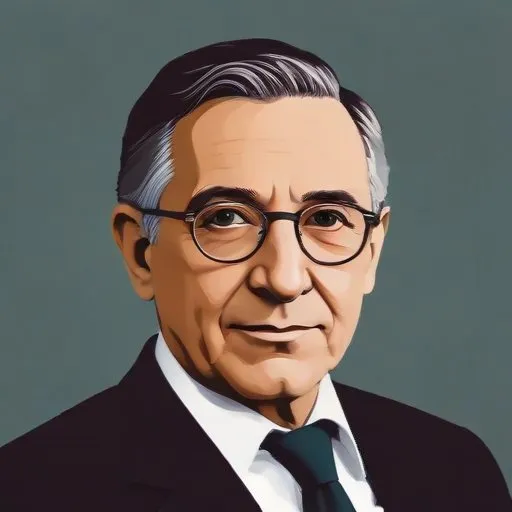
Leonard Lerman: The Pioneer of DNA Research
The Discovery that Shaped Our Understanding of DNA
Leonard Lerman, a renowned American scientist, is best known for his groundbreaking discovery that certain molecules bind to DNA by intercalation, revolutionizing the field of DNA research. This fundamental finding has greatly impacted our understanding of how drugs and mutagens interact with DNA, paving the way for significant advances in medicine and genetics.
Early Life and Education
Born on June 27, 1925, in Pittsburgh, Pennsylvania, Lerman was the son of Jewish immigrants from Ukraine. His father, Meyer Lerman, was a department store buyer. Leonard's academic prowess was evident from an early age, as he began attending the Carnegie Institute of Technology before graduating from high school and went on to receive his BS in just five semesters.
Collaborations and Contributions
Lerman's graduate work with
Linus Pauling at the California Institute of Technology led to another significant discovery: that antibodies have two binding sites. His sabbatical at the University of Cambridge afforded him the opportunity to work with future Nobel laureates
Sydney Brenner and
Francis Crick. Lerman's subsequent research programs at Vanderbilt University, the University of Colorado Health Sciences Center, and SUNY Albany produced a plethora of influential papers and collaborations, including his work with Nobel prize winner
Sidney Altman and leading molecular biologist Tom Maniatis.
DGGE: A Technique that Changed the Game
One of Lerman's most notable contributions was the invention of denaturing gradient gel electrophoresis (DGGE), a technique used to separate DNA molecules. Developed in collaboration with Stuart Fischer at SUNY, DGGE has become an essential tool for scientists studying biodiversity in microbial communities.
Awards and Honors
Lerman's outstanding contributions to the field of DNA research earned him membership in the National Academy of Sciences, USA. His work also led to his involvement with the Genetics Institute, a pioneering biotechnology company co-founded by his student, Tom Maniatis.
Legacy and Impact
Through his pioneering work, Lerman has left an indelible mark on the scientific community. His discoveries have influenced generations of researchers, shaping our understanding of DNA and its interactions with molecules. As a testament to his legacy, Lerman's work continues to inspire new breakthroughs in medicine, genetics, and biotechnology.
Personal Milestones and Anecdotes
Lerman's dedication to his work was matched only by his passion for life. His lab was known for its camaraderie, with students and colleagues often gathering for lively discussions and debates. Despite his many accomplishments, Lerman remained humble and kind, inspiring those around him with his warmth and generosity.
Influence on Modern Society
The impact of Lerman's work extends far beyond the scientific community. His discoveries have paved the way for advancements in medicine, agriculture, and biotechnology, ultimately improving the lives of millions worldwide. As we continue to unravel the mysteries of DNA, Lerman's pioneering spirit and groundbreaking research serve as a beacon, guiding us toward a brighter future.
FAQ
What is Leonard Lermans significance in American genetics?
Leonard Lerman is an American geneticist and biologist who made significant contributions to the field of genetics, particularly in the discovery of DNA-binding proteins.
What were Leonard Lermans most notable research contributions?
Leonard Lermans most notable research contributions include his discovery of DNA-binding proteins, such as the lac repressor, and his work on the regulation of gene expression.
How did Leonard Lermans research influence our understanding of gene regulation?
Leonard Lermans research significantly advanced our understanding of gene regulation, revealing the key role of DNA-binding proteins in controlling gene expression and cellular differentiation.
What awards did Leonard Lerman receive for his contributions to genetics?
Leonard Lerman received several awards for his contributions to genetics, including the National Medal of Science and the Albert Lasker Award for Basic Medical Research.
What is Leonard Lermans legacy in American genetics?
Leonard Lermans legacy in American genetics continues to inspire new generations of geneticists and biologists, with his contributions to the field remaining a testament to his innovative spirit and scientific rigor.