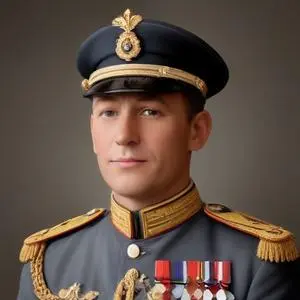
Leopold III of Belgium: The Controversial King
The Man Who Divided a Nation
Leopold III of Belgium is infamous for his role in World War II, where he surrendered to Nazi Germany, earning him widespread resentment from his people and the international community. For nearly two decades, he ruled Belgium, leaving an indelible mark on the country's history, but his decisions during the war would haunt him for the rest of his life.
Royal Upbringing and Early Life
Born on November 3, 1901, in Brussels, Leopold was the eldest son of Prince Albert, the future King
Albert I of Belgium, and Duchess Elisabeth in Bavaria. As the heir apparent, he was groomed for leadership from a young age. During World War I, he enlisted in the Belgian army at just 12 years old, and later attended Eton College in England. This unique blend of military and academic experience would shape his worldview and inform his future decisions.
Ascension to the Throne and Marriage
Following his father's death in 1934, Leopold III succeeded to the throne. His marriage to Princess
Astrid of Sweden in 1926 was a fairy-tale romance, producing three children. Tragedy struck in 1935 when Astrid died in a car accident in Switzerland, leaving Leopold devastated. He later married Lilian Baels in a morganatic marriage in 1941, which sparked controversy due to its clash with Belgian law.
World War II and the Controversial Surrender
When Germany invaded Belgium in May 1940, Leopold III chose to surrender, rather than follow the government into exile. This decision was met with outrage, and the Prime Minister, Hubert Pierlot, declared it unconstitutional. Leopold and his family were placed under house arrest, eventually being moved to Germany and Austria. After liberation by American forces in 1944, they were banned from returning to Belgium.
Post-War Controversy and Abdication
Leopold's return to Belgium in 1950 sparked widespread protests, and he was eventually pressured into abdicating the throne in favor of his son, Baudouin, in July 1951. This decision marked the end of his reign and the beginning of a new chapter in Belgian history.
Legacy and Impact
Leopold III's legacy is marked by controversy and division. While he was a pioneer in promoting Belgian unity and modernization, his actions during World War II left an indelible stain on his reputation. Despite this, he remains an important figure in Belgian history, and his story continues to captivate and educate.
Interesting Facts and Trivia
- Leopold III was the 1,136th Knight of the Order of the Golden Fleece in Spain.
- He was the first Belgian monarch to abdicate the throne.
- In his later years, Leopold III became an advocate for environmental conservation and wildlife preservation.
In conclusion, Leopold III of Belgium's life was a complex tapestry of triumph and tragedy, marked by a series of decisions that continues to shape the country's history. While his legacy remains contentious, his story serves as a reminder of the intricate dance between politics, power, and personal conviction.
FAQ
What were the major challenges faced by Leopold III of Belgium during his reign?
Leopold III of Belgium faced significant challenges during his reign, including the German invasion of Belgium in 1940, which led to his countrys occupation during World War II. He also struggled with the issues of fascism and communism in the interwar period.
How did Leopold III of Belgium respond to the German invasion of Belgium?
Leopold III of Belgium chose to remain in Belgium during the German invasion, unlike many other European monarchs who fled their countries. He believed that his presence would help to maintain order and stability, but this decision has been subject to controversy and debate.
What was Leopold III of Belgiums role in the Belgian government-in-exile?
Leopold III of Belgium was not part of the Belgian government-in-exile, which was established in London during World War II. Instead, he remained in Belgium and was eventually deported to Germany, where he was held under house arrest until the end of the war.
How did Leopold III of Belgiums reign affect the modernization of Belgium?
Leopold III of Belgiums reign had a significant impact on the modernization of Belgium, as he encouraged industrialization and economic development. He also supported the growth of tourism and the development of infrastructure, including the expansion of the Belgian rail network.
What is Leopold III of Belgiums legacy in Belgian history?
Leopold III of Belgiums legacy is that of a complex and controversial figure who faced significant challenges during his reign. While he made mistakes, he also worked to maintain Belgian neutrality and promote economic development, and his story continues to be an important part of Belgian history.