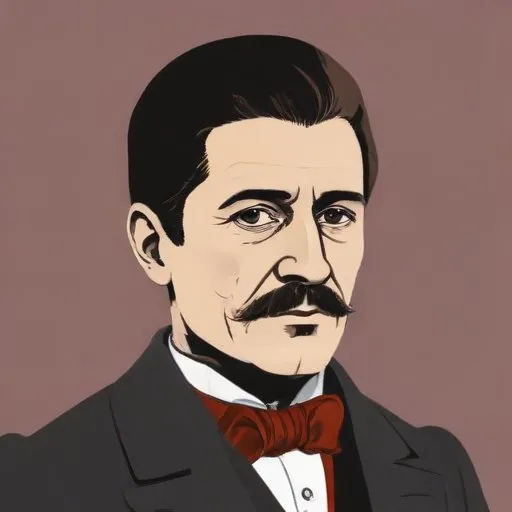
Leopold von SacherMasoch: The Father of Masochism
The Birth of a Controversial Concept
Leopold von SacherMasoch, an Austrian nobleman, writer, and journalist, is perhaps most notorious for being the namesake of the term "masochism". This term, coined by his contemporary,
Richard von Krafft-Ebing, describes the practice of deriving pleasure from pain or humiliation. While SacherMasoch did not condone this usage of his name, his literary works and ideologies continue to fascinate and provoke readers to this day.
A Life of Letters and Ideals
Born on January 27, 1836, in Lemberg, Kingdom of Galicia and Lodomeria (now Lviv, Ukraine), SacherMasoch was raised in a Roman Catholic family. His father, Leopold Johann Nepomuk Ritter von Sacher, was an Austrian civil servant, and his mother, Charlotte Josepha von Masoch, was a Ukrainian noblewoman. This blend of cultural influences would later seep into his writing, as he explored themes of national identity, social hierarchy, and human relationships.
A Scholar and Storyteller
SacherMasoch pursued higher education at Graz University, where he earned a doctorate in history in 1856. His early publications focused on Austrian history, showcasing his meticulous research skills and attention to detail. However, he soon shifted his attention to fiction, drawing inspiration from Galician folklore and culture. His short stories and novels effortlessly wove together historical themes, Panslavist ideas, and critiques of social norms.
A Utopian Thinker
SacherMasoch's writing often reflected his socialist and humanist ideals. He envisioned a society where individuals could break free from the shackles of oppression and inequality. His fiction frequently featured strong female characters, challenging the patriarchal norms of his time. Through his work, he sought to inspire change and spark conversations about the social ills plaguing his era.
A Legacy of Controversy and Inspiration
While SacherMasoch's name has become synonymous with masochism, his literary contributions extend far beyond this controversial concept. His writing has influenced numerous authors, including the likes of Kafka and Freud. Today, his works remain largely untranslated, yet they continue to fascinate scholars and readers alike. As we delve into the complexities of his life and writing, we are reminded that true artistry lies in challenging the status quo and provoking necessary conversations.
Major Works
- Venus in Furs (1870) – a novella exploring themes of desire, power, and submission
- The Legacy of Cain (1877) – a collection of short stories critiquing social norms and institutions
- The Galician Tales (1885) – a series of short stories showcasing SacherMasoch's mastery of folklore and cultural commentary
Personal Milestones and Key Life Events
- 1836: Born in Lemberg, Kingdom of Galicia and Lodomeria (now Lviv, Ukraine)
- 1856: Earned a doctorate in history from Graz University
- 1870s: Abandoned lecturing to focus on writing full-time
- 1895: Passed away on March 9th in Lindenhaus, near Gorz, Austria
Influence on Modern Society
SacherMasoch's work has had a lasting impact on modern thought and culture. His exploration of the human psyche, critiques of social norms, and utopian ideals have inspired generations of writers, thinkers, and artists. As we continue to grapple with the complexities of human relationships and social hierarchies, SacherMasoch's writing remains a poignant reminder of the power of art to challenge and transform.
FAQ
What is the significance of Leopold von Sacher-Masochs novel Venus in Furs?
Leopold von Sacher-Masochs novel Venus in Furs is a seminal work in the exploration of masochism and BDSM culture. It has been widely influential in literature and art.
What was Leopold von Sacher-Masochs role in the development of Ukrainian literature?
Leopold von Sacher-Masoch was a prominent figure in Ukrainian literature, and his works often explored themes of Ukrainian identity and culture.
How did Leopold von Sacher-Masochs experiences as a journalist influence his writing?
Leopold von Sacher-Masochs experiences as a journalist had a significant impact on his writing. He often incorporated elements of realism and social commentary into his fiction.
What is the connection between Leopold von Sacher-Masoch and the term masochism?
The term masochism was coined by the Austrian psychiatrist Richard von Krafft-Ebing, who was inspired by Leopold von Sacher-Masochs writings on the subject.
What was Leopold von Sacher-Masochs view on womens rights and feminism?
Leopold von Sacher-Masoch was a strong advocate for womens rights and feminism. His works often featured strong female characters and explored themes of gender equality.