


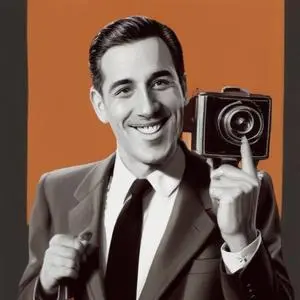
A pioneering talent agent and studio executive who transformed Hollywood's business model and launched the careers of numerous stars. He's credited with shaping the modern entertainment industry.
Lew Wasserman, a name synonymous with Hollywood greatness, is renowned for being the most powerful and influential Hollywood titan in the four decades following World War II. As a businessman and talent agent, Wasserman left an indelible mark on the entertainment industry, revolutionizing the way show business operated.
Wasserman was born on March 22, 1913, in Cleveland, Ohio, to a Jewish family of Russian immigrants. He began his show business career as an usher in a Cleveland theater in 1933, eventually becoming a booking agent for the Music Corporation of America (MCA), founded by Jules Stein.
Under Wasserman, MCA branched out into representing actors and actresses, creating the star system that drove up prices for studios. The agency struggled to gain ground in Hollywood, but Wasserman's strategic move to purchase Leland Hayward's agency in the mid-1940s gave MCA the bargaining leverage it needed to dominate the industry. Wasserman's MCA came to represent iconic stars like Bette Davis and Ronald Reagan, and eventually led the takeover of Universal Pictures.
Wasserman's business acumen was rooted in his philosophy of building long-term relationships and identifying untapped talent. He believed in fostering a culture of collaboration and mutual respect between artists, agents, and studios, which became the cornerstone of his success.
In 1995, Wasserman was awarded the Presidential Medal of Freedom by President Bill Clinton, the highest civilian honor in the United States. This recognition cemented his status as a titan of the entertainment industry.
Wasserman's impact on popular culture cannot be overstated. He played a crucial role in shaping the entertainment industry, and his legacy continues to influence the way movies and television shows are produced and distributed today.
"I am under contract here for the rest of my life, and I don't think they would throw me out of my office... my name is on the building." - Lew Wasserman, speaking to Variety about his ongoing work at Universal Pictures
Lew Wasserman's remarkable career spanned nearly eight decades, leaving behind a legacy that continues to inspire and shape the entertainment industry. As the last of the legendary movie moguls, Wasserman's impact will be remembered for generations to come.
Born in 1899
Master of suspense, renowned for crafting iconic thrillers that blended psychological complexity with cinematic innovation, leaving an indelible mark on the film industry.
Born in 1906
Academy Award-winning filmmaker behind iconic movies like "Some Like It Hot" and "Sunset Boulevard", known for his witty dialogue and genre-bending storytelling.
Born in 1913
Pioneering filmmaker behind socially conscious movies that tackled racism, nuclear war, and social justice, leaving a lasting impact on Hollywood's approach to serious issues.
Born in 1916
A legendary actor, singer, and producer who starred in iconic films like "Spartacus" and "20,000 Leagues Under the Sea", leaving an indelible mark on Hollywood's Golden Age.
Born in 1913
Academy Award-winning actor and acrobat, known for his charismatic performances in classic films like "From Here to Eternity" and "The Birdman of Alcatraz".
Born in 1889
A pioneer of silent film, he is renowned for his iconic "Little Tramp" character and groundbreaking work in writing, directing, and starring in his own movies.
