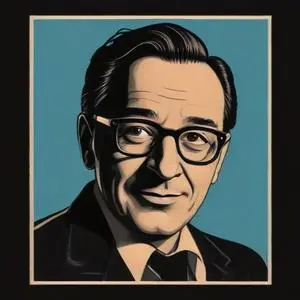
Lewis Milestone: The Acclaimed Film Director Behind Hollywood Classics
A Legacy of Cinematic Excellence
Lewis Milestone, born Leib Milstein, is renowned for directing two Academy Award-winning films:
Two Arabian Knights (1927) and
All Quiet on the Western Front (1930). These iconic films not only earned Milestone the prestigious Best Director award but also cemented his status as a pioneering filmmaker in Hollywood.
Early Life and Education
Born on September 30, 1895, in Kishinev, Russian Empire (now Chiinu, Moldova), Milestone was raised in a wealthy Jewish family with a strong liberal and political orientation. He received a well-rounded education, studying multiple languages, and developed an early passion for theater. However, his parents discouraged his interest in the dramatic arts, instead encouraging him to pursue engineering studies in Mittweida, Saxony.
A Journey to Hollywood
Milestone's desire for a theatrical career led him to neglect his engineering studies. He bought a one-way ticket to the United States, arriving in Hoboken, New Jersey, on November 14, 1913. Initially struggling to support himself in New York City, Milestone worked various jobs, including as a janitor, door-to-door salesman, and lace machine operator. In 1915, he found a position as a portrait and theater photographer.
World War I and the Army Signal Corps
During World War I, Milestone enlisted in the Army Signal Corps in 1917. Stationed in New York City and Washington, D.C., he was assigned to the corps' photography unit, where he trained in aerial photography, assisted on training films, and edited documentary combat footage. This experience would later influence his filmmaking style.
Career Highlights and Major Works
Milestone's impressive filmography includes:
- The Front Page (1931)
- The General Died at Dawn (1936)
- Of Mice and Men (1939)
- Oceans 11 (1960)
- Mutiny on the Bounty (1962), though Marlon Brando largely took over the directorial responsibilities
Philosophical Contributions and Beliefs
Milestone's films often explored themes of social injustice, humanity, and the futility of war. His direction of
All Quiet on the Western Front, an anti-war novel adaptation, showcased his commitment to conveying the devastating consequences of conflict.
Awards and Honors
Milestone's remarkable career earned him two Academy Awards for Best Director, as well as a star on the Hollywood Walk of Fame.
Legacy and Impact on Modern Society
Lewis Milestone's influence on Hollywood is undeniable. His films continue to captivate audiences, and his direction of classics like
All Quiet on the Western Front has helped shape the cinematic landscape. Milestone's legacy serves as a testament to the power of film in conveying important social messages and promoting empathy and understanding.
Personal Milestones and Key Life Events
Milestone passed away on September 25, 1980, leaving behind a rich cinematic heritage. His life's journey, marked by perseverance and dedication to his craft, serves as an inspiration to aspiring filmmakers and audiences alike.
FAQ
What was Lewis Milestones nationality?
Lewis Milestone was a Moldovan-American director, producer, and screenwriter, born in Kishinev (present-day Chișinău), Bessarabia (present-day Moldova) and later becoming a naturalized American citizen.
What was Lewis Milestones career like?
Lewis Milestone had a successful career in film, directing and producing numerous Hollywood productions, including the Academy Award-winning film All Quiet on the Western Front.
What was Lewis Milestones most famous film?
Lewis Milestones most famous film was All Quiet on the Western Front, an adaptation of Erich Maria Remarques novel about World War I, which won the Academy Award for Best Director and Best Picture in 1930.
What was Lewis Milestones style as a director?
Lewis Milestones style as a director was characterized by his use of dynamic camera work, close-ups, and location shooting, which added a sense of realism to his films.
What was Lewis Milestones legacy in film?
Lewis Milestones work and legacy have had a lasting impact on the development of Hollywood cinema, and he is considered one of the pioneering directors of the early sound era.