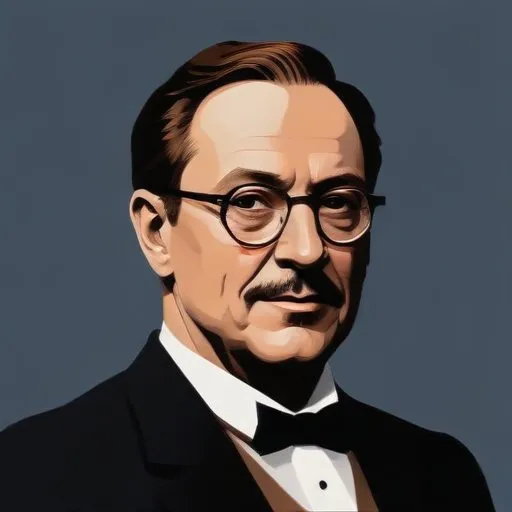
Lewis Mumford: A Pioneering Thinker on Cities, Technology, and Human Culture
A Visionary on Urban Planning and Architecture
Lewis Mumford, a renowned American historian, sociologist, philosopher of technology, and literary critic, is best known for his groundbreaking work on the study of cities and urban architecture. His comprehensive understanding of the complex relationships between technology, society, and the built environment has had a profound impact on modern urban planning and architectural thought.
Early Life and Education
Born on October 19, 1895, in Flushing, Queens, New York, Mumford graduated from Stuyvesant High School in 1912. He pursued higher education at the City College of New York and The New School for Social Research, but unfortunately, fell ill with tuberculosis, which prevented him from completing his degree. This setback, however, did not deter Mumford from pursuing his intellectual passions.
Early Career and Influences
During World War I, Mumford joined the Navy, where he served as a radio electrician until his discharge in 1919. Upon his return, he became associate editor of
The Dial, an influential modernist literary journal, where he was exposed to the works of Scottish theorist Sir
Patrick Geddes and British sociologist Victor Branford, whose ideas on urban planning and sociology greatly influenced his own thought.
Literary Contributions and Criticism
Mumford's early books on literary criticism, such as
The Story of Utopias (1922) and
The Golden Day (1926), have had a lasting impact on contemporary American literary criticism. In these works, he explored the visions of a better world that influenced the development of modern urban planning theory and argued for a mid-19th-century American literary canon that reflected an antebellum American culture.
Major Works and Career Highlights
Mumford's most notable works include:
- The Culture of Cities (1938), a comprehensive study of urban culture and its relationship to technology and society.
- The City in History (1961), a sweeping narrative that explores the development of cities from ancient times to the modern era.
- The Myth of the Machine (1966-1970), a two-volume critique of modern technology and its impact on human culture.
These works cemented Mumford's reputation as a leading thinker on urban planning, technology, and human culture.
Influence on Modern Society
Mumford's ideas have had a profound impact on modern urban planning and architectural thought. His emphasis on the importance of considering the social, cultural, and environmental implications of urban development has influenced generations of urban planners, architects, and policymakers.
Personal Relationships and Anecdotes
Mumford was a close friend and contemporary of notable figures such as
Frank Lloyd Wright, Clarence Stein, and Frederic Osborn, with whom he shared a passion for innovative urban planning and design.
Awards and Honors
Throughout his career, Mumford received numerous awards and honors for his contributions to urban planning, literature, and philosophy, including the National Medal for Literature in 1972.
Legacy and Historical Context
Lewis Mumford's legacy extends far beyond his own work, as his ideas have influenced a wide range of fields, from urban planning and architecture to philosophy and social theory. His work remains a testament to the power of interdisciplinary thinking and the importance of considering the complex relationships between technology, society, and the built environment.
FAQ
What was Lewis Mumfords contribution to urban planning?
Lewis Mumford was a pioneering urban planner who advocated for sustainable, human-scale cities, critiquing the excesses of modern urbanization.
What philosophical influences shaped Lewis Mumfords work?
Lewis Mumfords work was influenced by a range of philosophical traditions, including pragmatism, humanism, and organicism.
What is Lewis Mumfords most famous book?
Lewis Mumfords most famous book is The City in History, a sweeping narrative that examines the development of cities from ancient times to the modern era.
How did Lewis Mumfords work impact the development of sociology?
Lewis Mumfords work had a significant impact on the development of sociology, shaping the fields understanding of urbanization, technology, and human relationships.
What awards did Lewis Mumford receive for his work?
Lewis Mumford received several awards for his work, including the National Medal of Arts and the Presidential Medal of Freedom.