


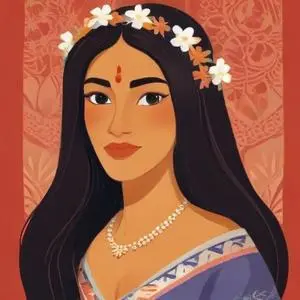
The last reigning monarch of a Pacific island kingdom, who fought to preserve her nation's independence and culture, and is remembered for her bravery and musical compositions.
Liliuokalani, the only queen regnant of the Hawaiian Kingdom, is renowned for her courageous reign, musical talents, and unwavering dedication to her people. As the composer of the iconic song "Aloha Oe," she left an indelible mark on Hawaiian culture, while her autobiography, "Hawaii's Story by Hawaii's Queen," remains a testament to her unbroken spirit.
Born on September 2, 1838, in Honolulu, Oahu, Liliuokalani was hnai (informally adopted) by Abner Pāʻāina and Laura Kōnia, and raised alongside their daughter Bernice Pauahi Bishop. This unique family arrangement instilled in her a strong sense of responsibility and compassion, which would later define her reign.
After the accession of her brother David Kalākaua to the throne in 1874, Liliuokalani was proclaimed heir apparent, solidifying her position as a future leader of the Hawaiian Kingdom. In 1887, she represented her brother as an official envoy to the United Kingdom during Queen Victoria's Golden Jubilee, further preparing her for the throne.
Liliuokalani ascended to the throne on January 29, 1891, nine days after her brother's death. During her reign, she courageously attempted to draft a new constitution, seeking to restore the power of the monarchy and the voting rights of the economically disenfranchised. However, her efforts were met with resistance from pro-American elements, who ultimately overthrew the monarchy on January 17, 1893.
Despite her reign being cut short, Liliuokalani's legacy continues to inspire generations of Hawaiians and music lovers worldwide. Her compositions, including "Aloha Oe," have become synonymous with Hawaiian culture, while her autobiography remains a powerful testament to her unwavering spirit.
"Aloha ʻoe, aloha ʻoe, e ke onaona no ho i ka lipo" ("Farewell to thee, farewell to thee, until we meet again"). These poignant words, penned by Liliuokalani, have become an anthem for the Hawaiian people, symbolizing their resilience and hope for a brighter future.
Liliuokalani's remarkable life and reign serve as a poignant reminder of Hawaii's rich cultural heritage and its struggle for sovereignty. Her legacy continues to inspire generations, fostering a deeper appreciation for Hawaiian history, music, and culture.
Born in 1836
Hawaiian monarch who ruled from 1874 to 1891, known for promoting Hawaiian culture, restoring native traditions, and composing "Aloha 'Oe," a beloved song that remains an iconic symbol of Hawaiian identity.
Born in 1835
Hawaii's first elected king, known for his brief but significant reign, which aimed to reform the government and improve the lives of Native Hawaiians. He's also remembered for his kindness and generosity.
Born in 1830
The last ruler of the Kamehameha dynasty, who oversaw the modernization of Hawaii's government and economy, while also preserving native Hawaiian culture and traditions. He's known for his efforts to balance progress with cultural heritage.
Born in 1830
The last ruler of the Kamehameha dynasty, who oversaw the modernization of Hawaii's government and economy, while also preserving native Hawaiian culture and traditions. He's known for his efforts to balance progress with cultural heritage.
Born in 1830
The last ruler of the Kamehameha dynasty, who oversaw the modernization of Hawaii's government and economy, while also preserving native Hawaiian culture and traditions. He's known for his efforts to balance progress with cultural heritage.
