


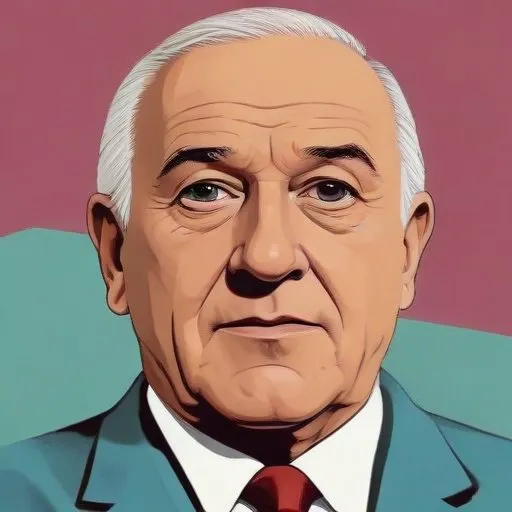
The 6th Deputy Prime Minister of Australia, serving from 1983 to 1990, known for his key role in shaping the country's economic and social policies during the Hawke government. He was a prominent figure in Australian politics, particularly in the Labor Party.
Lionel Frost Bowen AC, the sixth deputy prime minister of Australia, left an indelible mark on the country's political landscape with his unwavering commitment to public service and his stalwart leadership within the Australian Labor Party (ALP). From 1983 to 1990, Bowen served as the right-hand man to Prime Minister Bob Hawke, playing a crucial role in shaping the country's policies and governance.
Born on December 28, 1922, in the Sydney suburb of Ultimo, Bowen grew up in a working-class family. His father left the family when Bowen was just 10 years old, leaving his mother to care for her invalid brother and elderly mother while working as a cleaner. Despite these challenges, Bowen's mother instilled in him a strong sense of determination and resilience.
Bowen's educational journey began at Cleveland Street public school, followed by Marcellin College Randwick. He later pursued a law degree at the University of Sydney, graduating with a LLB in 1946. This academic achievement laid the foundation for his future career in politics.
Before entering politics, Bowen served in the Second Australian Imperial Force from 1941 to 1945, reaching the rank of corporal. This experience instilled in him a sense of discipline and dedication to serving his country.
Bowen's political career began in 1948 when he was elected to Randwick Council and subsequently became the Mayor of Randwick. He served in the New South Wales Legislative Assembly from 1962 to 1969, representing Randwick. In 1969, he was elected to the House of Representatives, representing the seat of Kingsford Smith.
Throughout his political career, Bowen held various ministerial positions, including Postmaster-General (1972-1974), Special Minister of State (1973-1975), and Minister for Manufacturing Industry (1975) in the Whitlam government. In 1977, he became the deputy leader of the ALP, a position he retained until 1990.
When Bob Hawke became the Prime Minister of Australia in 1983, Bowen was sworn in as the Deputy Prime Minister and Minister for Trade (1983-1984). He later served as Attorney-General from 1984 to 1990, demonstrating his versatility and expertise in various portfolios.
Bowen's tenure as Deputy Prime Minister was marked by significant reforms and policy initiatives, including the introduction of Medicare, the floating of the Australian dollar, and the deregulation of the financial sector.
After retiring from politics in 1990, Bowen continued to contribute to public life, serving as the chair of the National Gallery of Australia from 1990 to 1994. He passed away on April 1, 2012, leaving behind a legacy of dedicated public service, political acumen, and a deep commitment to the Australian nation.
Bowen's life and career serve as a testament to the power of hard work, perseverance, and a passion for serving others. His contributions to Australian politics and governance continue to inspire future generations of leaders and public servants.
96 Years Old
Leader of the Australian Labor Party who served as Prime Minister from 1983 to 1991, known for his charismatic leadership and economic reforms.
82 Years Old
The 24th Prime Minister of Australia, a Labor Party leader who implemented significant economic reforms, including deregulation and privatization, and is known for his bold and charismatic leadership style.
73 Years Old
A British singer-songwriter and pianist known for his emotive, poetic lyrics and soaring melodies, crafting introspective and atmospheric indie-pop soundscapes.
77 Years Old
The 9th Deputy Prime Minister of Australia, serving from 1995 to 1996, is a prominent figure in Australian politics, known for his leadership roles and diplomatic efforts. He later became the Australian Ambassador to the United States from 2010 to 2016.
77 Years Old
A prominent Australian trade union leader and politician who served as the Minister for the Arts, known for his contributions to the country's cultural development and labor movement.
69 Years Old
The 26th Prime Minister of Australia, a diplomat, and leader who apologized to the Indigenous Australians for past injustices and played a key role in shaping the country's climate change policies.
64 Years Old
The first female Prime Minister of Australia, serving from 2010 to 2013, known for her progressive policies and leadership during a period of significant economic reform.
72 Years Old
The 14th Deputy Prime Minister of Australia, a Labor Party member, and economist who served during the Rudd and Gillard governments, known for his role in navigating Australia through the 2008 global financial crisis. He's also an academic and author, having written several books on economics and politics.
