


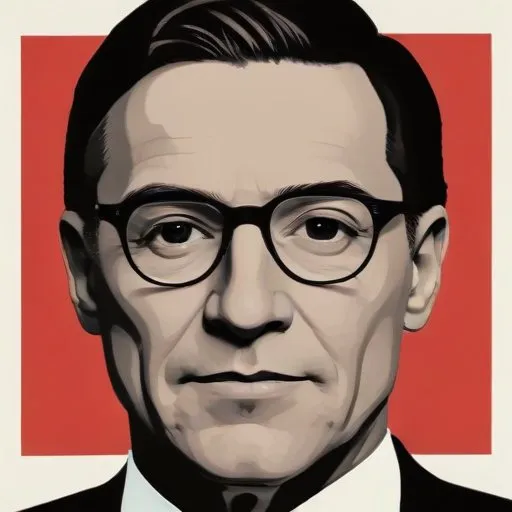
Canadian Minister of Justice who played a key role in shaping the country's post-war reconstruction and social welfare policies, particularly in the areas of health and education.
Lionel Chevrier, a Canadian politician and cabinet minister, left an indelible mark on the country's history by spearheading the development of the St. Lawrence Seaway, a monumental infrastructure project that transformed international trade and commerce. As the first president of the St. Lawrence Seaway Authority, Chevrier's leadership and vision played a crucial role in bringing this ambitious project to life.
Born on April 2, 1903, in Cornwall, Ontario, Chevrier was the son of former Cornwall mayor Joseph E. Chevrier. He received his education in Cornwall, the University of Ottawa, the University of Montreal, and Osgoode Hall. Chevrier was called to the bar in 1928 and was named King's Counsel in 1939.
Chevrier's political career spanned over three decades, during which he held various positions in the Canadian government. He was first elected as a Liberal candidate in the Ontario riding of Stormont in the 1935 federal election and went on to be reelected in 1940, 1945, 1949, and 1953. In 1943, he became the Parliamentary Assistant to the Minister of Munitions and Supply, and from 1945 to 1954, he served as the Minister of Transport.
In 1954, Chevrier resigned from politics to become the first president of the St. Lawrence Seaway Authority, a position he held until 1957. During his tenure, he oversaw the construction and development of the seaway, which was officially inaugurated in 1959. The seaway revolutionized maritime trade, enabling ocean-going vessels to travel from the Great Lakes to the Atlantic Ocean.
After his stint at the St. Lawrence Seaway Authority, Chevrier returned to politics and was elected in the Quebec riding of Laurier in 1957. He went on to serve as the Minister of Justice and Attorney General of Canada from 1963 to 1964. In 1964, he resigned from the House of Commons to become the Canadian High Commissioner in London, a position he held until 1967.
In recognition of his contributions to Canada, Chevrier was made a Companion of the Order of Canada in 1967. In 1997, Canada Post issued a stamp in his honor, a testament to his enduring legacy.
Chevrier married Lucienne Brl in 1932 and had a long and fulfilling personal life. He served as the Honorary Lieutenant Colonel of the Stormont, Dundas and Glengarry Highlanders from 1948 to 1956 and as Honorary Colonel from 1956 to 1961.
Lionel Chevrier's remarkable life and career serve as a testament to his dedication to public service, his vision for a modern Canada, and his unwavering commitment to the development of the St. Lawrence Seaway. His legacy continues to inspire generations, and his name remains synonymous with one of Canada's most iconic infrastructure projects.
Born in 1882
The 12th Prime Minister of Canada, a strong leader who played a crucial role in shaping the country's post-war economy and foreign policy, and is credited with establishing universal hospital insurance and old-age pensions.
Born in 1897
A Canadian leader who served as Prime Minister and won the Nobel Peace Prize for resolving the Suez Canal Crisis, known for his diplomatic efforts and peacekeeping initiatives.
Born in 1919
The charismatic leader who championed Canadian unity and implemented progressive policies, known for his iconic style and influential legacy in shaping modern Canada.
92 Years Old
The 20th Prime Minister of Canada, serving from 1993 to 2003, known for his leadership during the Quebec sovereignty movement and his role in shaping Canada's national unity. He implemented policies like the Clarity Act and the National Child Benefit.
45 Years Old
American professional ice hockey player who won two Stanley Cup championships and was a four-time NHL All-Star. Known for his rugged defensive play and physical presence on the ice.
70 Years Old
A Canadian politician and sociologist who served as Minister of the Environment, known for his advocacy on climate change and implementation of the Kyoto Protocol. He led the Liberal Party of Canada and was a key figure in shaping the country's environmental policies.
79 Years Old
A Canadian journalist and politician who served as the leader of the Liberal Party of Canada and was a prominent public intellectual, known for his writings on politics, history, and human rights.
97 Years Old
The 17th Prime Minister of Canada, serving from 1984 to 1985, is most known for his brief tenure and struggles to maintain party unity. He's also recognized for his prior role as Minister of Justice, where he introduced significant reforms.
