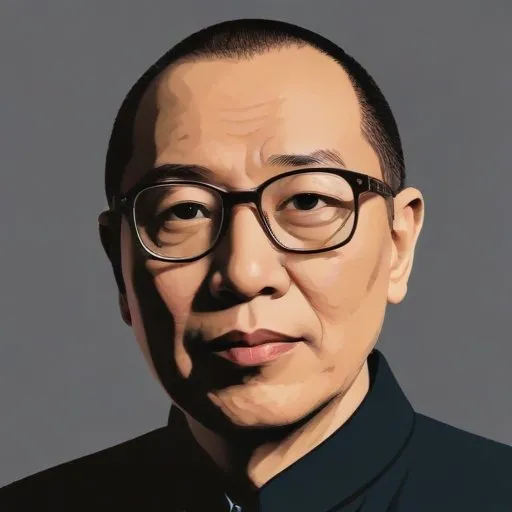
Liu Xiaobo: China's Nobel Laureate and Champion of Human Rights
A Life Dedicated to Freedom and Democracy
Liu Xiaobo, a Chinese literary critic, philosopher, and human rights activist, is best known for his unwavering commitment to promoting political reforms and ending communist one-party rule in China. His courageous efforts earned him the prestigious Nobel Peace Prize in 2010, making him the first Chinese citizen to receive the honor while residing in China.
A Brief Biography
Born on December 28, 1955, Liu Xiaobo grew up in Changchun, Jilin Province, China. He studied literature at Jilin University and later pursued his Ph.D. at Beijing Normal University. Liu's academic pursuits led him to become a visiting scholar at several international universities, including Columbia University and the University of Oslo.
Rise to Prominence and Early Activism
In the 1980s, Liu gained recognition in Chinese literary circles for his exemplary literary critiques. His work sparked controversy, and he became known for his bold and incisive commentary on Chinese politics and society. In 1989, Liu returned to China to support the Tiananmen Square protests, which led to his first imprisonment from 1989 to 1991.
A Life of Persecution and Activism
Liu was imprisoned multiple times for his activism, including from 1995 to 1996 and again from 1996 to 1999, on suspicion of inciting subversion of state power. Despite these setbacks, he continued to advocate for human rights and democracy, serving as the President of the Independent Chinese PEN Center from 2003 to 2007 and the President of Minzhu Zhongguo (Democratic China) magazine from the mid-1990s.
The Charter 08 Manifesto and Imprisonment
In 2008, Liu participated in the creation of the Charter 08 manifesto, a call for democratic reforms and human rights in China. On December 8, 2008, he was detained, and on June 23, 2009, he was formally arrested on suspicion of inciting subversion of state power. Liu was sentenced to eleven years' imprisonment and two years' deprivation of political rights on December 25, 2009.
The Nobel Peace Prize and International Recognition
During his fourth prison term, Liu was awarded the 2010 Nobel Peace Prize for his "long and non-violent struggle for fundamental human rights in China." This recognition brought international attention to Liu's plight and solidified his status as a symbol of resistance against China's authoritarian regime.
Philosophical Contributions and Beliefs
Liu Xiaobo's philosophical contributions center around the importance of democracy, human rights, and non-violent resistance. His work emphasizes the need for political reform, highlighting the importance of individual freedom and the protection of human dignity.
Personal Milestones and Key Life Events
- 1989: Returned to China to support the Tiananmen Square protests
- 2003-2007: Served as President of the Independent Chinese PEN Center
- 2008: Participated in the creation of the Charter 08 manifesto
- 2010: Awarded the Nobel Peace Prize
- 2017: Died on July 13, due to complications from liver cancer, while on medical parole
Influence on Modern Society and Legacy
Liu Xiaobo's unwavering commitment to democracy and human rights has inspired a new generation of Chinese activists and intellectuals. His legacy serves as a testament to the power of non-violent resistance and the importance of promoting individual freedom and dignity.
Quotes and Memorable Sayings
- "The true hero is not someone who never falls, but someone who always gets back up."
- "Freedom of expression is the foundation of human rights, the source of human dignity, and the guarantee of social justice."
Honors and Awards
- 2010 Nobel Peace Prize
- Prix de la Liberté (Liberty Prize) from the France Libertés Foundation
- Hermann Kesten Medal from the German PEN Center
Historical Context and Comparative Analysis
Liu Xiaobo's story parallels that of other notable dissidents and human rights activists, such as
Nelson Mandela and
Václav Havel. His struggle for democracy and human rights in China serves as a powerful reminder of the ongoing quest for freedom and dignity around the world.
FAQ
What was Liu Xiaobos most famous work?
Liu Xiaobos most famous work is likely Charter 08, a manifesto calling for democratic reforms in China, for which he was awarded the Nobel Peace Prize in 2010. Sub-question: What inspired Liu Xiaobo to write Charter 08?
What was Liu Xiaobos role in the Tiananmen Square protests?
Liu Xiaobo was a key figure in the Tiananmen Square protests, where he famously negotiated a peaceful withdrawal of students from the square.
What is Liu Xiaobos view on human rights in China?
Liu Xiaobo has been a vocal advocate for human rights and democracy in China, often criticizing the governments crackdown on dissent and free speech.
Has Liu Xiaobo won any awards for his work?
Yes, Liu Xiaobo has won numerous awards for his work, including the Nobel Peace Prize, the Václav Havel Human Rights Prize, and the PEN/Barbara Goldsmith Freedom to Write Award.
What is Liu Xiaobos legacy?
Liu Xiaobos legacy is one of courage and conviction, inspiring generations of Chinese activists and dissidents to fight for democratic reforms and human rights.