


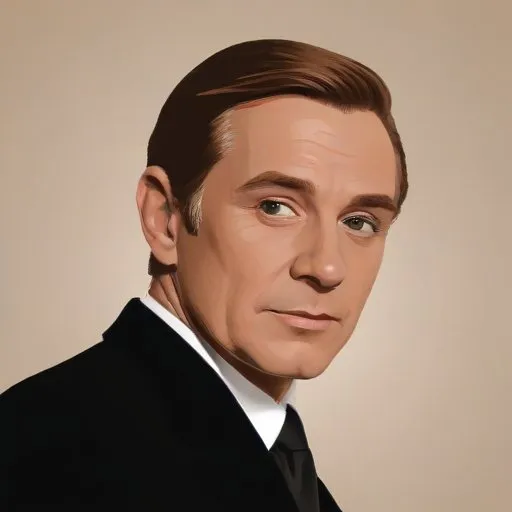
A prolific character actor with a distinctive voice, he appeared in over 150 films and TV shows, often playing doctors, detectives, and authority figures.
When the curtains closed on Lloyd Nolan's illustrious career, which spanned half a century, the Los Angeles Times eulogized him as "The Actor's Actor." This fitting tribute summed up Nolan's reputation as a consummate professional, renowned for his versatility, range, and dedication to his craft. Nolan's iconic portrayal of Captain Queeg in Herman Wouk's play The Caine Mutiny Court-Martial catapulted him to featured player status, cementing his place in the pantheon of American actors.
Nolan's journey to stardom was marked by his early beginnings on stage, where he honed his skills and eventually transitioned to film and television. His breakout role came in the mid-1950s when he played Captain Queeg, a part that earned him a Best Actor Emmy Award in 1955 for the TV play adaptation of Wouk's novel.
Nolan's impressive résumé boasts a range of notable performances, including his Oscar-nominated role in Peyton Place and his Emmy-nominated portrayal of Doctor Morton Chegley in the groundbreaking TV series Julia, starring Diahann Carroll. His ability to effortlessly transition between film and television, as well as his capacity to play a wide range of characters, solidified his reputation as a master of his craft.
Born in San Francisco, California, in 1902, Nolan was the youngest of three children to Irish immigrant James Nolan and Margaret, who was of Irish descent. Nolan's early life was characterized by a strong disapproval from his parents, who preferred he join the family shoe business. However, Nolan's passion for acting prevailed, and he went on to attend Santa Clara Preparatory School and Stanford University, where he flunked out as a freshman due to his focus on dramatics.
Nolan's influence extends beyond his impressive body of work. He played a pivotal role in shaping the cultural landscape of his time. His iconic performance in The Caine Mutiny Court-Martial not only earned him widespread recognition but also contributed to the play's enduring popularity. Moreover, his role in Julia, which was the first American TV series starring an African American woman, helped pave the way for greater diversity and representation in television.
Nolan's swan song came in Woody Allen's Hannah and Her Sisters, released posthumously in 1986. This poignant finale to his storied career serves as a testament to Nolan's unwavering dedication to his craft, even in the twilight of his life. As the curtains closed on his remarkable journey, Lloyd Nolan left behind a legacy that continues to inspire generations of actors, filmmakers, and audiences alike.
In the end, Lloyd Nolan's remarkable body of work, coupled with his tireless dedication to his craft, has ensured his place as "The Actor's Actor," a testament to his enduring legacy in the world of film, television, and theater.
Born in 1899
Iconic leading man of classic Hollywood cinema, starring in timeless films like Casablanca and The African Queen, embodying a tough, charismatic on-screen presence.
Born in 1899
A legendary actor and dancer who dominated Hollywood's Golden Age with iconic roles in gangster films and musicals, leaving an indelible mark on American cinema.
Born in 1893
A legendary actor who brought iconic characters to life on screen, starring in classic films like "Double Indemnity" and "Key Largo".
Born in 1904
A versatile actor and singer who brought iconic characters to life in classic films like Casablanca and Arsenic and Old Lace, with a distinctive voice and eerie on-screen presence.
Born in 1897
Academy Award-winning actor who brought iconic characters to life on stage and screen, including Dr. Jekyll and Mr. Hyde.
Born in 1900
Academy Award-winning star of Hollywood's Golden Age, known for iconic on-screen partnership with Katharine Hepburn and memorable roles in classics like "Inherit the Wind" and "Guess Who's Coming to Dinner".
Born in 1907
A legendary actress who won four Academy Awards and starred in iconic films like "The Philadelphia Story" and "On Golden Pond", known for her fierce independence and spirited on-screen presence.
Born in 1908
A legendary actress who dominated Hollywood's Golden Age with her powerful performances and iconic roles in films like "All About Eve" and "What Ever Happened to Baby Jane?"
