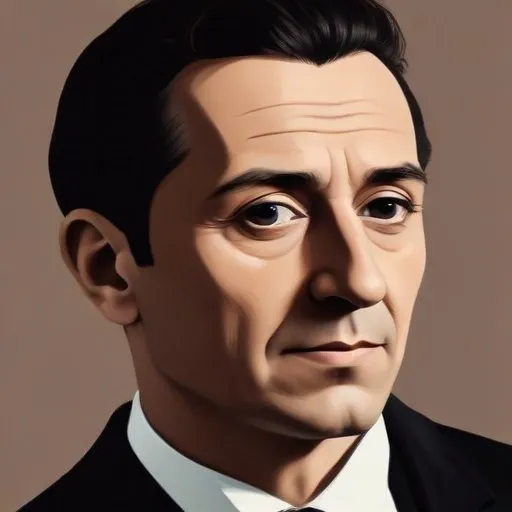
Lodovico Zacconi: The Renaissance Master of Musical Theory
A Life Dedicated to Music and Theology
Lodovico Zacconi was a renowned Italian composer and musical theorist of the late Renaissance and early Baroque eras, celebrated for his exhaustive work,
Prattica di Musica, a comprehensive treatise on musical practice. This magnum opus, published in two volumes in 1592 and 1622, cemented Zacconi's reputation as a leading authority on musical theory, solidifying his position as a prominent figure in the world of music.
Early Life and Education
Born on June 11, 1555, in Pesaro, Marche, Zacconi embarked on a spiritual journey, becoming an Augustinian friar at Venice, where he was ordained as a priest. His passion for music led him to study at the church of San Stefano, Venice, where he was accepted as a student of counterpoint by the celebrated composer Andrea Gabrieli. This mentorship had a profound impact on Zacconi's development as a musician and theorist.
Professional Career and Patronage
In 1584, Zacconi auditioned as a singer at San Marco, Venice, but declined the position. Instead, he joined the musical establishment of Archduke Karl of Graz, a patronage that lasted until the Archduke's death in 1590. During this period, Zacconi met the prominent Venetian School theorist, Zarlino, an encounter he fondly recalled in the second part of his
Prattica di Musica. Zacconi's services were subsequently sought by Wilhelm V, Duke of Bavaria, whose chapel was directed by the renowned Orlande de Lassus.
Later Life and Legacy
After leaving the employ of Wilhelm V in 1596, Zacconi returned to Italy, where he worked as a prior at Pesaro and as a preacher and administrator in both Italy and Crete. He eventually retired to Pesaro in 1612, remaining there until his passing on March 23, 1627, at Fiorenzuola di Focara, near Pesaro. Zacconi's
Prattica di Musica remains his enduring legacy, a testament to his dedication to the art of music and his contribution to the development of musical theory.
Philosophical Contributions and Beliefs
Zacconi's theoretical works, although conservative, reflect his deep understanding of musical principles and his commitment to preserving the traditions of the Renaissance. His writings, devoid of any mention of the emerging Baroque style, demonstrate his focus on the timeless aspects of music. Zacconi's philosophy was rooted in the pursuit of knowledge and the transmission of musical wisdom to future generations.
Major Works
- Prattica di Musica (1592) - Volume I
- Prattica di Musica (1622) - Volume II
Historical Context and Legacy
Zacconi's life and work bridged the Renaissance and Baroque eras, a period of significant transformation in music. His
Prattica di Musica stands as a monumental achievement, illuminating the musical practices and theoretical foundations of his time. Zacconi's legacy, rooted in his contributions to musical theory, continues to inspire and inform musicologists, scholars, and musicians to this day.
FAQ
What is Lodovico Zacconi known for in music theory?
Lodovico Zacconi was an Italian composer and theorist, known for his influential treatise Prattica di musica (1592), which explored counterpoint and harmony.
What was Lodovico Zacconis contribution to the development of musical notation?
Zacconis work on musical notation helped to standardize the use of staff notation, clefs, and key signatures, making music more accessible and readable.
How did Lodovico Zacconis music reflect the Renaissance humanist ideals?
Zacconis music embodied the Renaissance humanist ideals of beauty, proportion, and harmony, reflecting the cultural and intellectual values of the time.
Did Lodovico Zacconi have any notable pupils or students?
Yes, Zacconi taught music theory and composition to several notable pupils, including the composer and theorist Adriano Banchieri.
What is Lodovico Zacconis legacy in music theory?
Zacconis work on music theory and notation had a lasting impact on Western classical music, influencing composers and theorists for centuries to come.