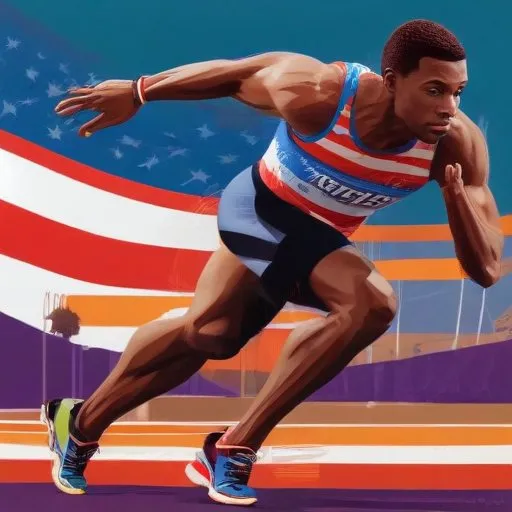
Loren Murchison: The Illustrious American Athlete
Early Life and Athletic Prowess
Loren Murchison, born on December 17, 1898, was an American athlete renowned for his exceptional speed and agility, earning him double gold medals in the 4x100m relay at the Olympic Games. His remarkable career was marked by numerous championships and record-breaking feats, solidifying his position as one of the most accomplished athletes of his era.
Athletic Achievements
Murchison's athletic prowess was evident in his numerous championships and record-breaking performances. He was an AAU Champion in the 100yd and 220yd events in 1920 and 1923, respectively. Additionally, he won the British AAA championships in both 100yd and 220yd events in 1925. At the 1920 Summer Olympics, Murchison finished fourth in the 200m and sixth in the 100m events. He also played a crucial role in the gold medal-winning United States 4x100m relay team, setting a new world record of 42.2s in the Olympic final.
Olympic Glory and Indoor Dominance
At the 1924 Summer Olympics, Murchison repeated his success, winning his second Olympic gold medal as the opening leg of the world record 41.0s-setting American 4x100m relay team. His indoor running career was equally impressive, with 14 titles (9 individual and 5 relay) at the prestigious Millrose Games. Murchison was also a national indoor champion in the 60y, 300y, and 500m events.
Record-Breaking Exploits
Murchison's record-breaking performances were a testament to his exceptional speed and agility. He equaled or broke numerous world best times, including the 60y (6.4s in 1920, 1922, and 1923), 50m (6.0s in 1925), 300y (31.2s), and 220y (22.4s). His remarkable achievements earned him the respect and admiration of his peers, including
Charley Paddock, the 1920 Olympic 100m champion, who referred to Murchison as the greatest indoor sprinter of his generation and the finest starter of all time.
Personal Milestones and Tragedy
In 1925, Murchison's life took a tragic turn when he contracted spinal meningitis, leaving him paralyzed from the waist down for the rest of his life. Despite this setback, he continued to live a fulfilling life, residing in Leisure Village, Lakewood Township, New Jersey. Murchison passed away on June 11, 1979, at the age of 80, at Point Pleasant Hospital in Point Pleasant, New Jersey.
Legacy and Impact
Loren Murchison's remarkable athletic career, marked by numerous championships and record-breaking feats, has left an indelible mark on the world of athletics. His achievements serve as an inspiration to generations of athletes, and his contributions to the sport continue to be celebrated and revered.
FAQ
What are Loren Murchisons Olympic achievements?
Loren Murchison was an American sprinter who won two Olympic gold medals and two silver medals at the 1920 and 1924 Summer Olympics. He was a member of the American 4x100m relay team that set multiple world records.
How did Loren Murchison become a successful sprinter?
Loren Murchisons success in sprinting can be attributed to his early start in athletics and his rigorous training regime. He was also known for his exceptional speed and technique, which earned him a place in the University of Chicagos track team.
What was Loren Murchisons role in the 1920 Summer Olympics?
At the 1920 Summer Olympics, Loren Murchison was part of the American 4x100m relay team that won the gold medal, setting a new world record. He also competed in the 100m dash, finishing fourth in the final.
How did Loren Murchisons athletic career impact American sprinting?
Loren Murchisons achievements in sprinting inspired a new generation of American athletes, contributing to the growth of the sport in the United States. His success also led to increased recognition and funding for American track and field programs.
What is Loren Murchisons legacy in the world of athletics?
Loren Murchisons legacy in athletics is that of a pioneering sprinter who set multiple world records and won Olympic gold medals. He is remembered as one of the most successful American sprinters of his time, inspiring future generations of athletes.