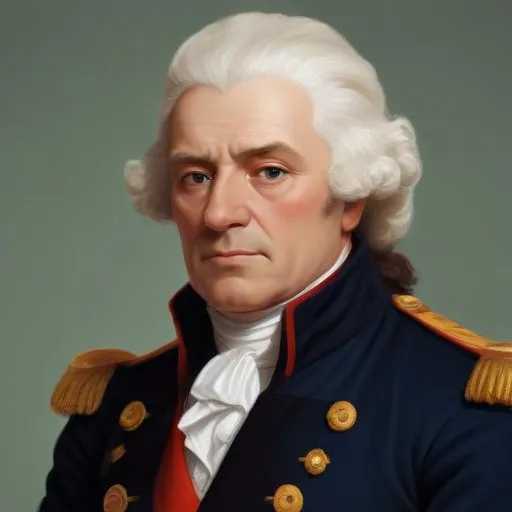
Unveiling the Maritime Maestro: Louis Antoine de Bougainville
The French Explorer Who Conquered the Seas
Louis Antoine de Bougainville, a name synonymous with maritime excellence, is renowned for being the first Frenchman to circumnavigate the globe, charting new territories, and expanding the boundaries of human knowledge. A contemporary of the British explorer
James Cook, Bougainville's voyages opened up new trade routes, facilitated scientific discoveries, and etched his name in the annals of history.
A Shrewd Scholar and Skilled Navigator
Born on November 12, 1729, in Paris, France, Bougainville was the son of notary Pierre-Yves de Bougainville. He initially pursued law, but his passion for mathematics and astronomy led him to publish a treatise on integral calculus at the age of 25. This work was a supplement to Guillaume de l'Hopital's treatise, "Des infiniment petits." Bougainville's academic prowess earned him a spot as a member of the Royal Society during his stay in London as secretary to the French embassy in 1755.
War and Wisdom
Bougainville's military career began in 1753 when he joined the French Army as a Musketeer of the Guard. He fought in the Seven Years War, serving as captain of dragoons and aide-de-camp to the Marquis de Montcalm. He participated in the capture of Fort Oswego in 1756 and the 1757 Battle of Fort William Henry. Bougainville's bravery and tactical prowess earned him the Cross of St. Louis and promotion to colonel.
The Visionary Voyager
Bougainville's most notable achievement was his scientific expedition between 1763 and 1769, during which he charted a course around the globe. He commanded the ships "La Boudeuse" and "L'Étoile," with a crew of scientists, including the astronomer Pierre-Antoine Veron and the botanist
Philibert Commerson. This voyage led to the discovery of the Bougainville Strait, Bougainville Island in Papua New Guinea, and the Falkland Islands.
Awards and Legacy
Bougainville's contributions to science, navigation, and exploration earned him numerous accolades, including:
- The Copley Medal in 1756 for his work on calculus
- The Grand Cross of the Legion of Honor in 1804
- Membership in the Academy of Sciences and the Academy of Inscriptions and Belles-Lettres
A Lasting Impact
Today, Bougainville's name is immortalized in various ways:
- The Bougainvillea flower, a vibrant, thorny vine, is named after him
- Bougainville Island, Papua New Guinea, bears his name
- The Falkland Islands, Islas Malvinas, were first settled by Bougainville in 1764
Bougainville's remarkable life, marked by bravery, intellect, and vision, serves as an inspiration to generations of scientists, explorers, and historians. His voyages opened up new frontiers, expanding human knowledge and shaping the course of history.
FAQ
What was Louis-Antoine de Bougainvilles role in French exploration?
Louis-Antoine de Bougainville was a French admiral and explorer who played a significant role in French exploration and colonization. He led the first French expedition to circumnavigate the globe, and explored the Pacific Ocean and South America.
What were Louis-Antoine de Bougainvilles contributions to navigation and cartography?
Louis-Antoine de Bougainville made significant contributions to navigation and cartography, charting new territories and creating accurate maps of the regions he explored. His writings on navigation and geography were influential, and he is considered one of the greatest navigators of his time.
How did Louis-Antoine de Bougainville interact with indigenous peoples?
Louis-Antoine de Bougainville was known for his respectful and curious approach to indigenous peoples, establishing positive relationships and learning about their customs and way of life. He believed in the importance of peaceful coexistence and cultural exchange.
What were Louis-Antoine de Bougainvilles views on colonialism?
Louis-Antoine de Bougainville believed in the importance of establishing French colonies, but he also recognized the potential risks and negative consequences of colonialism. He advocated for responsible and sustainable colonial practices, and sought to promote mutual understanding and cooperation between colonizers and indigenous peoples.
Where is Louis-Antoine de Bougainville buried?
Louis-Antoine de Bougainville is buried in the Panthéon in Paris, France, a testament to his enduring legacy as a great explorer and navigator.