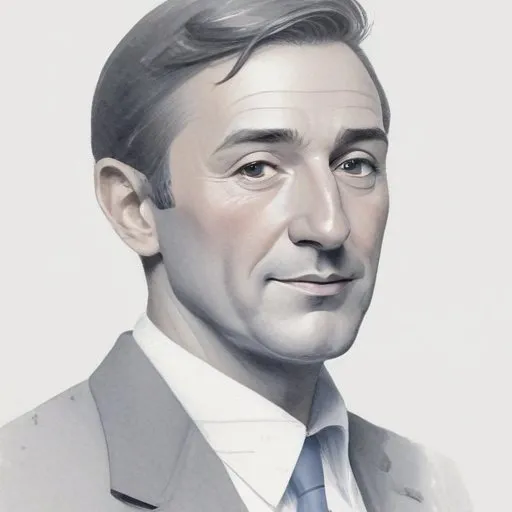
Louis Archambault: The Pioneering Sculptor and Ceramicist of Modern Canadian Art
A New Era of Abstraction
Louis Archambault was a trailblazing Quebec sculptor and ceramicist who defied traditional methods, spearheading the new sculpture movement in Canada towards abstraction. With his innovative approach, he revolutionized the art scene, earning him a reputation as one of the most influential artists of his time.
Early Life and Education
Born on April 4, 1915, in Montreal, Quebec, Archambault received his Bachelor of Arts from the University of Montreal in 1936. He then pursued a diploma in ceramics from the École des Beaux-Arts, Montreal, graduating in 1939. This solid educational foundation catapulted him into a successful career as an instructor in sculpture at the École des Beaux-Arts, a position he held since 1949.
The Rise to Prominence
Archambault's talent soon gained recognition, leading to his first exhibition at the Art Gallery of Toronto in 1952, alongside
Alfred Pellan. This milestone was followed by a Canadian Government Fellowship to study in Paris and Venice in 1953. His work continued to garner attention, representing Canada at the prestigious Venice Biennale in 1956, alongside Jack Shadbolt and Harold Town.
Commissioned Works and Accolades
Archambault's impressive portfolio includes commissioned pieces for prominent institutions, such as a ceramic wall for the Canadian pavilion at the Brussels International and Universal Exposition in 1958. He also created sculptures for Pearson International Airport, Malton, Ontario, the Ottawa airport, and Expo 67, Montreal. In 1958, he was awarded the Royal Architectural Institute of Canada's Allied Arts Medal.
Public Collections and Legacy
Archambault's work is proudly displayed in esteemed public collections across Canada, including the National Gallery of Canada, the Art Gallery of Ontario, and the Robert McLaughlin Gallery in Oshawa. He was a respected member of the Royal Canadian Academy of Arts and was appointed an Officer of the Order of Canada in 1968.
Personal Milestones and Later Life
Archambault passed away on January 27, 2003, leaving behind a remarkable legacy. He was entombed at the Notre-Dame-des-Neiges Cemetery in Montreal.
Timeline of Major Works and Achievements
- 1952: Exhibited work at the Art Gallery of Toronto with Alfred Pellan
- 1953: Received Canadian Government Fellowship to study in Paris and Venice
- 1956: Represented Canada at the Venice Biennale
- 1957: Commissioned to create a ceramic wall for the Canadian pavilion at the Brussels International and Universal Exposition
- 1958: Won the Royal Architectural Institute of Canada's Allied Arts Medal
- 1968: Appointed Officer of the Order of Canada
Influence on Modern Canadian Art
Louis Archambault's pioneering spirit and innovative approach to sculpture and ceramics have had a lasting impact on modern Canadian art. His contributions to the development of abstraction in Canada have inspired generations of artists, solidifying his place as a true icon in the world of art.
FAQ
What is Louis Archambaults style of sculpting?
Louis Archambaults style of sculpting is characterized by his use of bold, expressive forms and his exploration of the relationship between shape and texture. His work often features abstract, modernist forms that evoke a sense of dynamic energy.
What materials did Louis Archambault use in his sculptures?
Louis Archambault worked with a variety of materials, including wood, stone, and metal, often combining different materials to create complex, layered forms.
What themes does Louis Archambaults work explore?
Louis Archambaults work explores a range of themes, including the relationship between nature and the human experience, the balance between form and function, and the emotional resonance of abstract forms.
Where can Louis Archambaults work be found?
Louis Archambaults work can be found in private and public collections across Canada, including the National Gallery of Canada and the Musée dart contemporain de Montréal.
What is Louis Archambaults place in Canadian art history?
Louis Archambault is considered one of Canadas most important sculptors of the 20th century, known for his innovative approach to modernist sculpture and his contributions to the development of Canadian modernism.