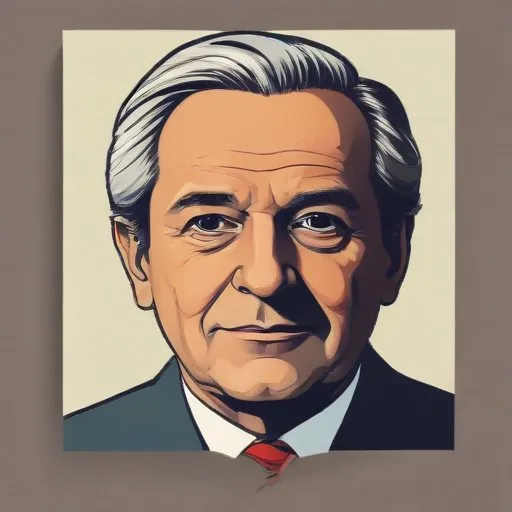
Louis Beel: The Dutch Statesman Who Shaped the Netherlands' Post-War Reconstruction
A Double Term as Prime Minister and Champion of Catholic Politics
Louis Beel is remembered as one of the most influential Dutch politicians of the 20th century, serving two non-consecutive terms as Prime Minister of the Netherlands from 1946 to 1948 and again from 1958 to 1959. Throughout his career, Beel was a stalwart champion of Catholic politics, playing a pivotal role in shaping the country's post-war reconstruction and European integration.
Early Life and Education
Born on April 12, 1902, in Roermond, Netherlands, Beel grew up in a devout Catholic family. He studied law at Radboud University Nijmegen, earning a Master of Laws degree and later a Doctor of Law in Administrative Law. Beel's academic pursuits would lay the foundation for his future in politics and public service.
Rise to Prominence: War-Time Politics and Post-War Reconstruction
During World War II, Beel worked as a lawyer in Eindhoven, eventually becoming Minister of the Interior in the Gerbrandy III cabinet, the last government-in-exile. Following the war, he retained his position in the national unity Schermerhorn-Drees cabinet and later formed his own cabinet, the Beel I cabinet, in 1946. As Prime Minister, Beel oversaw the Netherlands' early post-war reconstruction efforts, including the country's transition from a war-time economy to a peacetime economy.
Second Term and Later Career
After a brief period out of office, Beel returned as Prime Minister in 1958, leading the country through a tumultuous period marked by economic stagnation and social unrest. During his second term, Beel prioritized European integration, playing a key role in shaping the European Economic Community (EEC), the precursor to the modern-day European Union.
Philosophical Contributions and Beliefs
Throughout his career, Beel's policies were guided by a strong Catholic faith and a commitment to social justice. He believed in the importance of balancing individual freedoms with state intervention, advocating for a mixed economy that protected the interests of workers and the disadvantaged.
Personal Milestones and Key Life Events
- 1929: Beel began his career as a civil servant in Eindhoven, serving until 1942.
- 1945: Appointed Minister of the Interior in the Gerbrandy III cabinet.
- 1946: Formed his first cabinet, the Beel I cabinet, and became Prime Minister of the Netherlands.
- 1948: Stepped down as Prime Minister and was elected to the House of Representatives.
- 1949: Served as high commissioner of the Dutch East Indies.
- 1958: Returned as Prime Minister for a second term.
- 1977: Passed away on February 11, at the age of 74.
Legacy and Impact on Modern Society
Louis Beel's enduring legacy lies in his role as a champion of Catholic politics and a shaper of the Netherlands' post-war reconstruction. His commitment to European integration and social justice continues to inspire politicians and policymakers today. As a testament to his impact, Beel remains one of the most celebrated and respected figures in modern Dutch history.
FAQ
What was Louis Beels role in Dutch politics?
Louis Beel was the 36th Prime Minister of the Netherlands, serving from 1946 to 1948 and again from 1958 to 1959. He played a key role in shaping the countrys post-war policies and rebuilding its economy.
What were Louis Beels academic achievements?
Before entering politics, Louis Beel was an academic who taught law and politics at the University of Amsterdam. He wrote several books on constitutional law and was a respected authority on Dutch politics.
What were Louis Beels policies as Prime Minister?
As Prime Minister, Louis Beel implemented policies that focused on economic reconstruction, social welfare, and international cooperation. He played a key role in shaping the Netherlands post-war identity.
How did Louis Beels leadership impact the Netherlands?
Louis Beels leadership had a significant impact on the Netherlands. He navigated the country through a period of rapid change and helped to establish it as a major player in European politics.
What was Louis Beels legacy in Dutch politics?
Louis Beels legacy in Dutch politics is that of a statesman who played a key role in shaping the countrys post-war identity. He is remembered for his commitment to public service and his leadership during a period of significant change.