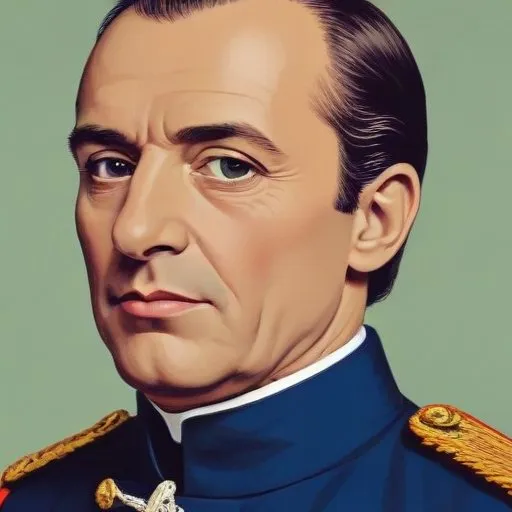
Louis Eugène Cavaignac: The Reluctant Dictator of the French Second Republic
The Rise to Power
Louis Eugène Cavaignac, a French general and politician, is best known for his brief but significant reign as the head of the executive power of France between June and December 1848, during the tumultuous period of the French Second Republic. During this time, he played a crucial role in crushing the June Days uprising, earning him both praise and criticism from his contemporaries.
Early Life and Military Career
Born on October 15, 1802, in Paris, France, Cavaignac was the second child of Jean-Baptiste Cavaignac and Julie-Marie Olivier de Corancez. His family was prominent, with his father serving as the mayor of Saint-Sauveur and his elder brother, Godefroi Cavaignac, becoming a renowned republican activist and journalist. Cavaignac's early education was geared towards a military career, which he pursued with dedication. He took part in the Morea expedition in 1828 and later served with distinction in Algeria during the French invasion from 1832 to 1848.
Political Career and the French Second Republic
Cavaignac's political career began in the aftermath of the French Revolution of 1848, when he was elected as a member of the National Assembly. He quickly rose through the ranks, becoming one of the leaders of the Moderate Republicans. On June 24, 1848, he was appointed as the Minister of War in the French provisional government and was tasked with quelling the June Days uprising.
The June Days Uprising and the Emergency Powers
The June Days uprising, a revolt by Parisian workers against the National Assembly, was a major threat to the stability of the newly formed Second Republic. Cavaignac was given emergency powers to suppress the insurrection, which he used to devastating effect. His actions were controversial, with some hailing him as a savior and others condemning him as a dictator. However, on June 26, 1848, he renounced his dictatorial powers, earning him a degree of admiration from his critics.
The Interim Government and the 1848 Presidential Election
Following the suppression of the June Days uprising, Cavaignac was confirmed by the National Assembly as the provisional Chief of the Executive Power of France, a position he held until the 1848 presidential election. During this period, he governed France with a firm hand, implementing several reforms and measures to stabilize the country. However, he lost the presidential election to Louis-Napoléon Bonaparte, who would later become Emperor Napoleon III.
Later Life and Legacy
Cavaignac continued to serve as a representative in the National Assembly until its dissolution by President Louis-Napoléon Bonaparte during the 1851 coup d'état. He subsequently retired into private life, dying on October 28, 1857. Despite his controversial legacy, Cavaignac's role in shaping the French Second Republic cannot be overstated. His actions, though often criticized, were driven by a desire to maintain order and stability in a tumultuous period of French history.
Historical Context and Legacy
Cavaignac's life and career were marked by the turmoil of the French Revolution of 1848 and the subsequent formation of the Second Republic. His experiences in Algeria and his military background influenced his worldview, which was shaped by a strong sense of duty and loyalty to France. While his actions were often controversial, they were driven by a desire to protect and serve his country.
Personal Milestones and Key Life Events
- October 15, 1802: Born in Paris, France
- 1828: Participated in the Morea expedition
- 1832-1848: Served in Algeria during the French invasion
- 1848: Elected as a member of the National Assembly
- June 24, 1848: Appointed as the Minister of War in the French provisional government
- June 26, 1848: Renounced his dictatorial powers
- 1848: Lost the presidential election to Louis-Napoléon Bonaparte
- October 28, 1857: Died in Paris, France
By examining Cavaignac's life and career, we gain insight into the complexities of the French Second Republic and the tumultuous period that shaped modern France. While his legacy is marked by controversy, it is undeniable that he played a significant role in shaping the course of French history.
FAQ
What was Louis-Eugène Cavaignacs role in the French Revolution of 1848?
Louis-Eugène Cavaignac was a French general and politician who played a key role in the French Revolution of 1848, serving as the head of state of France from June to December 1848 and overseeing the suppression of the June Days uprising.
How did Louis-Eugène Cavaignacs military career influence his politics?
Louis-Eugène Cavaignacs military career, including his experiences in Algeria and in the French Revolution of 1848, shaped his political views and influenced his approach to governance and social order in France.
What were Louis-Eugène Cavaignacs political views on the French monarchy and republicanism?
Louis-Eugène Cavaignac was a strong supporter of the French Republic and opposed the restoration of the monarchy, advocating for a more authoritarian and centralized system of government to maintain order and stability in France.
Did Louis-Eugène Cavaignac face opposition to his leadership in France?
Yes, Louis-Eugène Cavaignac faced opposition from radical republicans, socialists, and other factions who criticized his authoritarian approach to governance and his suppression of left-wing movements.
What is Louis-Eugène Cavaignacs legacy in modern French politics?
Louis-Eugène Cavaignacs legacy in modern French politics is complex and contested, with some viewing him as a champion of order and stability and others condemning his authoritarianism and repression of democratic movements.