


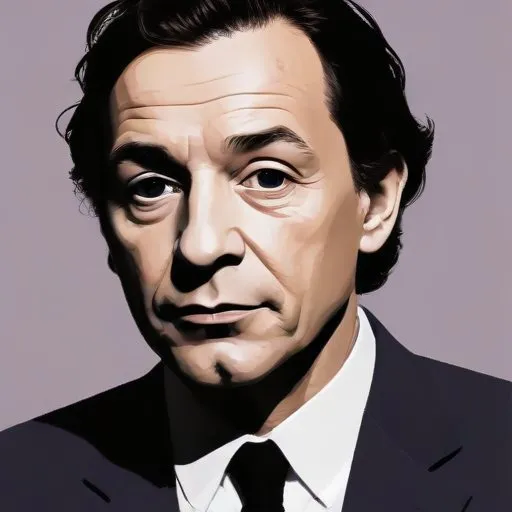
A prominent figure in Canadian literature, known for his poetry and novels that explored themes of French-Canadian identity and culture. He was also a politician who served in the Canadian House of Commons.
Louis-Honoré Fréchette was a renowned Canadian poet, politician, playwright, and short story writer who made history by becoming the first Quebecois to receive the prestigious Prix Montyon from the Académie française. This notable achievement marked a significant milestone in the literary world, cementing Fréchette's status as a trailblazer in Canadian literature.
Born on November 16, 1839, in Lévis, Lower Canada, Fréchette's early life was marked by a thirst for knowledge and a rebellious spirit. He pursued his classical studies at the Séminaire de Québec, the Collège de Sainte-Anne-de-la-Pocatière, and the Séminaire de Nicolet from 1854 to 1860. Later, he studied law at Université Laval, where his restless nature became apparent, foreshadowing the unconventional path he would take in life.
In 1864, Fréchette opened a law office in Lévis, where he also founded two newspapers, Le Drapeau de Lévis and La Tribune de Lévis. However, his restless nature soon led him to exile himself in Chicago, where he wrote La Voix d'un Exil. During this period, he penned several plays, which unfortunately were lost in the Great Chicago Fire.
In 1871, Fréchette returned to Quebec and ran as a Liberal candidate in the provincial elections, although he was not elected. Undeterred, he continued to pursue his passion for politics and was eventually elected as a Member of Parliament in Ottawa in 1874. He served in the House of Commons of Canada from 1874 to 1878 as a member of the Liberal Party of Canada, representing Lévis.
After losing his re-election bid in 1878, Fréchette moved to Montreal, where he devoted himself to writing full-time. This decision proved to be a pivotal moment in his career, as he inherited a substantial amount of wealth from his aunt, allowing him to focus on his craft.
In 1879, Fréchette's collection of poems, Les Fleurs boréales, les oiseaux de neige, earned him the prestigious Prix Montyon from the Académie française, a first for a Quebecois writer. This recognition was followed by an honorary LLD from Queen's College, Kingston, in 1881.
Fréchette's writing also earned him the admiration of Mark Twain, whom he met in Montreal in 1881. The two writers developed a lasting friendship, exchanging works and favorite books. Twain would later toast Fréchette at an American welcoming banquet in Holyoke, joking about his regard for the translation of Fréchette's works.
Louis-Honoré Fréchette's contributions to Canadian literature are undeniable. He paved the way for future generations of writers, demonstrating that Canadian voices could be heard and recognized on the international stage. Through his writing, he explored the complexities of Canadian identity, politics, and culture, leaving behind a rich legacy that continues to inspire and influence literary minds today.
Fréchette's life serves as a testament to the power of perseverance, creativity, and innovation. His story is a reminder that even the most unconventional paths can lead to remarkable achievements, and that the pursuit of one's passion can result in a lasting impact on the world.
Louis-Honoré Fréchette's remarkable life and contributions continue to inspire and influence literary minds to this day, solidifying his position as a pioneering figure in Canadian literature.
Born in 1841
The 7th Prime Minister of Canada, a champion of national unity and French-English relations, who navigated the country through significant industrial and economic growth. He's also known for his role in shaping Canada's autonomy from Britain.
92 Years Old
The 20th Prime Minister of Canada, serving from 1993 to 2003, known for his leadership during the Quebec sovereignty movement and his role in shaping Canada's national unity. He implemented policies like the Clarity Act and the National Child Benefit.
Born in 1919
The charismatic leader who championed Canadian unity and implemented progressive policies, known for his iconic style and influential legacy in shaping modern Canada.
Born in 1922
A charismatic leader who championed Quebec's independence and shaped the province's distinct identity through his passionate politics and journalism. He's revered for his role in Quebec's Quiet Revolution.
93 Years Old
The 22nd Premier of Quebec, a Canadian lawyer and politician, served from 1970 to 1976 and again from 1985 to 1994, known for his role in shaping Quebec's economy and politics. He implemented significant hydroelectric projects and negotiated with the Canadian government on provincial autonomy.
86 Years Old
The 28th Lieutenant Governor of Quebec, a Canadian lawyer and politician, served as the representative of the Canadian monarch in Quebec, playing a vital role in the province's governance and ceremonial events. They are most known for their contributions to Quebec's political and social landscape.
